
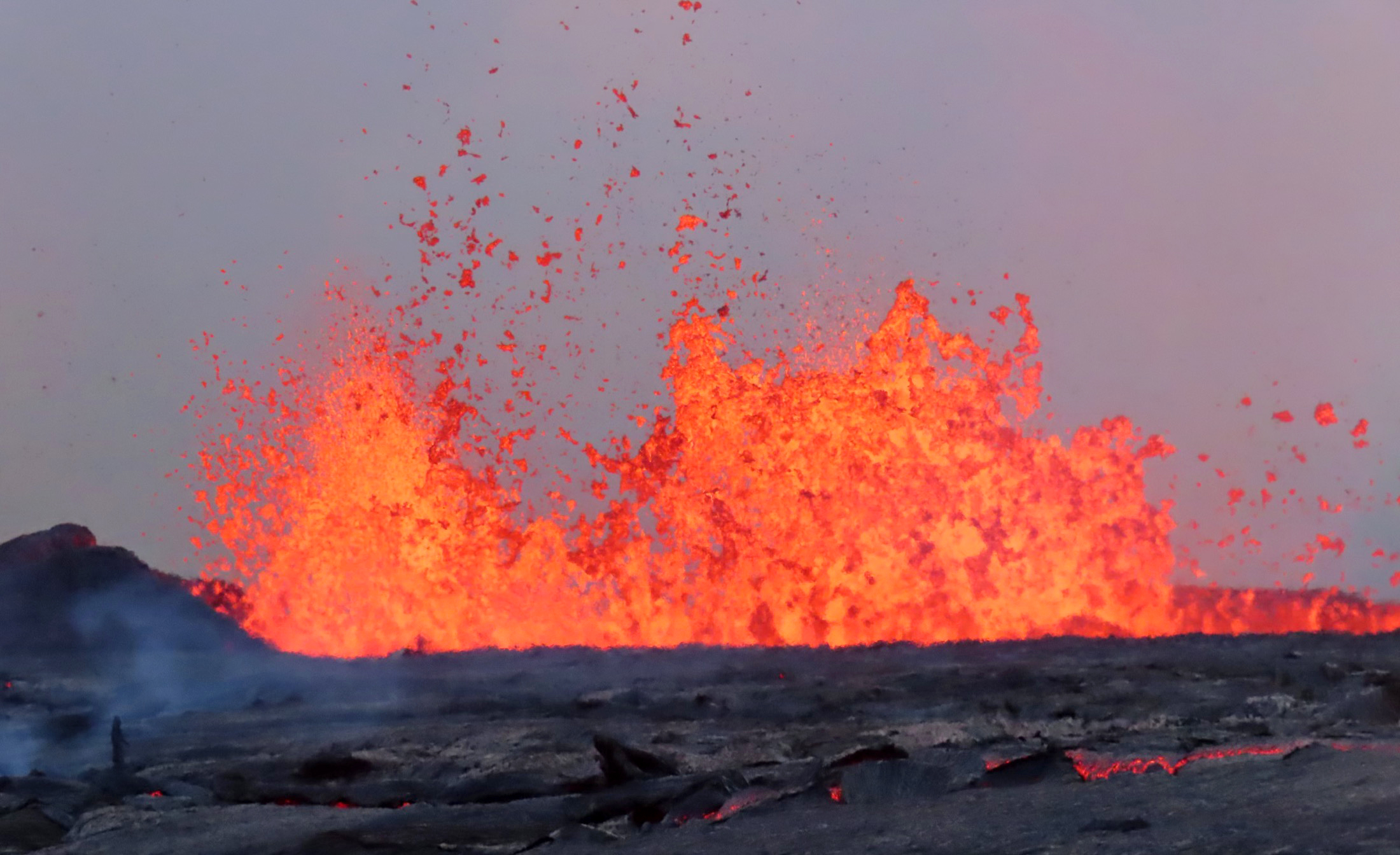
The Kīlauea volcano on the Big Island of Hawaii has resumed erupting, producing intense lava fountains on Monday [1].
This activity signals a volatile period for the region, as scientists monitor whether the eruption will expand beyond the immediate volcanic zone. The event follows a period of heightened seismic instability that threatened local infrastructure and natural landmarks.
The U.S. Geological Survey (USGS) forecast that lava fountains would become particularly intense around June 1, 2026 [2]. This renewed activity is part of an ongoing volcanic episode that has kept geologists on high alert throughout the month [1].
Experts said the current eruption may have been triggered or accelerated by a magnitude-6.0 earthquake [3]. That seismic event struck the Big Island on May 23, 2026 [3]. In the days following that quake, officials said the volcano was likely to erupt again as the ground stabilized [4].
The USGS continues to monitor the site to determine the volume of lava being emitted and the potential for new fissures to open. Current images show impressive fountains of molten rock, though the eruption remains concentrated within the volcanic system [2].
Local authorities are maintaining surveillance of the area to ensure public safety. Because the eruption is linked to a larger episode of activity, the USGS is assessing the risk of further earthquakes, or secondary eruptions, across the island [4].
“The Kīlauea volcano on the Big Island of Hawaii has resumed erupting”
The temporal link between the May 23 earthquake and the June 1 eruption suggests a direct causal relationship between tectonic shifts and volcanic triggers on the Big Island. This pattern underscores the inherent instability of the Kīlauea system, where seismic shocks can rapidly displace magma and accelerate eruption timelines.


