
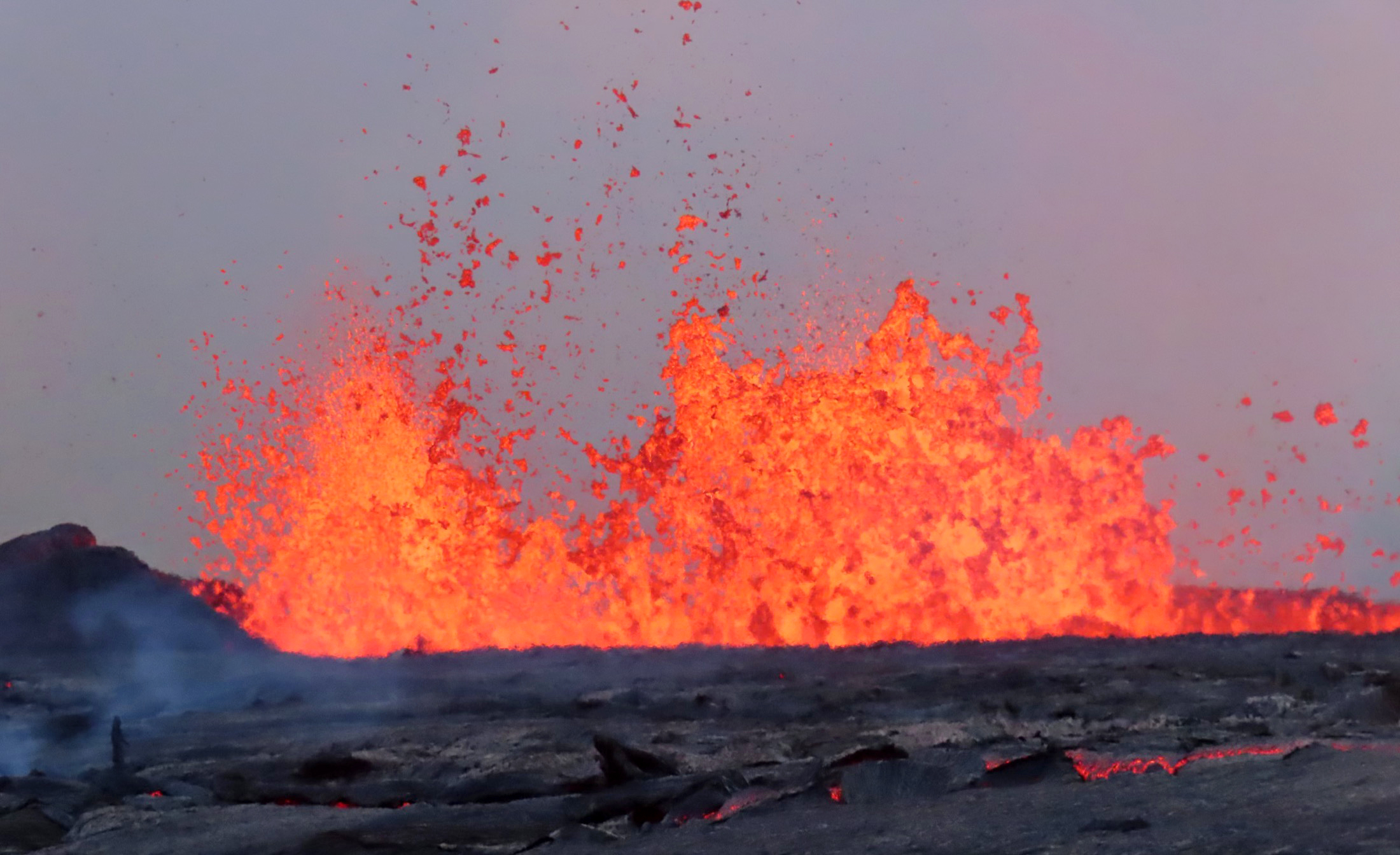
The Kilauea volcano on Hawaii's Big Island erupted Monday morning, June 1, 2026 [1], producing dramatic lava fountains [2].
This event marks the 48th episode [3] of the volcano's ongoing activity. Frequent eruptions on the Big Island pose persistent risks to local infrastructure and necessitate constant monitoring by geological services to ensure public safety.
Reports indicate that lava fountains reached heights of approximately 500 feet [4]. The U.S. Geological Survey said it had forecasted the occurrence of these fountains around June 1 [5].
Geological activity preceding the eruption included a magnitude-6.0 earthquake [6] that rocked the Big Island. Some reports said this seismic event may have triggered the eruption, while other forecasts focused on the expected timing of the lava fountains [5], [6].
The eruption occurred in a region of the U.S. known for its volatile volcanic landscape. Authorities said they continue to monitor the site as the lava flows and fountains evolve.
“Lava fountains reached heights of approximately 500 feet.”
The recurrence of eruptions at Kilauea, now in its 48th episode, underscores the volcano's current state of high activity. The correlation between the magnitude-6.0 earthquake and the subsequent eruption highlights the complex relationship between seismic shifts and volcanic triggers in the Hawaiian archipelago, requiring precise real-time data to manage evacuation and safety protocols.


