
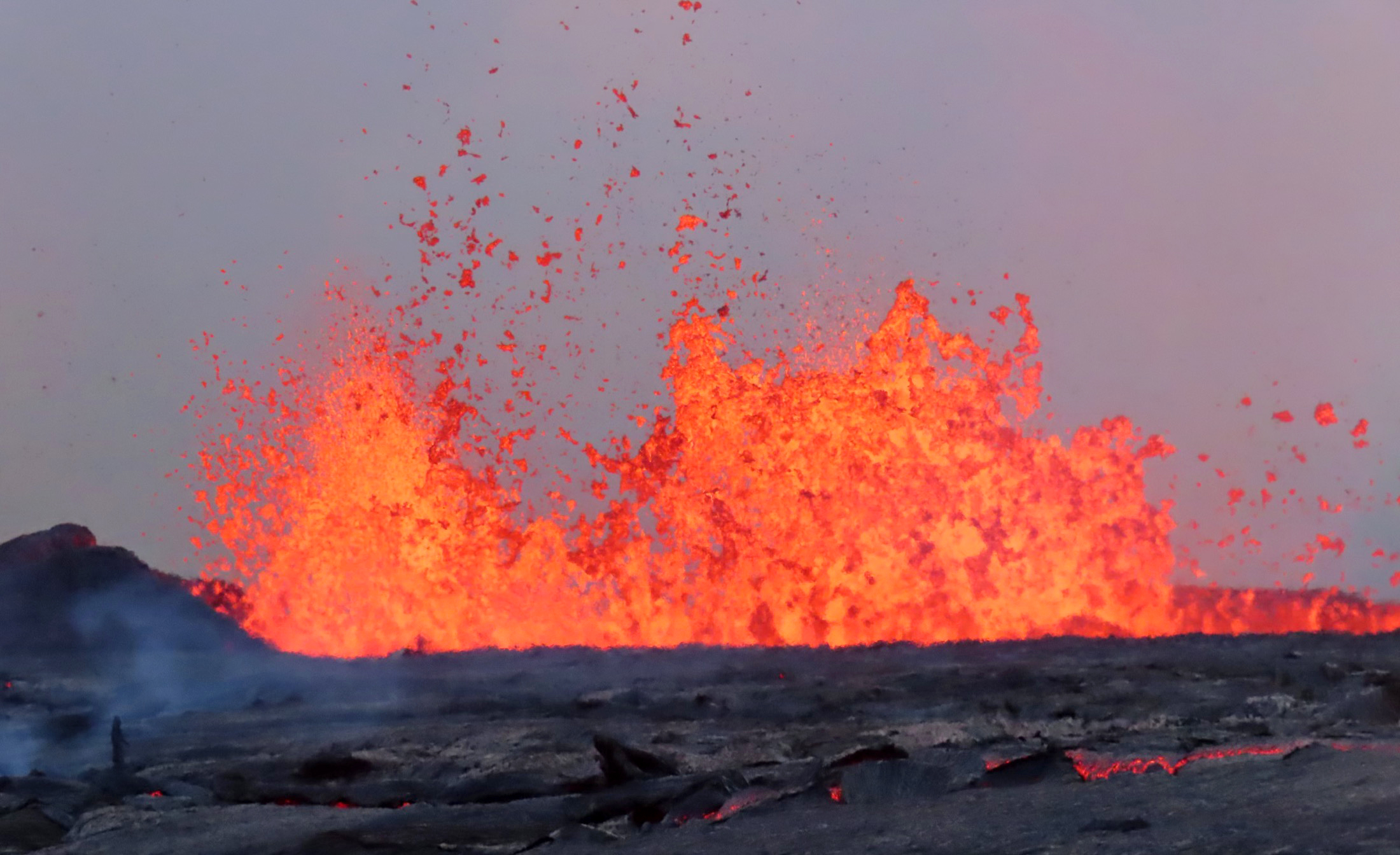
Lava began bubbling up from the Kilauea volcano on Hawaii's Big Island as part of a new eruptive episode [1, 2].
This activity signals a period of heightened volcanic unrest in the region. Because Kilauea is one of the most active volcanoes in the world, these episodes provide critical data for geologists monitoring magma movement and surface expressions.
The latest eruptive phase began on May 14, 2024 [1, 2]. During this episode, the volcano produced high lava fountains that rose as high as 700 feet, or 215 meters [3]. The U.S. Geological Survey (USGS) monitored the activity as magma reached the surface [1].
Local resident Justin Hirako captured video of the eruption, showing the lava bubbling up within the volcano [1, 2]. The footage highlights the intensity of the event, a natural expression of the volcano's ongoing eruptive phase [1].
Kilauea is located on the Big Island of Hawaii, near Honolulu [3]. The volcano frequently enters these cycles of activity, where magma pressure builds until it breaks through the crust. These events are typical for the region's geological profile, though the scale of the fountains varies by episode [3].
Monitoring agencies continue to track the flow and volume of the lava. The 700-foot fountains represent a significant discharge of material [3]. Such events are closely watched to determine if the eruption will remain confined to the summit or expand into other areas of the volcano's flank.
“Lava fountains reached 700 feet (215 meters)”
The recurrence of high-altitude lava fountains at Kilauea underscores the volcano's volatile nature and the continuous movement of magma beneath the Big Island. By documenting these specific eruptive episodes, scientists can better predict future activity and manage the risks associated with lava flows and volcanic gases in Hawaii.


