
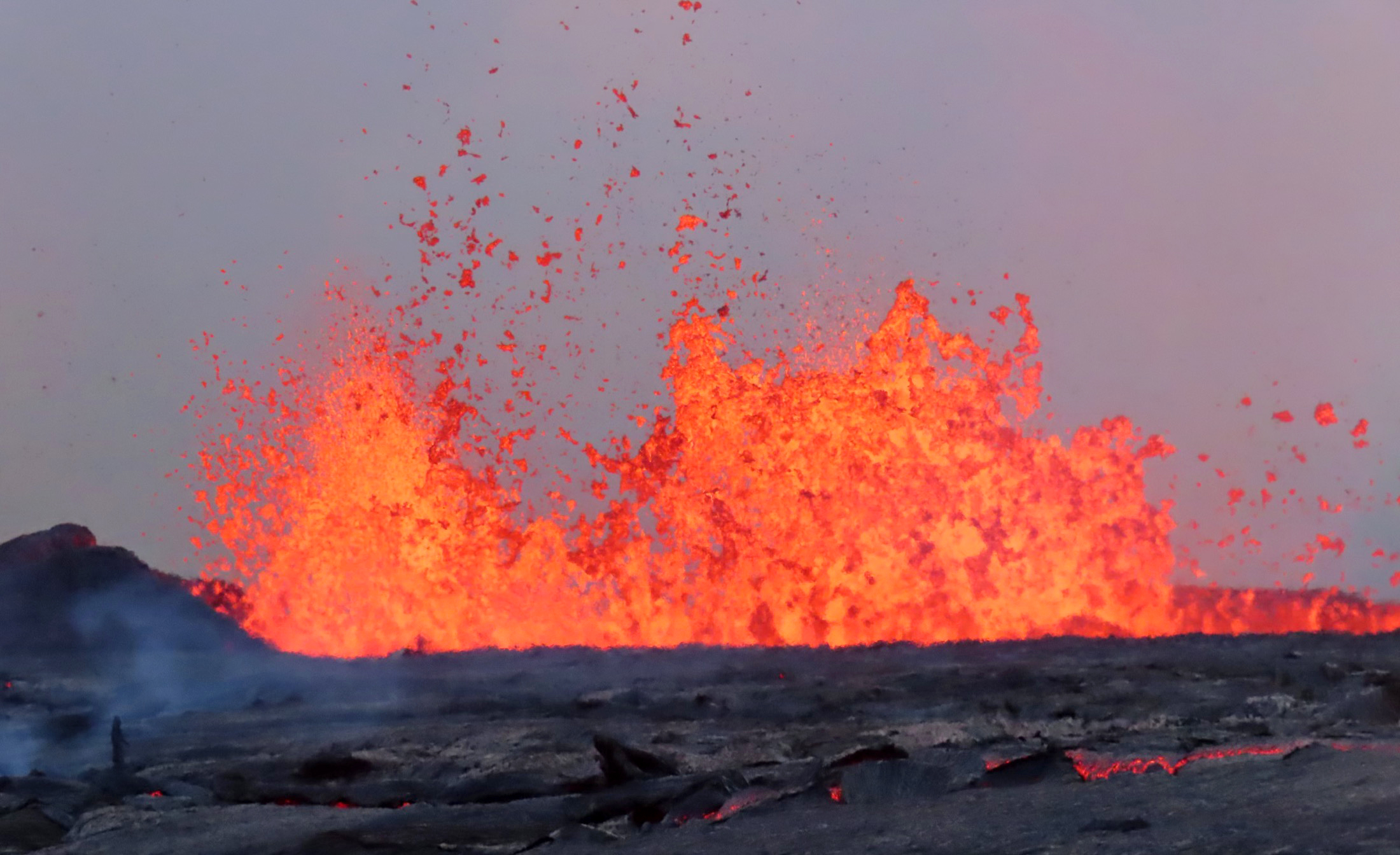
The Kilauea volcano on the island of Hawaii erupted on May 14, 2024, sending lava flows down the slopes of the summit crater [1].
This event marks a continuation of high volcanic activity on the Big Island, demonstrating the persistent instability of one of the world's most active volcanoes. Frequent eruptions necessitate constant monitoring to ensure public safety, and manage land use in the region.
The eruption began around 1:30 a.m. local time [2]. Lava burst from the summit crater and flowed down the volcano's slopes, creating a spectacle of fire and molten rock [1]. Reports said lava fountains reached heights between 800 [3] and 1,000 feet [1] above the ground.
This latest event is the 45th eruptive episode recorded in the last year and a half [2]. The U.S. Geological Survey (USGS) continues to monitor the volcano as it enters this new phase of activity [4]. Geologists said the process is a natural volcanic episode, though the frequency of these events remains a point of study.
Local authorities and scientists track the movement of the lava to determine if it poses a threat to nearby infrastructure. While the summit area is remote, the volume of material ejected during these episodes can alter the landscape rapidly. The 45th episode [2] follows a pattern of short-lived but intense bursts of activity that have characterized Kilauea's recent behavior.
“Lava fountains reached heights between 800 and 1,000 feet above the ground.”
The frequency of Kilauea's eruptions—45 episodes in 18 months—indicates a period of intense volcanic unrest. This pattern suggests a highly efficient magma transport system that allows the volcano to cycle through eruptive phases quickly, keeping the region in a state of perpetual geological transition.


