
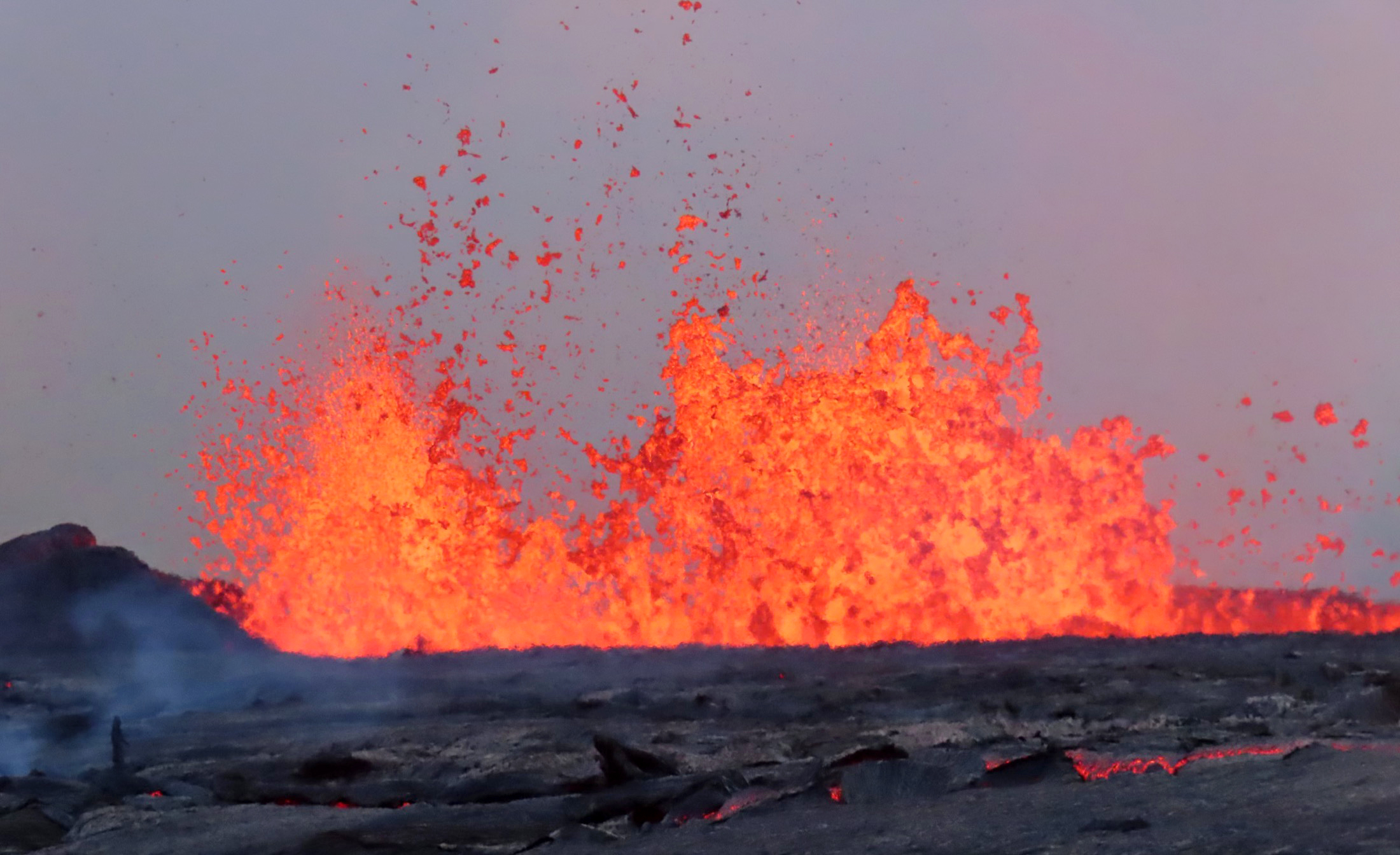
Molten lava is flowing from the crater of the Kilauea volcano on the island of Hawai‘i [1].
The activity is part of a prolonged period of instability that could lead to more significant geological events. Scientists monitor these flows to determine if a stronger eruption is imminent, which would pose greater risks to the surrounding landscape [5].
Kilauea has been in an intermittent eruptive phase since December 2024 [5]. This period of activity has seen varying levels of intensity, with recent footage showing lava creating what observers described as showers of gold [1]. The flows originate from the volcano's crater, moving across the terrain in molten streams [3].
Geological experts said the volcano's current state is characterized by these periodic bursts of activity. While some eruptions remain confined to the summit, the potential for lava to reach different areas remains a primary concern for local authorities [5].
The island of Hawai‘i continues to experience these volcanic events as the earth releases pressure through the crater [2]. Monitoring equipment tracks the movement of magma beneath the surface to provide early warnings for any sudden increases in activity [3].
This latest activity follows a pattern of instability that began late last year. The intermittent nature of the eruptions makes it difficult to predict exactly when the phase will end or when the next major event will occur [5].
“Lava is flowing from the crater of Kilauea volcano”
The sustained activity of Kilauea since late 2024 indicates a period of high volcanic unrest. Because the volcano is in an intermittent phase, the transition from small lava flows to a major eruptive event can happen quickly, requiring constant surveillance to protect infrastructure and public safety on the island of Hawai‘i.


