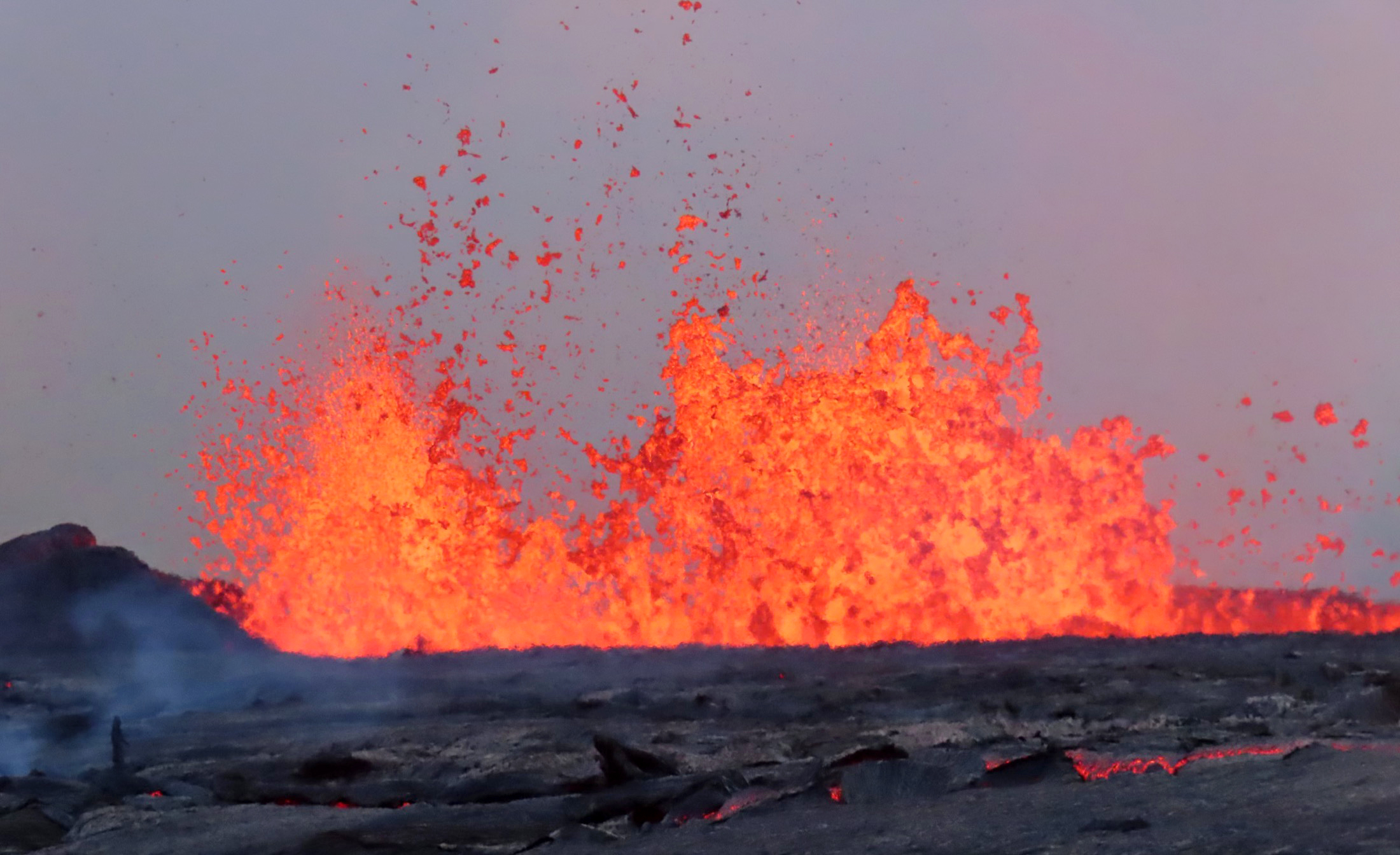
Researchers captured video of a rare whirlwind vortex forming over the Kilauea volcano in Hawaii [1, 2].
The footage provides a visual record of a complex atmospheric interaction during an eruption. Understanding these vortices helps scientists better model how volcanic heat affects local weather patterns, and air quality during active events.
The phenomenon occurred when intense heat from fresh lava caused hot air to rise rapidly [1, 2]. As this heated air ascended, it encountered cooler atmospheric layers above the volcano, creating the spinning vortex seen in the recording [1, 2].
This type of volcanic whirlwind is an uncommon sight, as it requires a specific balance of surface temperature and atmospheric stability. The resulting air show demonstrates the volatile energy present at the site of the eruption — a testament to the extreme temperatures of the lava flows.
Researchers observed the event as part of their ongoing monitoring of Kilauea's activity [1, 2]. While the vortex itself is a transient weather event, it highlights the immediate impact that geothermal heat has on the surrounding environment [1, 2].
The captured video serves as a critical data point for atmospheric researchers. By analyzing the structure and duration of the vortex, experts can gain insight into the thermal dynamics of the eruption site [1, 2].
“Researchers captured video of a rare whirlwind vortex forming over the Kilauea volcano.”
The occurrence of a volcanic vortex underscores the extreme thermal gradients created during eruptions. When lava heats the air to such an extent that it creates a localized whirlwind, it indicates a significant transfer of energy from the earth's interior to the atmosphere, which can influence the dispersal of volcanic ash and gases.