
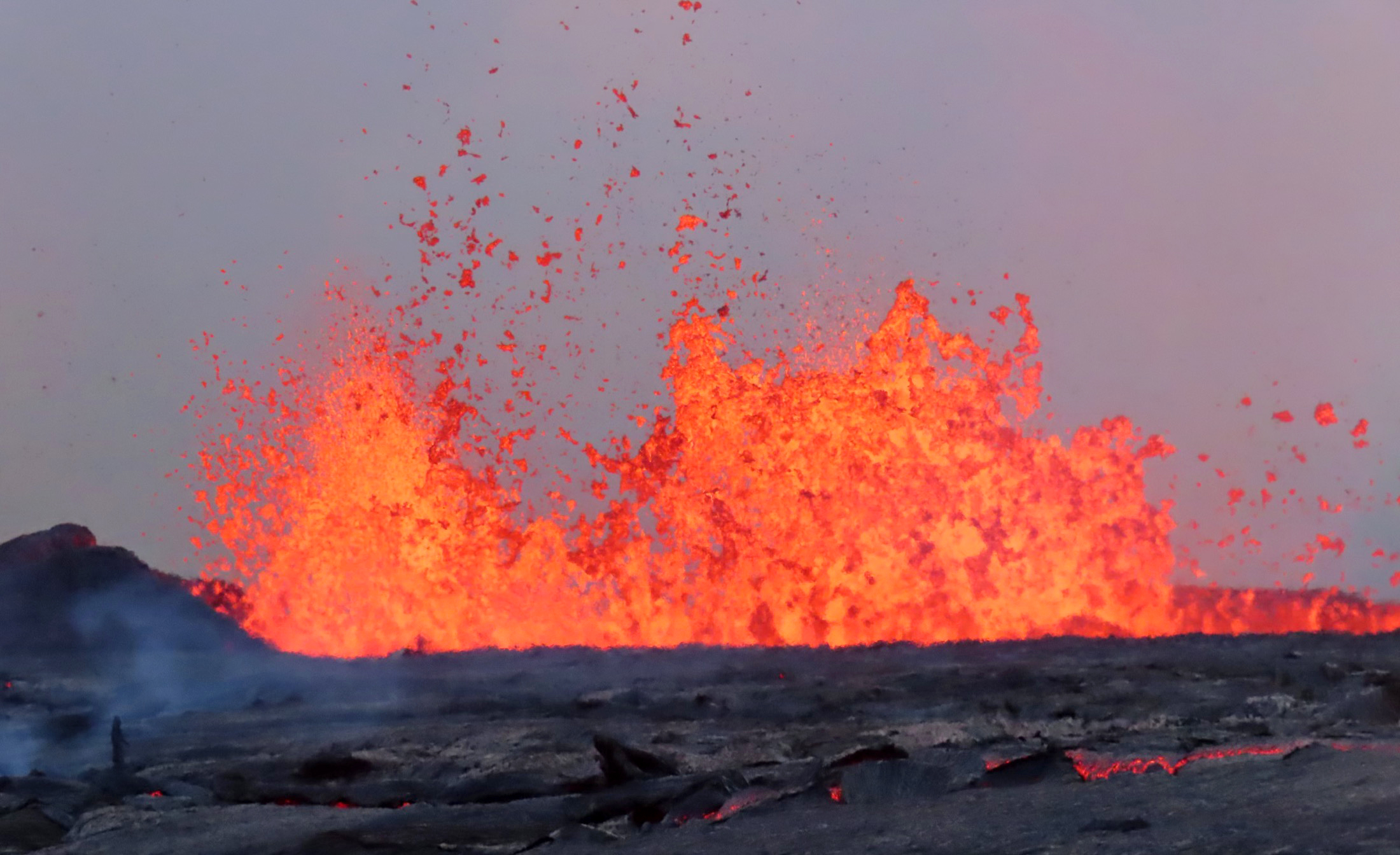
Scientists from the U.S. Geological Survey observed a small whirlwind forming over the Kilauea volcano in Hawaiʻi Volcanoes National Park [1].
The event highlights the extreme atmospheric instability created by volcanic activity, demonstrating how localized heat can trigger sudden weather phenomena.
The spinning column of air was captured on video by USGS cameras on Monday, June 1, 2026 [2]. Other reports indicate the whirlwind may have formed as early as May 31, 2026 [1]. The phenomenon occurred as the volcano continued its activity on the Big Island of Hawaii [1].
The USGS said the whirlwind was caused by intense heat from the lava [1]. This heat warmed the surface air, causing it to rise rapidly and draw in surrounding cooler air, which created the spinning column [1].
The current eruptive activity is part of a larger pattern of instability. The 46th eruptive episode began at 8:17 a.m. HST on June 1, 2026 [4]. This specific phase of activity follows a broader period of eruption that has been ongoing since December 2024 [3].
Monitoring teams said the eruption has lasted over two months as of early June 2026 [5]. The USGS continues to track the thermal effects of the lava flows and their impact on the immediate environment, including the formation of these rare atmospheric vortices [1].
“The whirlwind was caused by intense heat from the lava”
The formation of a volcanic whirlwind, or 'fire whirl,' indicates a high temperature gradient between the lava and the ambient air. This event serves as a visual marker of the energy being released during Kilauea's current eruptive cycle, providing scientists with data on how volcanic heat interacts with the local atmosphere to create localized weather systems.


