
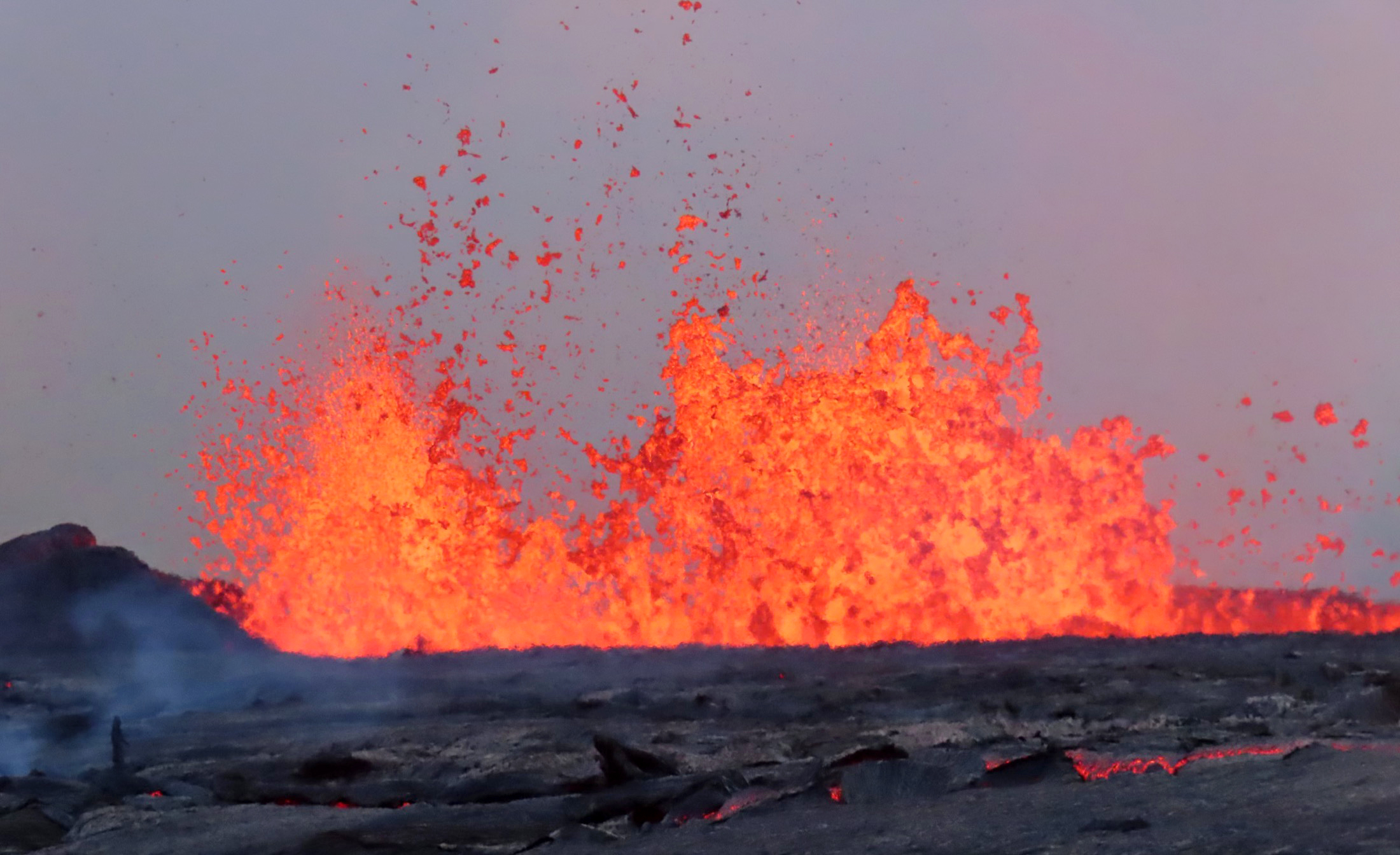
U.S. Geological Survey cameras captured a small whirlwind forming over the crater of the Kilauea volcano on June 1, 2025 [1].
The event highlights the volatile atmospheric conditions created by active volcanic vents, where extreme heat and gas emissions can trigger localized weather phenomena.
The vortex, which some reports describe as a "Tephra Devil" or tornado-like whirlwind [2], appeared over the summit of the volcano on the island of Hawai‘i [3]. These rare occurrences happen when intense heat from the crater causes air to rise rapidly, creating a spinning column of ash, gas, and hot material [4].
This atmospheric event occurred during a period of significant geological instability. Kilauea had erupted 25 times since December [5]. In related eruptive activity, lava heights were reported to reach over 330 feet [6].
The USGS monitoring system recorded the phenomenon, providing a visual record of how volcanic emissions interact with the surrounding air. While the whirlwind was small, its formation is a direct result of the ongoing eruptive cycle that has characterized the volcano's behavior over the last several months [4].
Such vortices are distinct from meteorological tornadoes, as they are driven by the thermal energy of the earth rather than large-scale storm systems. The combination of ash, and high-temperature gases provides the necessary material for the vortex to become visible to cameras [2].
“A small whirlwind, also described as a 'Tephra Devil,' formed over the crater of Kilauea volcano.”
The appearance of a Tephra Devil underscores the intense thermal gradients present during Kilauea's current eruptive phase. By documenting these vortices, scientists can better understand the transport of volcanic ash and gases into the atmosphere, which has implications for local air quality and aviation safety in the region.


