
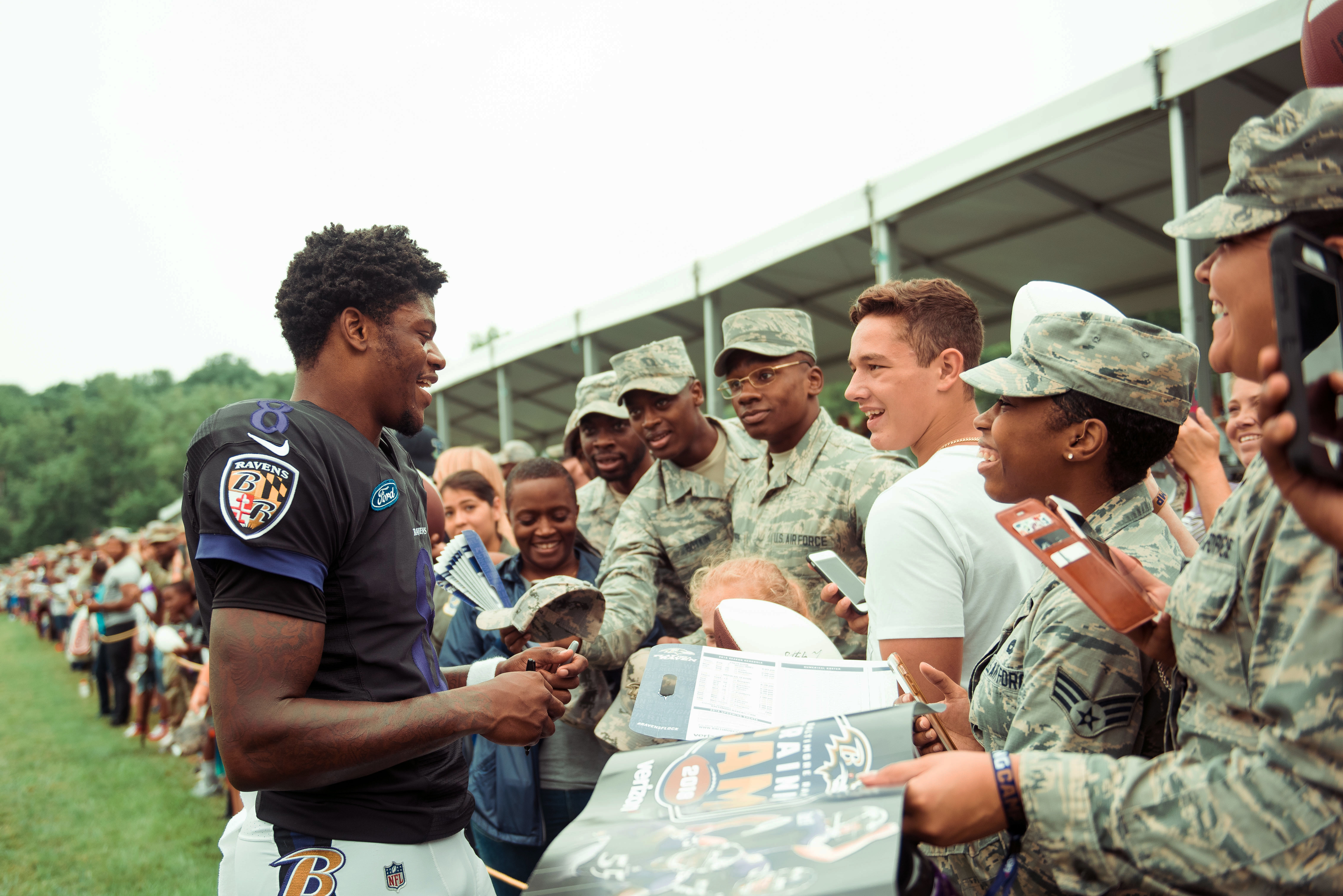
Lamar Jackson reported for organized team activities (OTAs) on May 28, 2026 [1], ending a notable offseason hiatus.
The return of the star quarterback comes at a critical juncture for the Baltimore Ravens. While Jackson is back on the field, the team faces a combination of unresolved financial negotiations and the pressure to translate regular-season success into a championship.
Contract discussions between Jackson and the Ravens have hit a standstill. Reports indicate that the two sides made no progress during extension talks held in February 2026 [3]. This lack of movement creates a tension between the team's long-term planning and the player's current status.
Despite the financial uncertainty, Jackson has expressed his commitment to the franchise. "My love for the Ravens has never wavered," Jackson said [2]. This public support provides some stability to a locker room preparing for a new offensive direction.
Optimism for the upcoming season is driven by a new offensive scheme under offensive coordinator Declan Doyle [5]. Some analysts argue that the current alignment of talent and coaching makes 2026 the definitive year for the Ravens to reach the summit [4].
However, not everyone shares this confidence. Analyst Michael Wilbon expressed reservations regarding the team's prospects, citing the stalled contract talks and Jackson's time away from the team during the spring. These factors contribute to a divide in how experts view the team's readiness for the postseason.
The Ravens are looking to overcome past playoff disappointments to reach the Super Bowl. The next championship game, Super Bowl LVIII, is scheduled for Feb. 11, 2026 [2].
Jackson's presence at OTAs on Thursday [1] allows the offense to begin integrating the new scheme with its primary playmaker. The ability of the Ravens to resolve the contract impasse, while maintaining on-field chemistry, will likely determine their trajectory this season.
“"My love for the Ravens has never wavered."”
The intersection of a new offensive scheme and a stalled contract creates a high-risk, high-reward scenario for Baltimore. If the team can resolve the financial dispute, they may possess the stability needed to challenge for a title. Conversely, a prolonged contract stalemate often leads to internal friction that can undermine a team's performance during the high-pressure environment of the NFL playoffs.


'%2F%3E%0A%20%20%20%20%3Crect%20width%3D'1600'%20height%3D'900'%20fill%3D'url(%23v)'%2F%3E%0A%20%20%20%20%3Cg%20opacity%3D'0.08'%20fill%3D'%23ffffff'%3E%0A%20%20%20%20%20%20%3Ccircle%20cx%3D'1420'%20cy%3D'180'%20r%3D'220'%2F%3E%0A%20%20%20%20%20%20%3Ccircle%20cx%3D'1500'%20cy%3D'760'%20r%3D'120'%2F%3E%0A%20%20%20%20%3C%2Fg%3E%0A%20%20%20%20%3Cline%20x1%3D'80'%20y1%3D'172'%20x2%3D'220'%20y2%3D'172'%20stroke%3D'%23ffffff'%20stroke-width%3D'3'%20stroke-opacity%3D'0.6'%2F%3E%0A%20%20%20%20%3Ctext%20x%3D'80'%20y%3D'140'%20font-family%3D'Inter%2C%20-apple-system%2C%20Helvetica%2C%20sans-serif'%20font-weight%3D'700'%20font-size%3D'28'%20fill%3D'%23ffffff'%20letter-spacing%3D'6'%3EHANNA%20%C2%B7%20NEWS%3C%2Ftext%3E%0A%20%20%20%20%3Ctext%20x%3D'80'%20y%3D'230'%20font-family%3D'Inter%2C%20-apple-system%2C%20Helvetica%2C%20sans-serif'%20font-weight%3D'600'%20font-size%3D'40'%20fill%3D'%23ffffffb3'%20letter-spacing%3D'4'%3ESPORTS%3C%2Ftext%3E%0A%20%20%20%20%3Ctext%20x%3D'80'%20y%3D'694'%20font-family%3D'Playfair%20Display%2C%20Georgia%2C%20serif'%20font-weight%3D'800'%20font-size%3D'110'%20fill%3D'%23ffffff'%20letter-spacing%3D'-1'%3ESong%20Yadong%20to%20Face%20Deiveson%3C%2Ftext%3E%3Ctext%20x%3D'80'%20y%3D'820'%20font-family%3D'Playfair%20Display%2C%20Georgia%2C%20serif'%20font-weight%3D'800'%20font-size%3D'110'%20fill%3D'%23ffffff'%20letter-spacing%3D'-1'%3EFigueiredo%20at%20UFC%20Macau%3C%2Ftext%3E%0A%20%20%20%20%3Ctext%20x%3D'80'%20y%3D'870'%20font-family%3D'Inter%2C%20-apple-system%2C%20Helvetica%2C%20sans-serif'%20font-weight%3D'500'%20font-size%3D'22'%20fill%3D'%23ffffff66'%20letter-spacing%3D'2'%3Enews.hanna-ai.com%3C%2Ftext%3E%0A%20%20%3C%2Fsvg%3E)