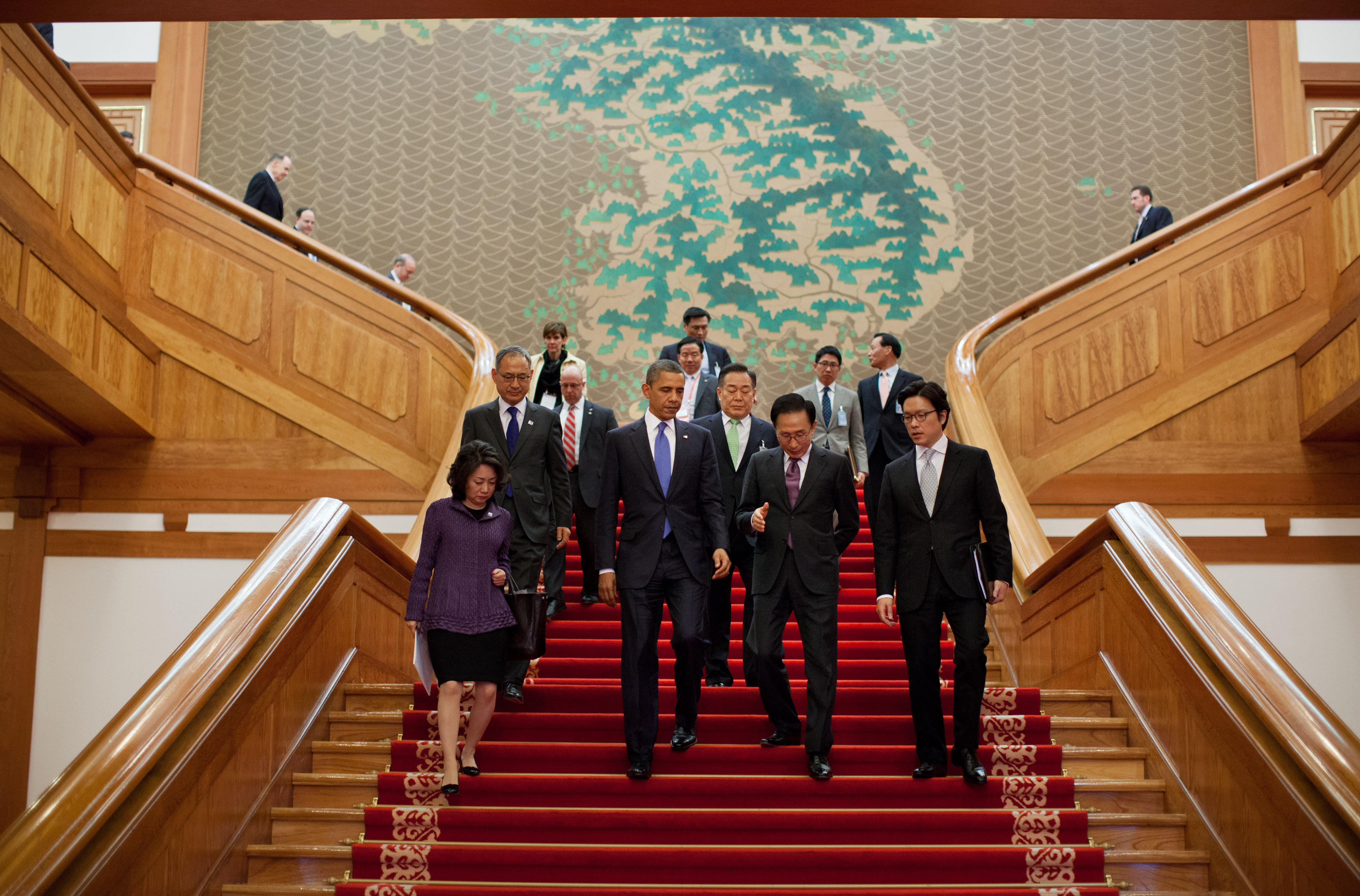
President Lee Jae Myung met with International Labour Organization Director-General Gilbert Houngbo at the Blue House on Friday to discuss labor policy [1].
The meeting comes as South Korea seeks to navigate the economic disruptions caused by the rapid integration of artificial intelligence into the workforce. Because AI technology is expected to significantly affect jobs, the administration is looking to international standards to protect workers while maintaining competitiveness [2].
During the discussions in Seoul, President Lee focused on the necessity of updating national labor frameworks to accommodate an AI-driven economy [1]. Lee said he hopes the ILO will play a major role in shaping these policies [2]. This collaboration aims to ensure that the transition to automated systems does not result in widespread instability, or the erosion of worker rights [1].
Director-General Houngbo provided guidance on how other nations are addressing the intersection of technology and employment. The ILO serves as a global benchmark for labor standards, and South Korea's effort to seek its advice suggests a desire for a policy approach that aligns with international norms [1].
President Lee and the ILO chief discussed the specific vulnerabilities of various sectors within the South Korean economy. The administration is particularly concerned with how AI will shift the demand for human labor, and which new skills will be required for the future workforce [2].
The Blue House meeting marks a strategic effort by the South Korean government to proactively address the social consequences of automation. By engaging with the ILO, the administration intends to build a labor policy that balances technological innovation with social security [1].
“President Lee hopes the ILO will play a major role in shaping labor policy.”
South Korea's decision to seek ILO guidance indicates that the government views AI-driven job displacement as a systemic risk rather than a simple industrial shift. By aligning national policy with an international body, Seoul is attempting to create a sustainable model for 'just transition' that prevents social unrest as automation replaces traditional roles.
'%2F%3E%0A%20%20%20%20%3Crect%20width%3D'1600'%20height%3D'900'%20fill%3D'url(%23v)'%2F%3E%0A%20%20%20%20%3Cg%20opacity%3D'0.08'%20fill%3D'%23ffffff'%3E%0A%20%20%20%20%20%20%3Ccircle%20cx%3D'1420'%20cy%3D'180'%20r%3D'220'%2F%3E%0A%20%20%20%20%20%20%3Ccircle%20cx%3D'1500'%20cy%3D'760'%20r%3D'120'%2F%3E%0A%20%20%20%20%3C%2Fg%3E%0A%20%20%20%20%3Cline%20x1%3D'80'%20y1%3D'172'%20x2%3D'220'%20y2%3D'172'%20stroke%3D'%23ffffff'%20stroke-width%3D'3'%20stroke-opacity%3D'0.6'%2F%3E%0A%20%20%20%20%3Ctext%20x%3D'80'%20y%3D'140'%20font-family%3D'Inter%2C%20-apple-system%2C%20Helvetica%2C%20sans-serif'%20font-weight%3D'700'%20font-size%3D'28'%20fill%3D'%23ffffff'%20letter-spacing%3D'6'%3EHANNA%20%C2%B7%20NEWS%3C%2Ftext%3E%0A%20%20%20%20%3Ctext%20x%3D'80'%20y%3D'230'%20font-family%3D'Inter%2C%20-apple-system%2C%20Helvetica%2C%20sans-serif'%20font-weight%3D'600'%20font-size%3D'40'%20fill%3D'%23ffffffb3'%20letter-spacing%3D'4'%3EWORLD%3C%2Ftext%3E%0A%20%20%20%20%3Ctext%20x%3D'80'%20y%3D'622'%20font-family%3D'Playfair%20Display%2C%20Georgia%2C%20serif'%20font-weight%3D'800'%20font-size%3D'86'%20fill%3D'%23ffffff'%20letter-spacing%3D'-1'%3EPM%20Modi%20Secures%20AUD%20500%3C%2Ftext%3E%3Ctext%20x%3D'80'%20y%3D'721'%20font-family%3D'Playfair%20Display%2C%20Georgia%2C%20serif'%20font-weight%3D'800'%20font-size%3D'86'%20fill%3D'%23ffffff'%20letter-spacing%3D'-1'%3EMillion%20Mineral%20Deals%20in%3C%2Ftext%3E%3Ctext%20x%3D'80'%20y%3D'820'%20font-family%3D'Playfair%20Display%2C%20Georgia%2C%20serif'%20font-weight%3D'800'%20font-size%3D'86'%20fill%3D'%23ffffff'%20letter-spacing%3D'-1'%3EAustralia%3C%2Ftext%3E%0A%20%20%20%20%3Ctext%20x%3D'80'%20y%3D'870'%20font-family%3D'Inter%2C%20-apple-system%2C%20Helvetica%2C%20sans-serif'%20font-weight%3D'500'%20font-size%3D'22'%20fill%3D'%23ffffff66'%20letter-spacing%3D'2'%3Enews.hanna-ai.com%3C%2Ftext%3E%0A%20%20%3C%2Fsvg%3E)

