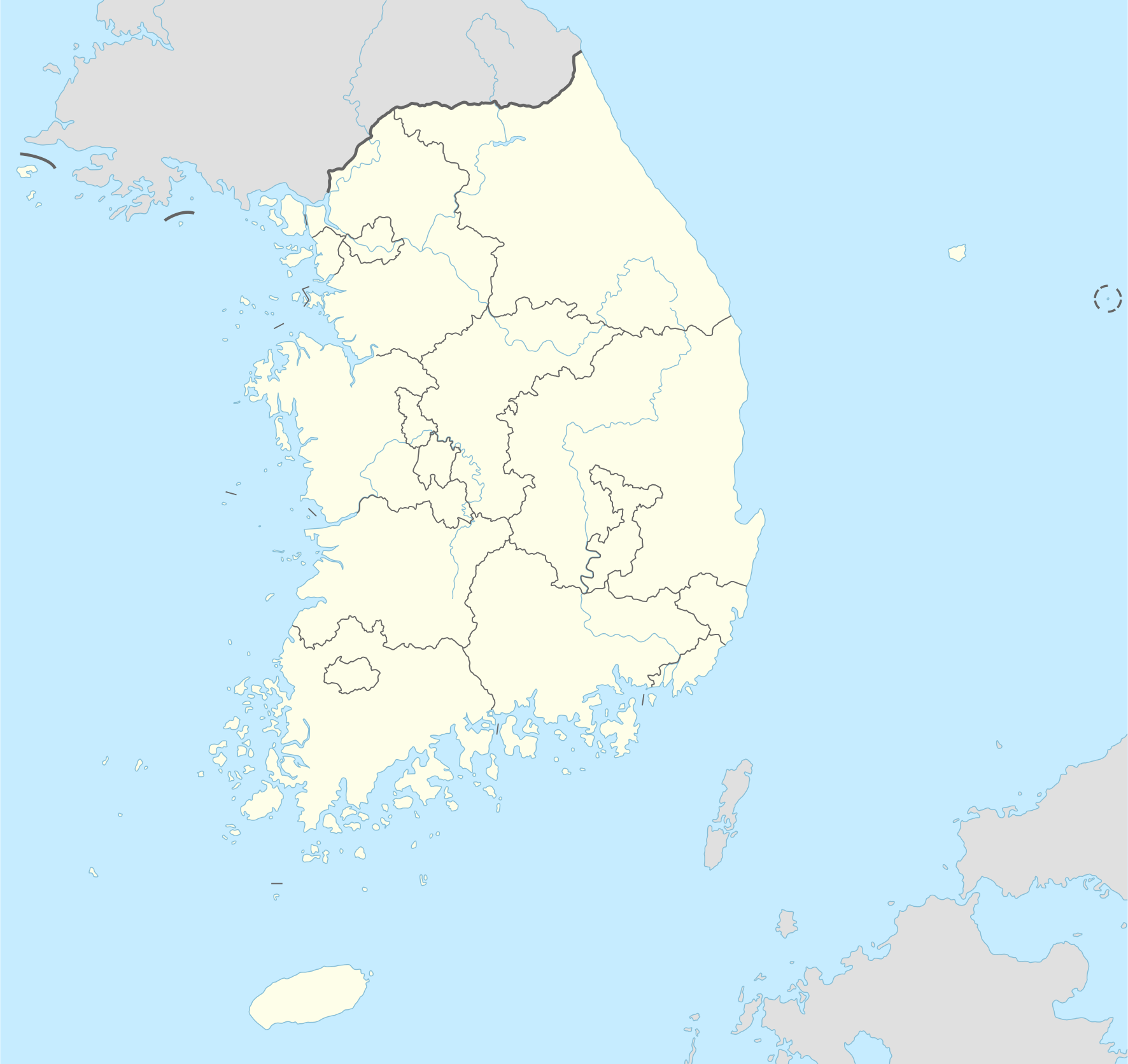
President Lee Jae-myung announced Tuesday that he will establish a presidential office in Sejong City during his term [1].
The move seeks to decentralize power from the capital region to address systemic issues involving housing, education, and youth challenges. Lee said that balanced regional development is the primary solution to these societal pressures [2].
Speaking at the Sejong Government Complex, Lee said that he intends to open the "Sejong office era" within his tenure and will hold his final cabinet meeting at the location [1]. This gathering marked the fourth cabinet meeting held at the Sejong complex since the current administration began [1].
Plans for the presidential office in Sejong indicate a move-in date of August 2029 [1]. Additionally, the National Assembly building in Sejong is scheduled for completion in 2033 [1].
During the meeting, Lee also addressed reports of discord among government ministries. He said claims that the administration is out of sync are refuted, framing inter-ministerial disagreements as a healthy part of governance.
"Debates and the exposure of differing views between ministries are a natural and democratic process of coordinating policy," Lee said [1].
As an example of these internal discussions, Lee noted a specific disagreement between the Ministry of Trade, Industry and Energy, and the Ministry of Employment and Labor regarding the implementation of the 52-hour work week [1]. He said such frictions are not failure, but the necessary work of policy refinement.
By shifting executive functions toward Sejong, the administration aims to signal a permanent move away from the concentration of authority in Seoul. The effort aligns with a broader long-term strategy to redistribute economic and political influence across the peninsula [2].
“"I will open the Sejong office era within my term and hold the final cabinet meeting here."”
The shift toward Sejong represents a strategic attempt to alleviate the extreme urban density and cost-of-living crises in Seoul. By physically relocating the presidency and the National Assembly, the administration is attempting to institutionalize regional balance, though the timeline—extending into 2033—suggests a gradual transition rather than an immediate overhaul of the state's power structure.