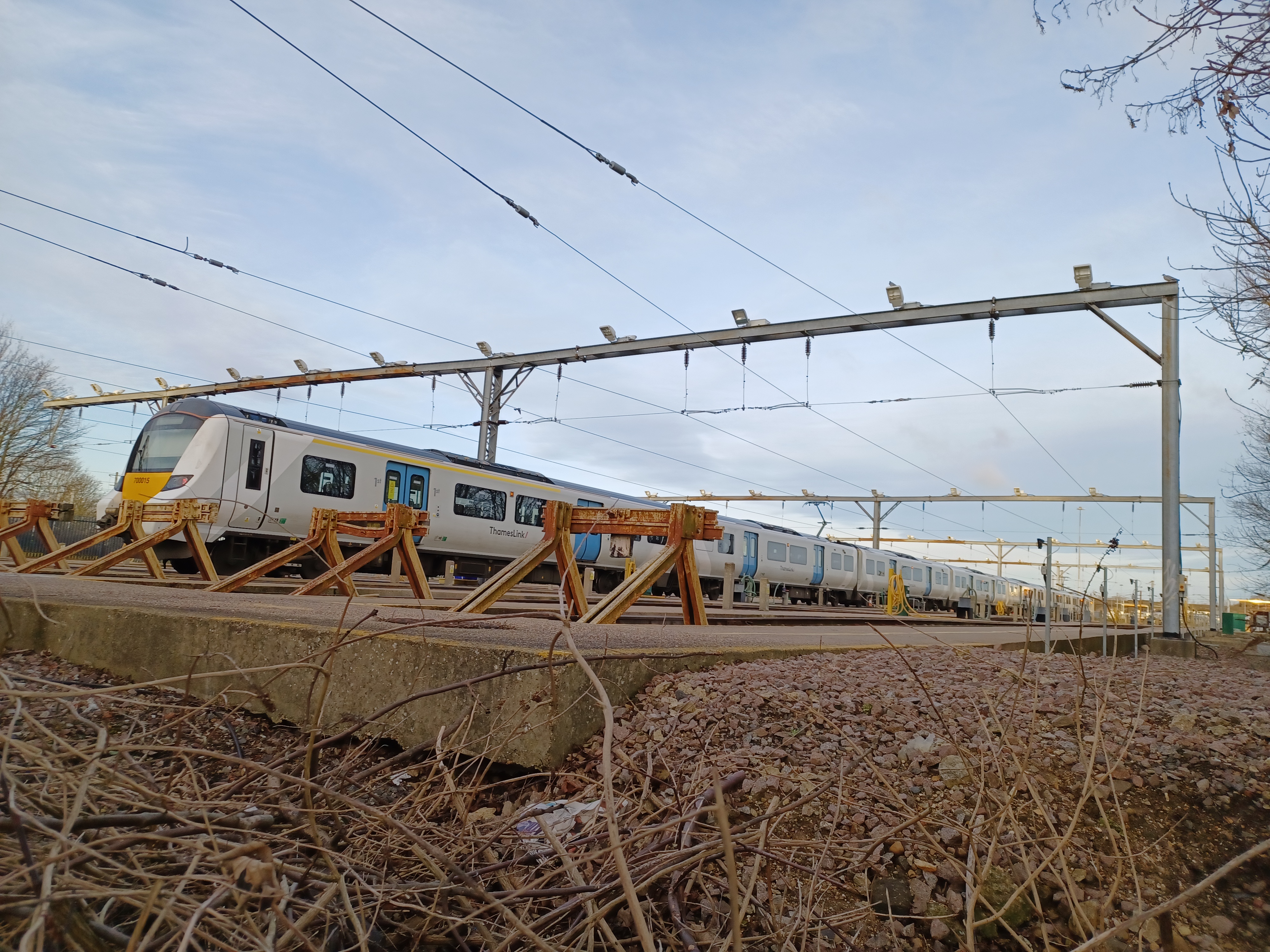
At least one person died after two passenger trains collided north of London on Friday afternoon [1].
The accident occurred June 19, 2026, near Bedford, England [1, 4]. This collision disrupts a critical rail corridor and raises immediate questions regarding safety protocols and signaling systems in the region.
Emergency services and British police responded to the scene to coordinate rescue efforts and transport the wounded to nearby hospitals. Officials said that one person died as a result of the crash [1].
Reports on the number of injuries vary among sources. Some officials said that dozens of people were injured [2], while other reports indicated the number of injured passengers reached nearly 100 [5].
The collision involved two passenger trains and caused significant damage to the carriages. Rescue teams worked through the afternoon to clear the wreckage and assist survivors, a process that delayed rail traffic across the area.
Authorities have not yet released a cause for the accident. Investigators are currently reviewing data from the trains and the rail network to determine how the two vessels ended up on the same track.
“At least one person died after two passenger trains collided north of London”
This incident highlights the potential for catastrophic failure in rail signaling or human error on high-traffic routes north of London. The discrepancy in injury counts suggests a chaotic initial scene, and the investigation will likely focus on whether technical malfunctions or operational lapses led to the collision.


![Text on a white background reads 'One inch equals 200 ft [1:2400]'.](https://upload.wikimedia.org/wikipedia/commons/b/bc/Downtown_Denver_-_city_of_Denver_downtown_business_area_-_the_Skyline_Urban_Renewal_District_-_DPLA_-_747fa553688f74968203a613d77bca73.jpg)