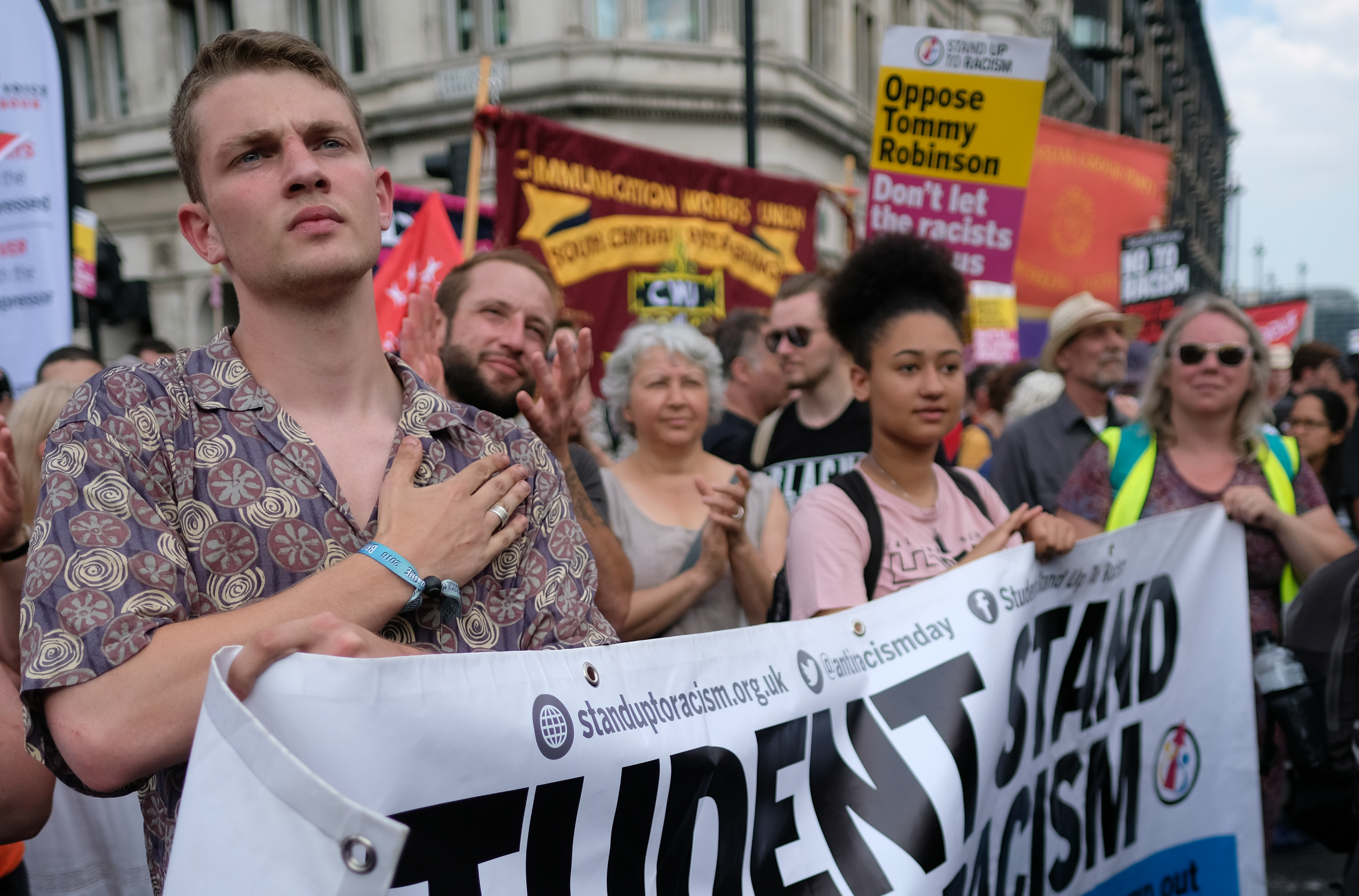
More than 4,000 police officers deployed to central London on Saturday to manage a far-right rally and a pro-Palestinian counter-demonstration [3].
The convergence of these opposing groups created a high risk of public disorder in the city center. Authorities focused on maintaining a physical divide between the participants to prevent violent clashes.
Far-right activist Tommy Robinson organized the rally to promote his political agenda [2]. Simultaneously, a separate group gathered for a counter-demonstration to mark Palestinian Nakba Day [2]. The Metropolitan Police Service coordinated the response to ensure the two movements did not collide.
Crowd size estimates varied significantly between organizers and law enforcement. Organizers claimed that 500,000 people marched in London [4]. However, the Metropolitan Police estimated the attendance was closer to 50,000 [4], [5]. Other reports described the gathering as consisting of tens of thousands of people [1], [6].
Police maintained a heavy presence throughout the day to secure the streets of central London [4]. The deployment of more than 4,000 officers [3] was intended to mitigate the volatility of the rival protests. Despite the opposing motivations of the groups, police focused on containing the crowds within designated areas to ensure public safety.
“More than 4,000 police officers deployed to central London”
The overlap of a far-right mobilization and a Nakba Day protest highlights the volatility of urban spaces when opposing ideological movements synchronize their activities. The stark discrepancy in attendance figures between organizers and police reflects a common trend in political demonstrations where crowd size is used as a tool for perceived legitimacy and influence.


