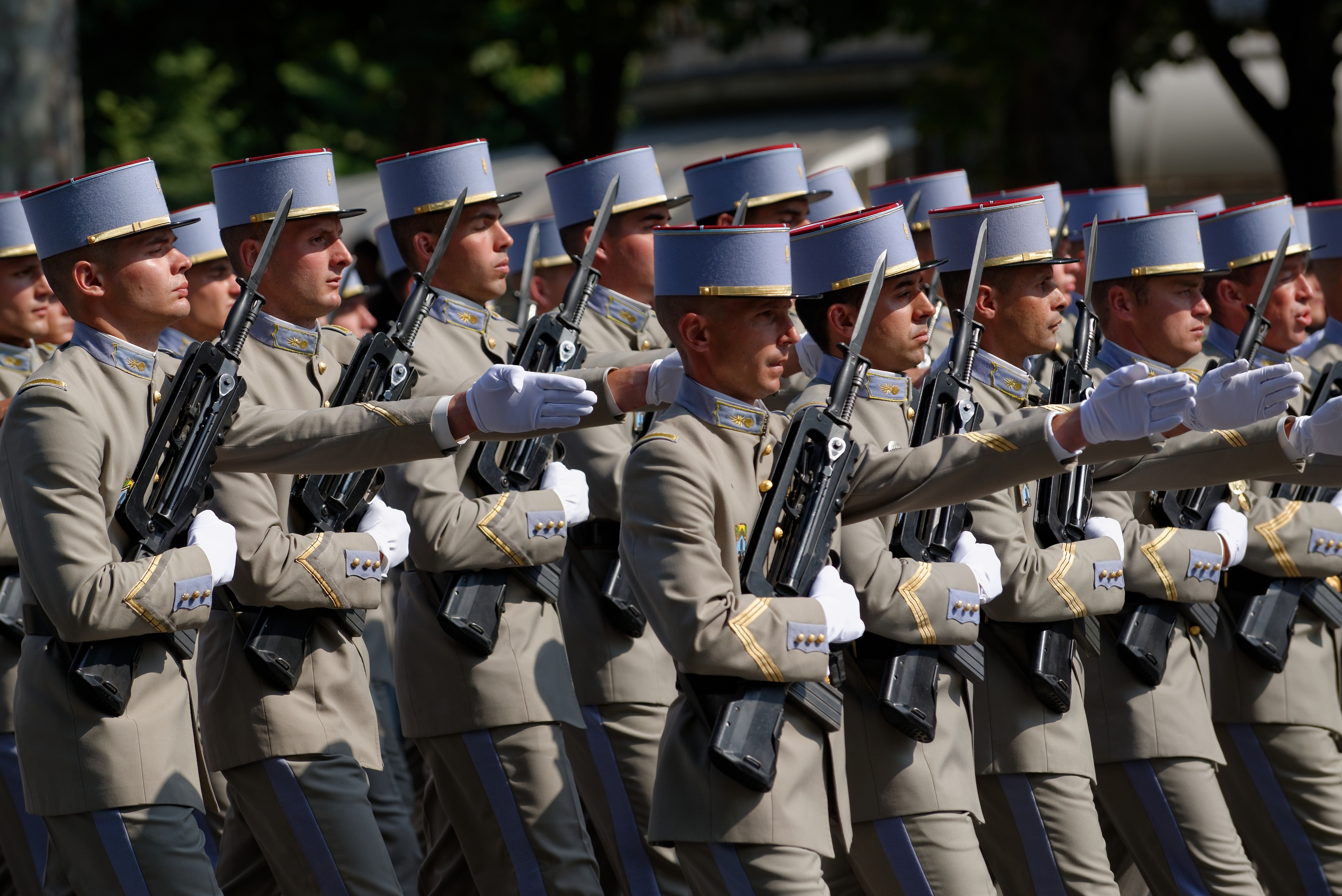
President Emmanuel Macron presided over the largest Bastille Day military parade ever held on the Champs-Élysées on Tuesday, July 14, 2026 [1].
The scale of the event serves as a public demonstration of France's military capabilities during a period of heightened global instability. By showcasing expanded hardware and personnel, the administration aims to signal strategic autonomy and readiness to both allies and adversaries.
The parade took place amid persistent regional and international tensions, including the ongoing war in Ukraine and various conflicts across the Middle East [1]. These geopolitical pressures have driven a shift in French national security priorities, leading to a focused effort to modernize the armed forces.
Central to this military renaissance is a significant financial commitment from the government. France's defense budget has been doubled [1] to support the acquisition of new technology and the expansion of troop capabilities.
The event on the Champs-Élysées was designed to highlight the results of these investments. The presence of advanced military equipment and a larger contingent of forces reflects the state's objective to maintain a leading role in European security architecture [1].
Macron's leadership of the ceremony underscores the link between national identity and military strength. The Bastille Day celebrations, which commemorate the French Revolution, were used this year to emphasize the necessity of a strong defense in an unpredictable global environment [1].
“the biggest parade ever held on the Champs‑Élysées”
The unprecedented scale of the 2026 parade and the doubling of the defense budget indicate that France is pivoting toward a more aggressive posture of strategic autonomy. By prioritizing military expansion amid conflicts in Ukraine and the Middle East, Macron is positioning France as the primary security guarantor in Europe, reducing reliance on external partners while signaling a readiness for high-intensity conflict.