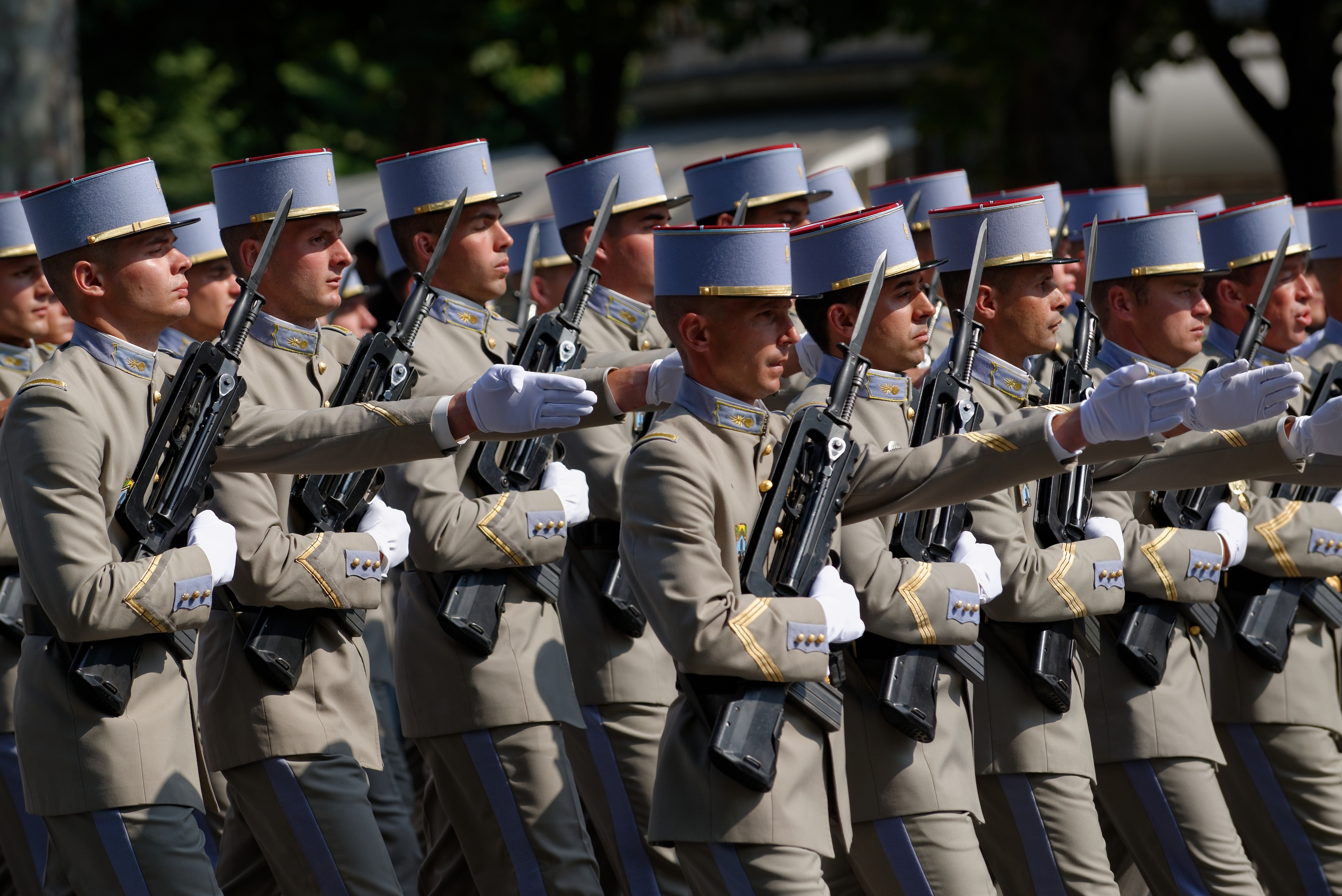
President Emmanuel Macron presided over his final Bastille Day parade in Paris on July 14, featuring a heavy emphasis on European solidarity with Ukraine.
The event served as a high-profile demonstration of military and political cohesion among Western allies during Russia's ongoing invasion of Ukraine. By centering the parade on this alliance, the French government signaled a continued commitment to Kyiv's defense as Macron concludes his presidency.
Marches along the Champs-Élysées included about 500 pro-Ukraine troops [2]. The display of force was complemented by a flyover of warplanes representing 11 different European countries [3]. These participants joined French forces to project a unified front against regional aggression.
Macron hosted around 30 foreign leaders during the celebrations [1]. The guest list reflected the strategic importance of the day, turning a national holiday into a diplomatic summit on European security. The presence of these leaders underscored the collective nature of the support for Ukrainian sovereignty.
This year's ceremony differed from previous iterations by shifting the focus from purely national pride to a broader continental defense strategy. The inclusion of European troops and co-pilots highlighted the integration of military assets across the bloc.
The parade concluded as a symbolic bookend to Macron's tenure as president. The alignment of military hardware and international leadership on the streets of Paris served as a final statement on his foreign policy legacy regarding the conflict in Eastern Europe.
“Macron presided over his final Bastille Day parade in Paris on July 14”
The integration of foreign troops and aircraft into the Bastille Day parade transforms a traditional French nationalist celebration into a geopolitical tool. By utilizing his final presidential appearance to highlight the presence of 11 nations' aircraft and hundreds of pro-Ukraine troops, Macron is attempting to institutionalize European military solidarity beyond his own term in office.


