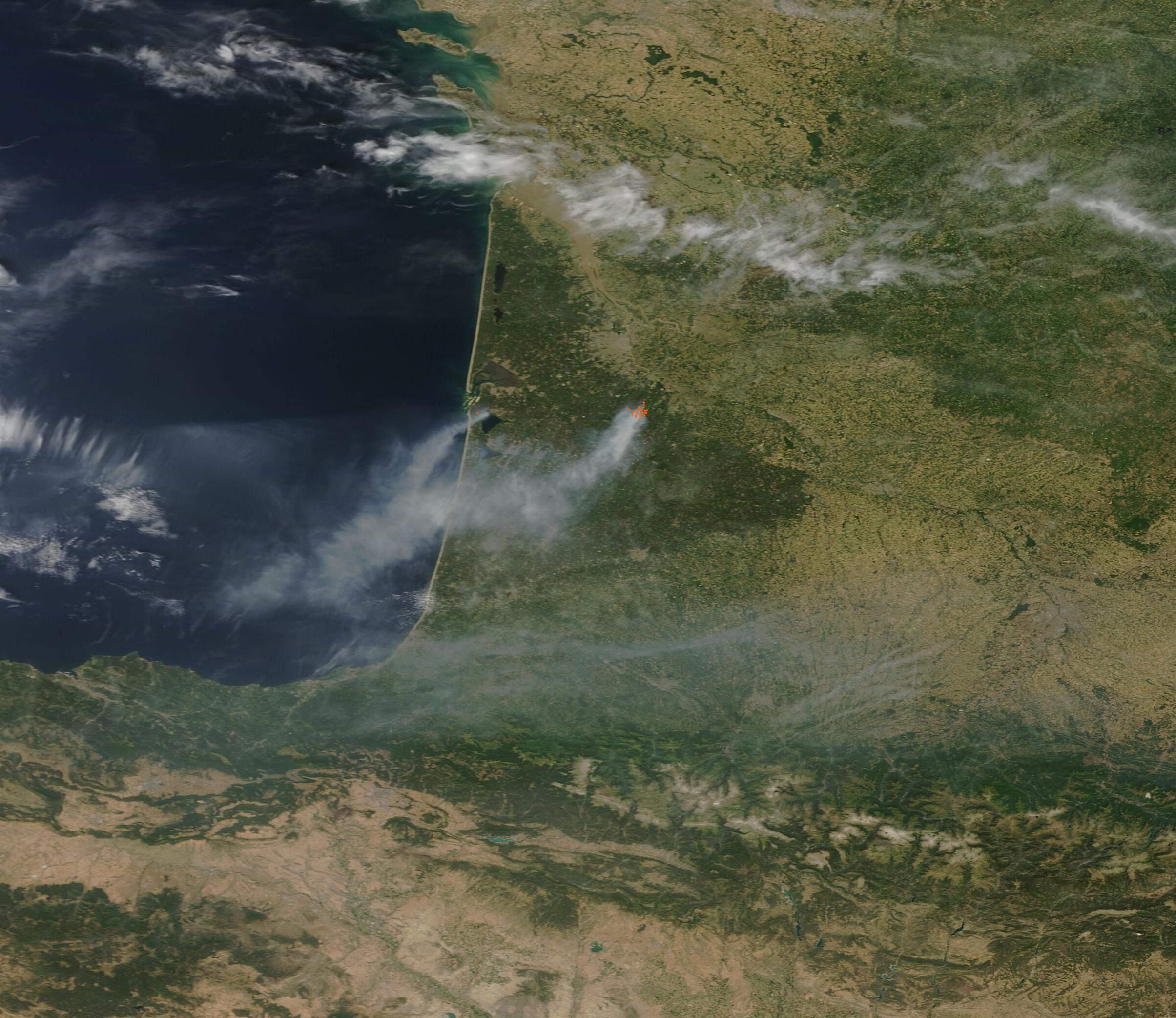
President Emmanuel Macron will chair an interministerial crisis cell on Monday, July 27, to coordinate the response to wildfires in southwestern France [1].
The emergency meeting is a response to the scale of the destruction and the massive displacement of civilians. With tens of thousands of hectares burned, the French government is shifting to a high-level national coordination effort to manage resources and safety.
Macron is scheduled to lead the meeting at 10:00 CET from the Ministry of the Interior in Paris [3]. The fires have devastated the region, with reports indicating that 42,000 hectares have burned across Gironde and Landes [1]. Earlier reports from July 24 had estimated lower figures of 8,700 hectares in Gironde and 2,500 hectares in Landes [6, 7], but the total area affected has grown significantly as the crisis progressed.
The human impact has been severe. Approximately 220,000 people have been evacuated in Gironde [2]. The situation remains volatile, with an additional 55,000 evacuations reported on July 26 [4].
On the ground, emergency services are working to stabilize the perimeter. A total of 3,600 reinforced firefighters have been deployed to combat the blazes [8]. Despite these efforts, the Prefect of Gironde warned that the situation remains precarious. "Le feu est contenu mais pas fixé," the prefect said, noting that while the fire is contained, it is not yet extinguished [5].
Local authorities have maintained a strict safety perimeter to prevent casualties. The Prefect of Gironde said there would be no return for those evacuated in the region [9]. The crisis cell meeting on Monday will focus on the deployment of national resources and the strategic management of the ongoing disaster.
“Le feu est contenu mais pas fixé”
The escalation to an interministerial crisis cell led by the president indicates that the wildfires have surpassed the capacity of regional authorities to manage. By centralizing the response at the Ministry of the Interior, the French government is treating the blazes as a national security priority, likely to ensure that military and civil resources are synchronized to prevent further loss of life and land.