
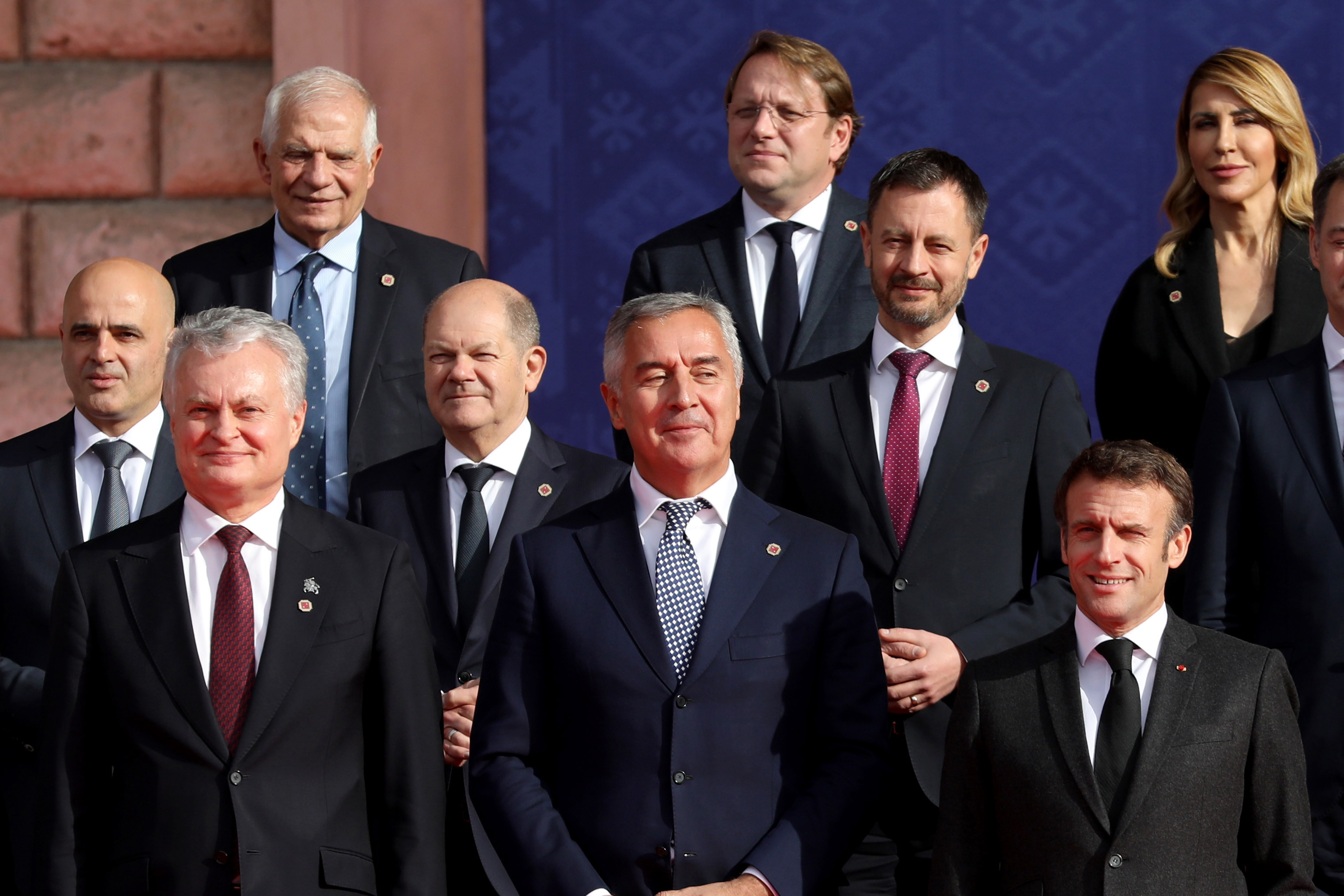
French President Emmanuel Macron and German Finance Minister Friedrich Merz met Serbian President Aleksandar Vučić in Belgrade on June 3, 2026 [1].
The meeting serves as a critical coordination effort to align the interests of the European Union's two largest economies with Serbian leadership. This diplomatic push aims to establish a unified roadmap for the gradual integration of six Western Balkan countries into the EU [1].
The talks occurred just days before the Western Balkans summit, which is scheduled to take place from June 7 to June 9, 2026 [1]. This upcoming summit in Montenegro will be the primary venue for formalizing the accession strategies discussed during the bilateral meetings in Serbia.
Macron emphasized the importance of regional stability and cooperation during the discussions. "We are committed to a path of integration for the Western Balkans and will work closely with our partners in the region," Macron said [1].
Germany's approach focuses on the necessity of internal policy changes within the candidate nations. Friedrich Merz highlighted the role of institutional updates in the process. "Germany stands ready to support Serbia’s reform agenda as part of the EU enlargement process," Merz said [1].
The gradual integration plan is designed to provide candidate nations with incremental benefits and access to EU markets as they meet specific milestones. By coordinating in Belgrade, France and Germany intend to present a cohesive front to the other Balkan nations, ensuring that the requirements for membership are clear and consistent before the Montenegro summit begins.
“"We are committed to a path of integration for the Western Balkans."”
The coordination between Paris, Berlin, and Belgrade suggests a shift toward a more structured, incremental approach to EU enlargement. By focusing on a 'gradual integration' model rather than a binary 'in or out' status, the EU seeks to incentivize reforms in the Western Balkans while maintaining strict standards for full membership, potentially reducing the political risk of rapid expansion.


