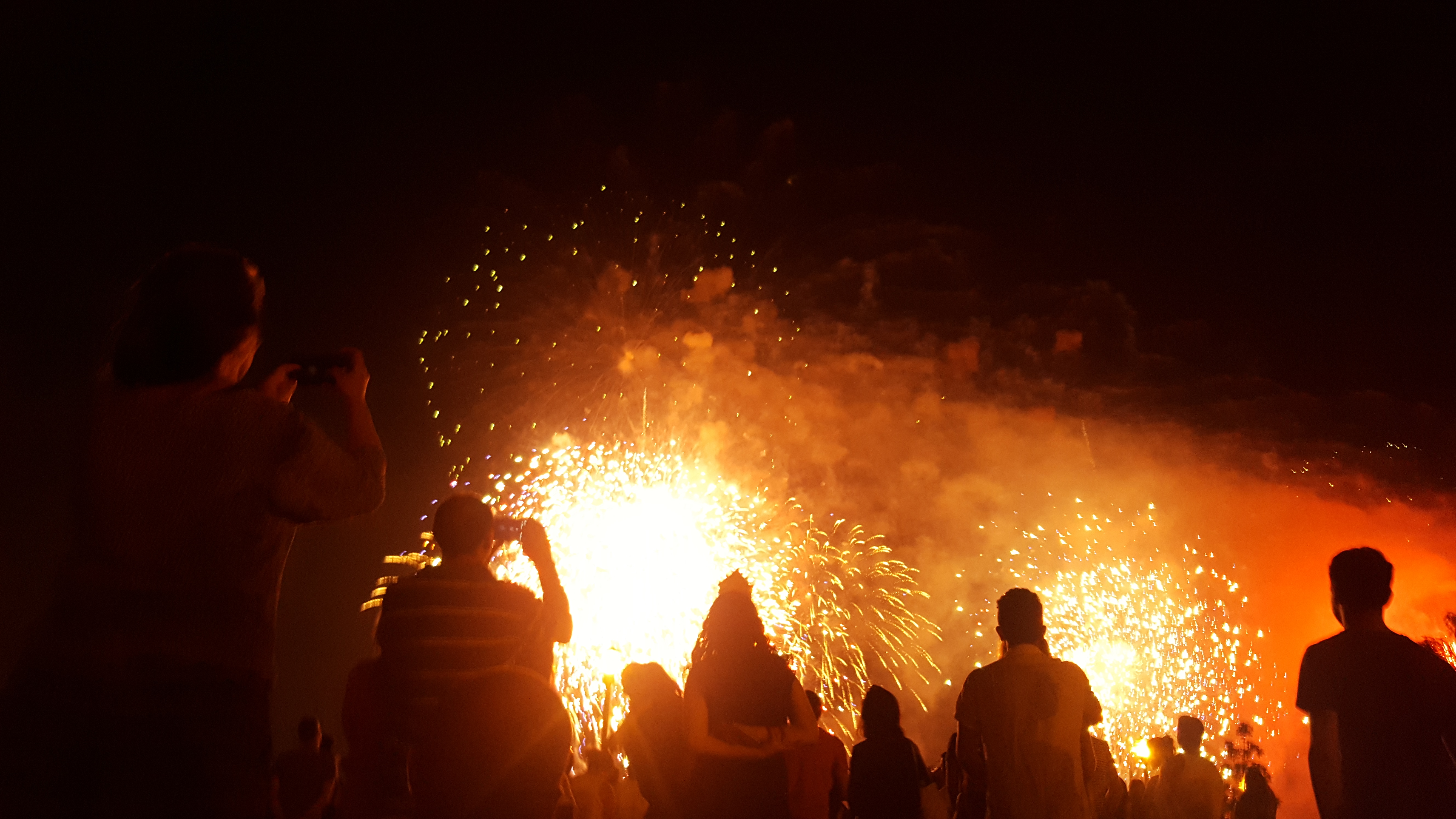
Macy's hosted its 50th annual Fourth of July fireworks display over New York City on Saturday night, July 4, 2026 [1, 2].
The event served as a primary celebration for the 250th anniversary of the United States' independence [1, 4]. Because this milestone coincides with the golden anniversary of the fireworks tradition, the scale of the production was expanded to reflect the historic nature of the semiquincentennial.
Spectators gathered throughout the city to watch the display, which launched from both the Hudson and East Rivers [2, 5]. MSN Travel said thousands of spectators decked out in red, white, and blue gathered across the Big Apple to watch the show.
The production utilized a massive array of pyrotechnics to fill the skyline. Rolling Stone said the show featured more than 30 different colors and patterns and 20,000 effects [3]. This variety was intended to make the 2026 event the most ambitious fireworks display in the history of the Macy's tradition [3]. Other reports noted the use of 85 fireworks in part of the launch sequence [6].
In addition to the visual spectacle, the event included a high-profile musical lineup. MSN Entertainment said the show featured performances from Post Malone and Blake Shelton [7]. These artists performed as part of the 50th anniversary celebration, blending live music with the coordinated pyrotechnic bursts.
The event combined the city's most famous waterways to create a panoramic view for crowds on both sides of Manhattan. The coordination of the Hudson and East River launches allowed the display to be visible from a wider range of vantage points across the city [5, 6].
“Over 30 different colors and patterns and 20,000 effects will bring to life what promises to be Macy's' most ambitious fireworks display to date.”
The alignment of the U.S. 250th anniversary with the 50th anniversary of the Macy's fireworks show creates a rare cultural intersection. By expanding the launch sites to both the Hudson and East Rivers and increasing the volume of pyrotechnic effects, the organizers shifted the event from a standard annual holiday celebration to a national historical landmark event.


