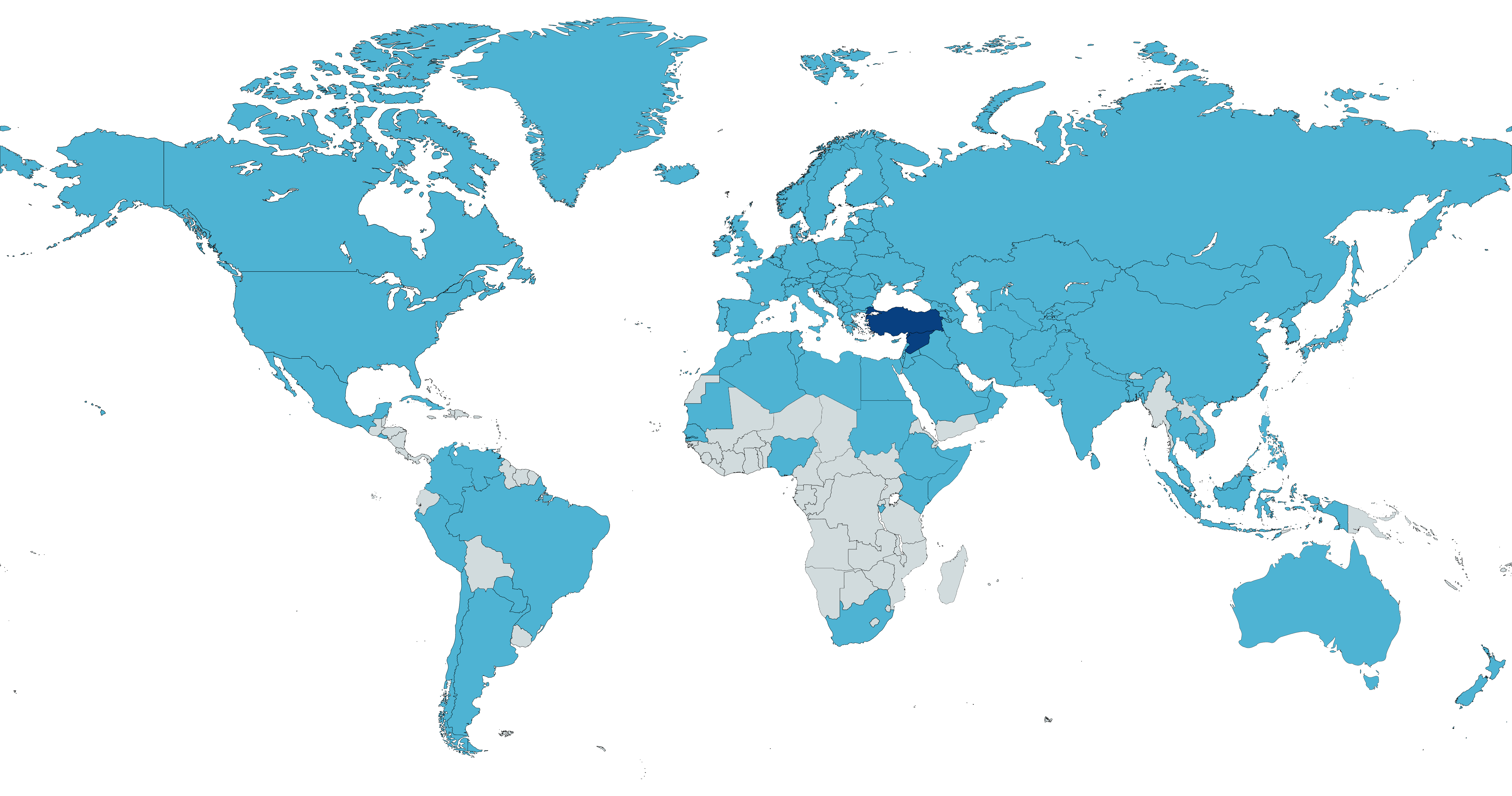
A magnitude 5.6 earthquake struck the Battalgazi district of Malatya Province, Turkey, at 9 a.m. local time this Wednesday [1].
The event occurred in a region with a history of significant seismic activity, raising immediate concerns regarding structural integrity and public safety in the province.
According to reports from NTV, the quake was centered in the Battalgazi district [1]. While the tremors were felt across the region and in neighboring provinces, officials said there were no immediate negative reports regarding casualties or significant infrastructure damage [1].
The magnitude of the quake was recorded at 5.6 [1], a level capable of causing noticeable shaking and potential distress to residents. Local authorities monitored the situation following the 9 a.m. strike to ensure the safety of the population [1].
Tectonic activity along regional fault lines is the general cause for such events in this part of Turkey [1]. The lack of immediate damage reports suggests that existing building codes, or the specific nature of the tremor, may have mitigated the impact on the Battalgazi district [1].
Emergency services remained on alert as the region stabilized. The event serves as a reminder of the ongoing volatility of the fault systems that intersect the Anatolian peninsula, a geography prone to frequent and often powerful seismic shifts.
“A magnitude 5.6 earthquake struck the Battalgazi district of Malatya Province”
This event underscores the persistent seismic risk in eastern Turkey. While the lack of immediate casualties is positive, a magnitude 5.6 quake is strong enough to compromise weakened structures, particularly in areas still recovering from previous seismic events. The situation highlights the critical importance of strict adherence to earthquake-resistant building codes in the Anatolian region.


