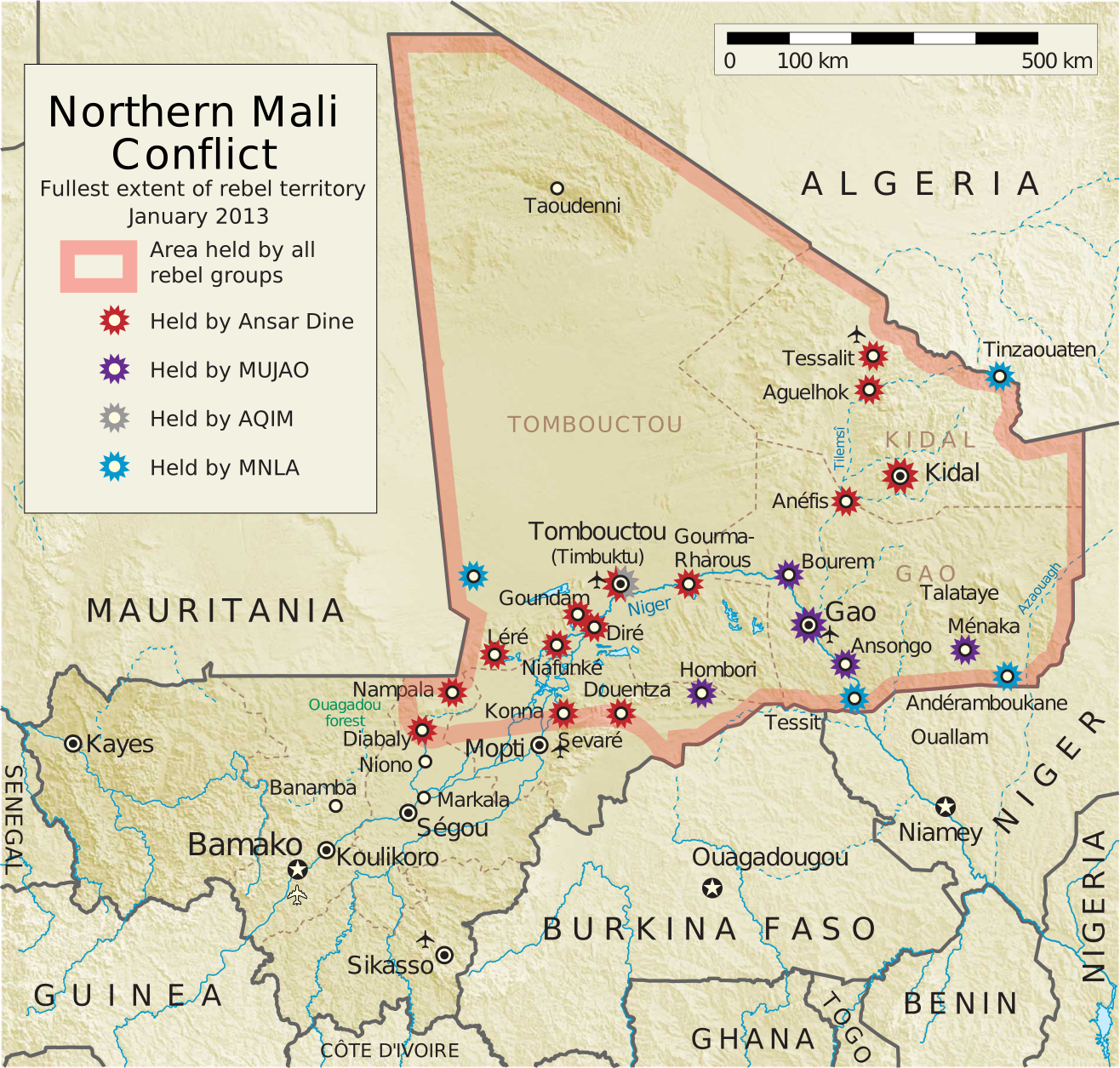
Militants linked to the Azawad Liberation Front and Al Qaeda-affiliated groups seized the northern Malian town of Tessalit on April 25, 2024 [1].
This escalation signals a significant shift in territorial control and a direct challenge to the stability of the military-led government in Bamako. The coordinated nature of the attacks suggests a strategic alignment between separatist rebels and global jihadist networks.
Insurgents from the Jama'at Nusrat al-Islam wal-Muslimin group established checkpoints around the capital city of Bamako [1]. These fighters called on Malians to rise up against the current government to impose Sharia law [1].
Rebels said they captured Tessalit after the Malian army and its Russian allies withdrew from the area [1]. The seizure of the northern town occurred as part of a broader series of coordinated attacks across the country [1].
The Azawad Liberation Front and the Al Qaeda-affiliated group have targeted military installations to weaken the state's grip on the northern regions. By establishing checkpoints near the capital, the militants have demonstrated an ability to project power beyond their traditional strongholds in the north.
The military government has faced increasing pressure as these groups seek to overthrow the administration. The withdrawal of government and Russian forces from Tessalit indicates a vulnerability in the state's defensive perimeter, a gap the militants have quickly exploited to consolidate control.
“Militants linked to the Azawad Liberation Front and Al Qaeda-affiliated groups seized the northern Malian town of Tessalit”
The simultaneous capture of a northern hub and the encirclement of the capital suggest a coordinated effort to destabilize the Malian state. The withdrawal of Russian allies from Tessalit may indicate a shift in the effectiveness of foreign military support, potentially emboldening Al Qaeda-linked groups to push for a total government collapse and the implementation of a religious legal system.
'%2F%3E%0A%20%20%20%20%3Crect%20width%3D'1600'%20height%3D'900'%20fill%3D'url(%23v)'%2F%3E%0A%20%20%20%20%3Cg%20opacity%3D'0.08'%20fill%3D'%23ffffff'%3E%0A%20%20%20%20%20%20%3Ccircle%20cx%3D'1420'%20cy%3D'180'%20r%3D'220'%2F%3E%0A%20%20%20%20%20%20%3Ccircle%20cx%3D'1500'%20cy%3D'760'%20r%3D'120'%2F%3E%0A%20%20%20%20%3C%2Fg%3E%0A%20%20%20%20%3Cline%20x1%3D'80'%20y1%3D'172'%20x2%3D'220'%20y2%3D'172'%20stroke%3D'%23ffffff'%20stroke-width%3D'3'%20stroke-opacity%3D'0.6'%2F%3E%0A%20%20%20%20%3Ctext%20x%3D'80'%20y%3D'140'%20font-family%3D'Inter%2C%20-apple-system%2C%20Helvetica%2C%20sans-serif'%20font-weight%3D'700'%20font-size%3D'28'%20fill%3D'%23ffffff'%20letter-spacing%3D'6'%3EHANNA%20%C2%B7%20NEWS%3C%2Ftext%3E%0A%20%20%20%20%3Ctext%20x%3D'80'%20y%3D'230'%20font-family%3D'Inter%2C%20-apple-system%2C%20Helvetica%2C%20sans-serif'%20font-weight%3D'600'%20font-size%3D'40'%20fill%3D'%23ffffffb3'%20letter-spacing%3D'4'%3EBUSINESS%3C%2Ftext%3E%0A%20%20%20%20%3Ctext%20x%3D'80'%20y%3D'694'%20font-family%3D'Playfair%20Display%2C%20Georgia%2C%20serif'%20font-weight%3D'800'%20font-size%3D'110'%20fill%3D'%23ffffff'%20letter-spacing%3D'-1'%3ETata%20Motors%20Launches%20Sierra%3C%2Ftext%3E%3Ctext%20x%3D'80'%20y%3D'820'%20font-family%3D'Playfair%20Display%2C%20Georgia%2C%20serif'%20font-weight%3D'800'%20font-size%3D'110'%20fill%3D'%23ffffff'%20letter-spacing%3D'-1'%3EEV%20in%20India%3C%2Ftext%3E%0A%20%20%20%20%3Ctext%20x%3D'80'%20y%3D'870'%20font-family%3D'Inter%2C%20-apple-system%2C%20Helvetica%2C%20sans-serif'%20font-weight%3D'500'%20font-size%3D'22'%20fill%3D'%23ffffff66'%20letter-spacing%3D'2'%3Enews.hanna-ai.com%3C%2Ftext%3E%0A%20%20%3C%2Fsvg%3E)

