
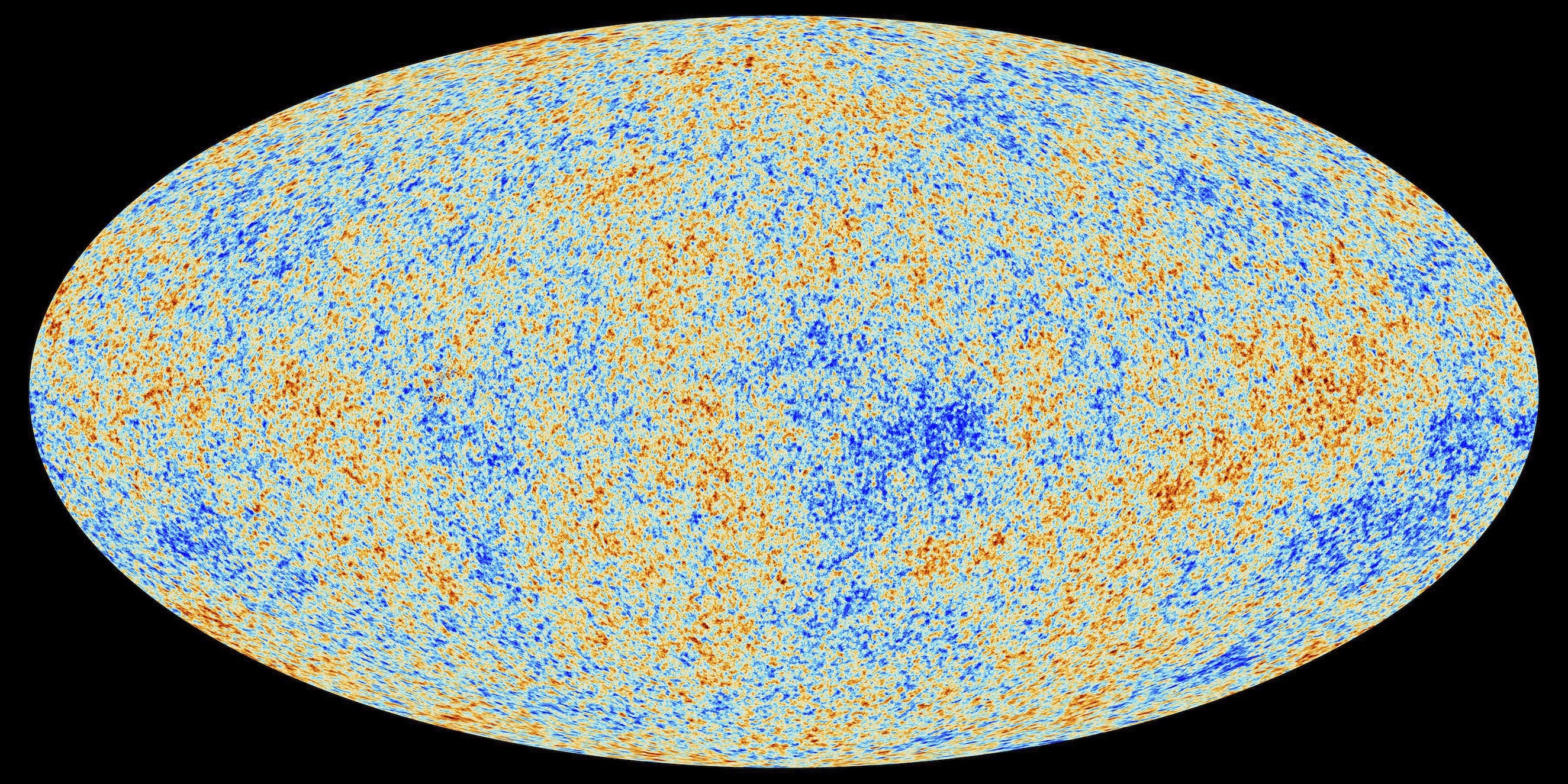
Scientists have detected a massive cloud of gas roughly three billion light-years in diameter [1].
The discovery is significant because the scale of the structure contradicts standard cosmological models. These models predict that formations of this magnitude should not exist at that specific epoch of the universe's history.
The gas cloud is located approximately seven billion light-years from Earth [2]. Its presence in deep space suggests a gap in the current understanding of how matter distributed itself during the early stages of cosmic expansion.
Standard cosmology relies on the principle that the universe is homogeneous and isotropic on a large enough scale. This means that while small-scale clusters of galaxies exist, the overall distribution of matter should be relatively uniform across the void. A structure spanning three billion light-years [1] challenges the assumption that no single object can exceed a certain size limit.
Researchers are now examining how such a massive accumulation of gas could have formed. The discovery suggests that gravity or other unknown forces may have operated differently than previously theorized, or that the timeline for structure formation in the early universe is inaccurate.
Because the cloud is located seven billion light-years away [2], astronomers are viewing the structure as it existed billions of years ago. This temporal window provides a direct look at the early universe, making the anomaly a critical piece of evidence for those seeking to refine the laws of physics and cosmology.
“The structure appears to contradict standard cosmological models”
This discovery indicates a potential flaw in the Cosmological Principle, the foundational assumption that the universe is uniform on a large scale. If structures of this size are common, scientists may need to rewrite the models governing how the first galaxies and superclusters formed, potentially altering our understanding of dark matter and the expansion of the universe.


