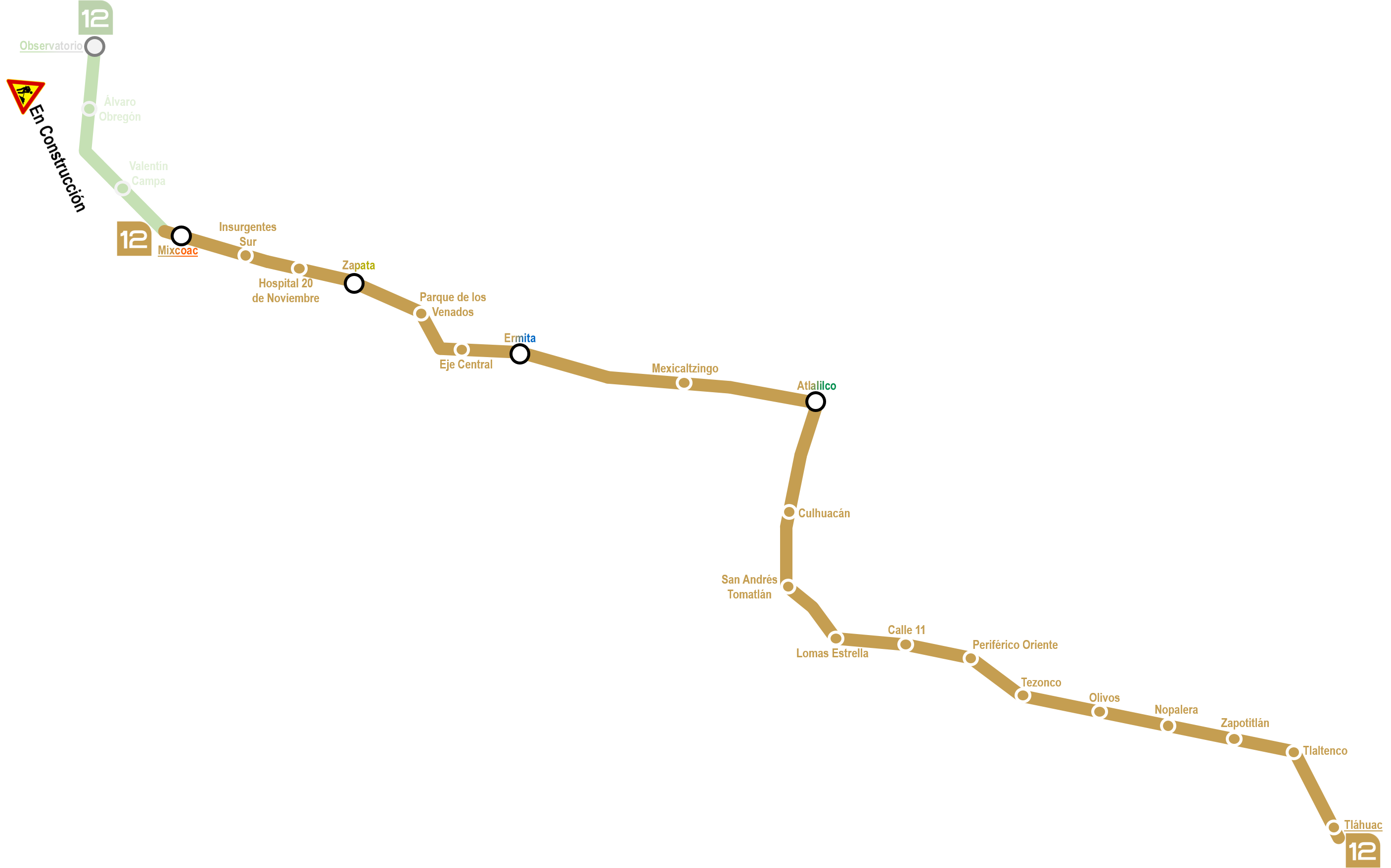
Mexico City is expanding Metro Line 12 with an investment of 11 billion pesos despite reports of structural damage to nearby homes [1].
The project highlights the tension between urban infrastructure goals and the safety of residential neighborhoods. As the city seeks to improve public transport connectivity, the physical impact on the Minas de Cristo area has raised alarms about resident security.
Construction crews are working on a 4.6 km extension [3] that includes four new stations [4]. To achieve this, the project requires a tunnel reaching depths of 34 meters [3]. While the government aims to modernize the transit system, the excavation process has led to sinkholes and cracks in local housing.
Approximately 80 families in the Minas de Cristo zone have reported that their homes are suffering from these structural failures [2]. Residents said the damage puts their safety at risk as the underground work continues.
The Mexico City government and the project's construction firm are overseeing the expansion [1]. Officials said the construction phase is expected to conclude in 2028 [5], with the extended service officially opening to the public in 2029 [6].
Despite the reported damage to private property, the project continues to move forward toward its 2028 completion goal [5]. The 11 billion peso investment [1] remains the primary driver for the city's effort to expand the reach of the subway system into these underserved areas.
“An investment of 11 billion pesos”
The situation in Minas de Cristo reflects a common conflict in megacity planning where large-scale transit investments can lead to localized geological instability. The 34-meter depth of the tunnel suggests significant subterranean disruption, which may necessitate further mitigation efforts or compensation for the 80 affected families to avoid legal delays before the 2029 opening.