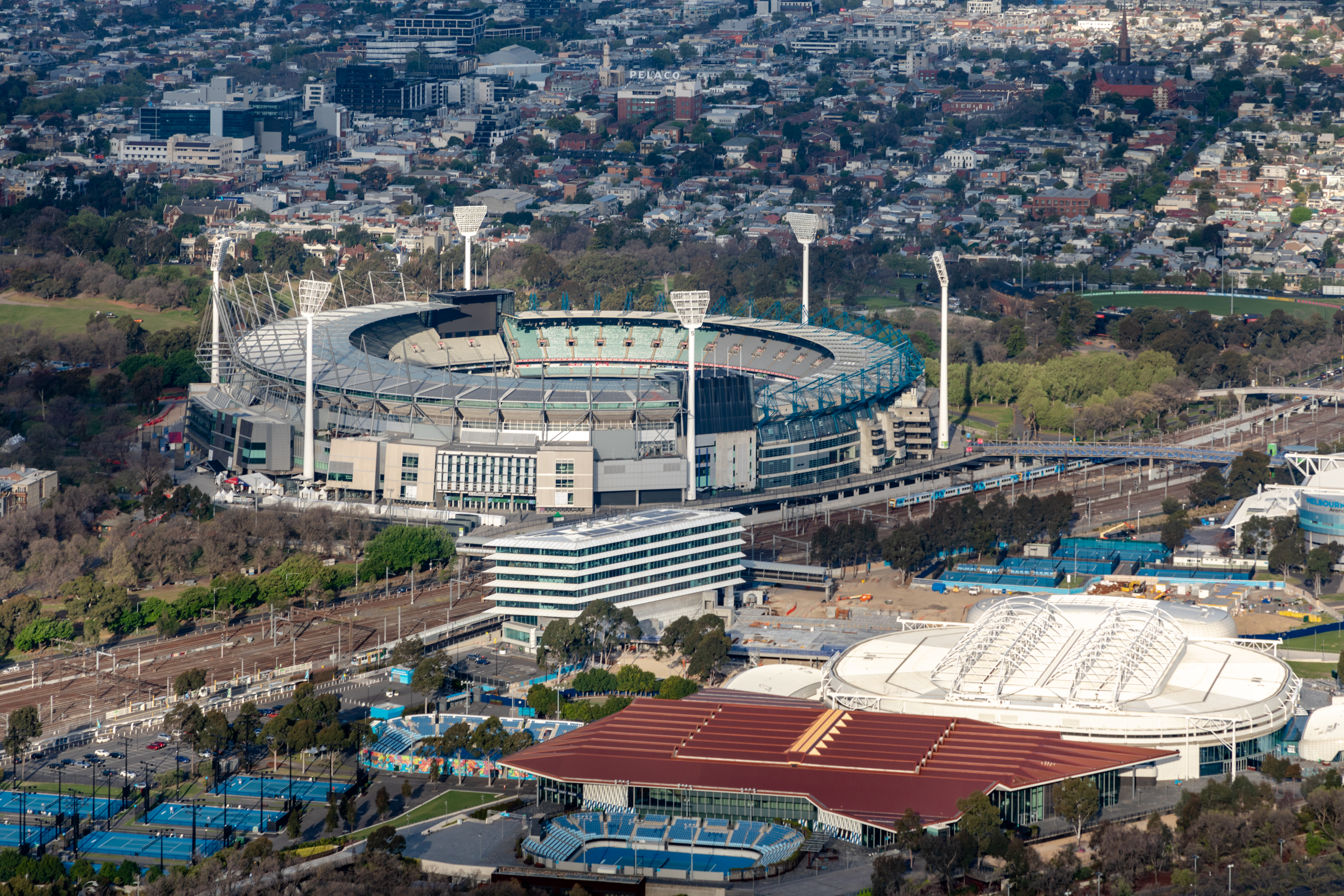
Prime Minister Narendra Modi and Australian Prime Minister Anthony Albanese visited the Melbourne Cricket Ground on Friday to highlight the partnership between their nations [1].
This engagement leverages the shared cultural passion for cricket to soften diplomatic ties and signal a deepening strategic alliance in the Indo-Pacific region. By visiting one of the world's most iconic sporting venues, the leaders aimed to connect with the public and the significant Indian diaspora in Australia.
The visit occurred as part of a larger three-nation diplomatic tour [3] involving India, Australia, and New Zealand. Accompanied by cricket legend Steve Waugh, the two leaders toured the stadium facilities to showcase the bond between the two countries [2].
Reports said that thousands of people gathered to witness the event [1]. The visit served as a cultural bookend to a series of high-level meetings, which included the India-Australia CEO Forum, and discussions regarding nuclear deals and defense pacts [3].
While some schedules placed the high-level Melbourne engagements on Thursday, July 9, other reports said the visit concluded on Friday, July 10, before Modi departed the city [3]. This sequence of events marked the final leg of the prime minister's Australian visit [3].
The use of sports as a diplomatic tool — often termed "cricket diplomacy" — is a recurring theme in the relationship between New Delhi and Canberra [2]. The tour of the Melbourne Cricket Ground was designed to underscore a partnership that extends beyond trade and security into the realm of shared social values, and sporting excellence [2].
“The visit occurred as part of a larger three-nation diplomatic tour.”
The integration of cultural symbols like the Melbourne Cricket Ground into official state visits suggests that India and Australia are pursuing a 'whole-of-society' diplomatic approach. By pairing hard-security discussions on defense and nuclear energy with high-visibility sporting events, both governments are attempting to build grassroots support for a strategic alignment that serves as a counterweight to regional instability in the Indo-Pacific.