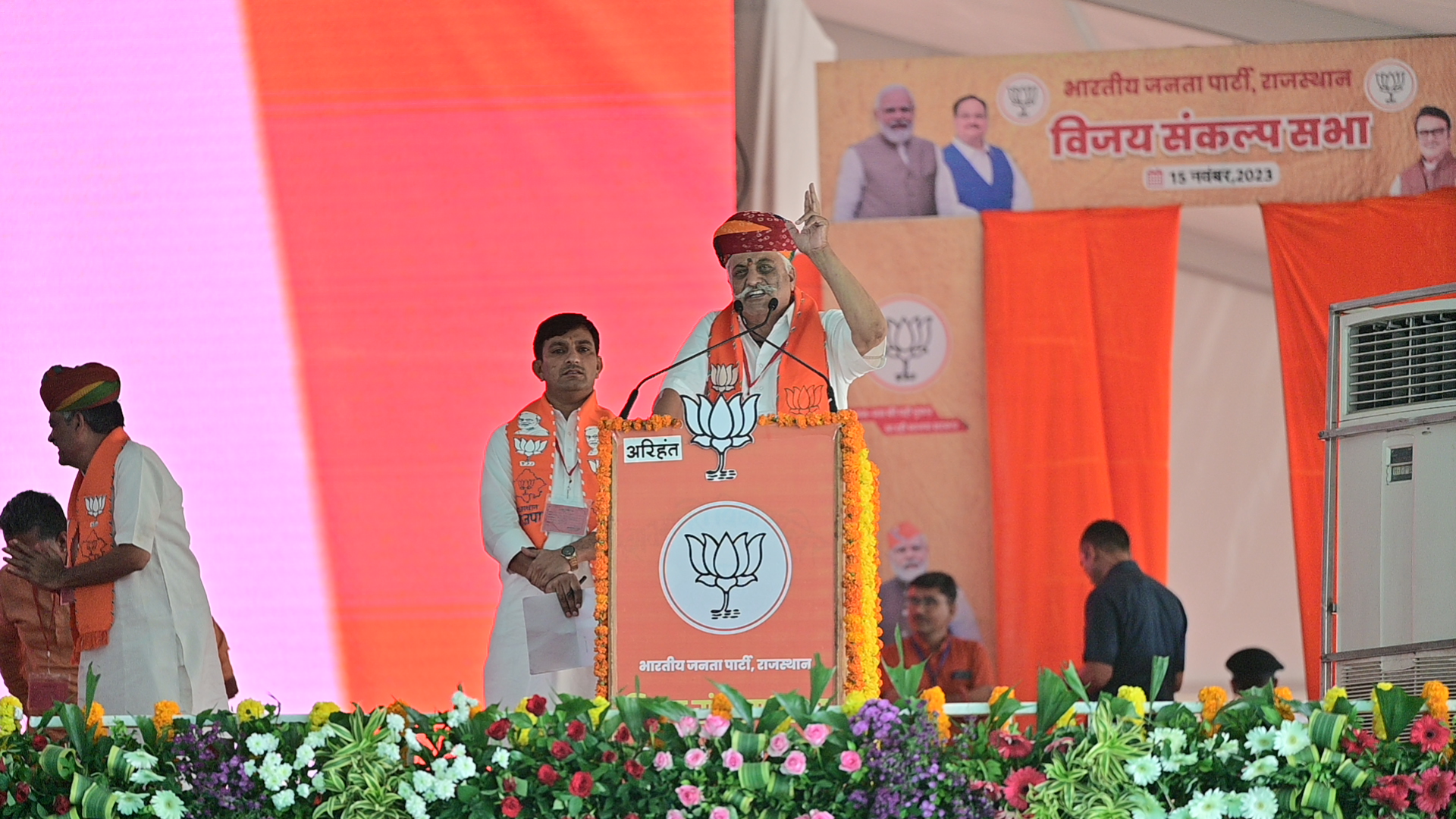
Prime Minister Narendra Modi inaugurated and laid foundation stones for rail and road infrastructure projects worth ₹5,470 crore [1] in Jalandhar on Friday.
The investments signal a push to modernize India's transport network and reduce carbon emissions through the introduction of sustainable energy in public transit.
The projects in Jalandhar, Punjab, are designed to improve regional connectivity, and public welfare [4]. This development is part of a larger regional visit that included Haryana and Chandigarh, focusing on the integration of high-capacity transit and updated road networks [2].
As part of the initiative, the Prime Minister flagged off India's first hydrogen-powered train [2]. The new service will operate on the route from Jind to Sonipat [3], a move intended to promote sustainable transport across the country [4].
Beyond the new train service, the government is focusing on the modernization of existing rail hubs. Under the Amrit Bharat Station Scheme, 75 railway stations have been redeveloped [2]. These upgrades aim to improve passenger experience and operational efficiency across the rail network.
The total value of the projects inaugurated in Jalandhar is cited as ₹5,470 crore [1], though some reports describe the investment as exceeding that amount [5]. The projects combine immediate inaugurations with the laying of foundation stones for future developments, ensuring a pipeline of infrastructure growth in the region.
“India's first hydrogen-powered train flagged off”
The introduction of hydrogen-powered rail marks a strategic shift in India's energy policy, moving away from diesel and electric dependence toward zero-emission alternatives. By pairing this technology with the Amrit Bharat Station Scheme's large-scale station upgrades, the government is attempting to synchronize sustainable technology with physical capacity increases to handle growing passenger volumes.