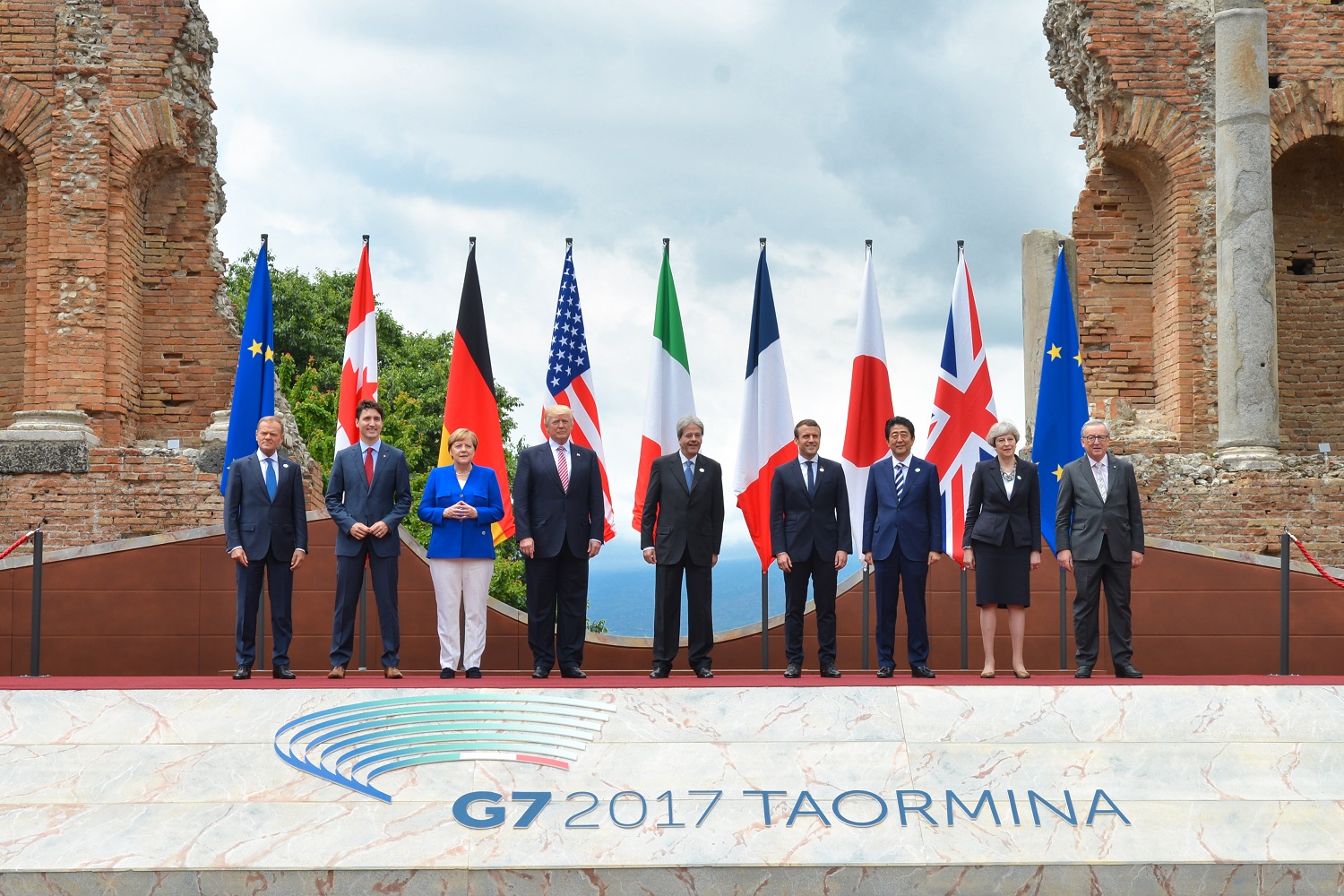
Prime Minister Narendra Modi of India and U.S. President Donald Trump met Tuesday at the 52nd G7 summit [1] in Evian, France.
The meeting underscores India's growing geopolitical influence as it navigates a landscape of U.S.-China trade tensions and global economic instability. This reunion marks the first formal bilateral interaction between the two leaders in nearly 16 months [2].
During the summit, Modi and Trump exchanged a handshake and engaged in a brief discussion. India was featured prominently in the official summit photograph, a visual signal of its rising global standing. The interaction took place as leaders gathered in the French resort town to address converging concerns over energy, trade, and security [3].
While the meeting highlighted a renewed India-US agenda, the broader summit faced challenges in achieving consensus. Leaders agreed on a narrow set of issues, though the gathering produced limited overall outcomes [4].
President Trump also addressed the ongoing conflict in Europe during the event. Trump said the Ukraine war has "No Impact" on the U.S. [5].
The presence of the Indian Prime Minister at the G7, where India is not a permanent member, reflects the strategic importance the U.S. and other G7 nations place on New Delhi. The two leaders aimed to signal a push for a strengthened partnership to counter global uncertainties [2].
“India was featured prominently in the official summit photograph”
The high-profile interaction between Modi and Trump suggests that the U.S. views India as a critical strategic counterweight to China, particularly as trade tensions escalate. By centering India within the G7 framework, the U.S. is signaling a shift toward a more flexible geopolitical alignment that prioritizes security and economic partnerships over traditional bloc memberships.