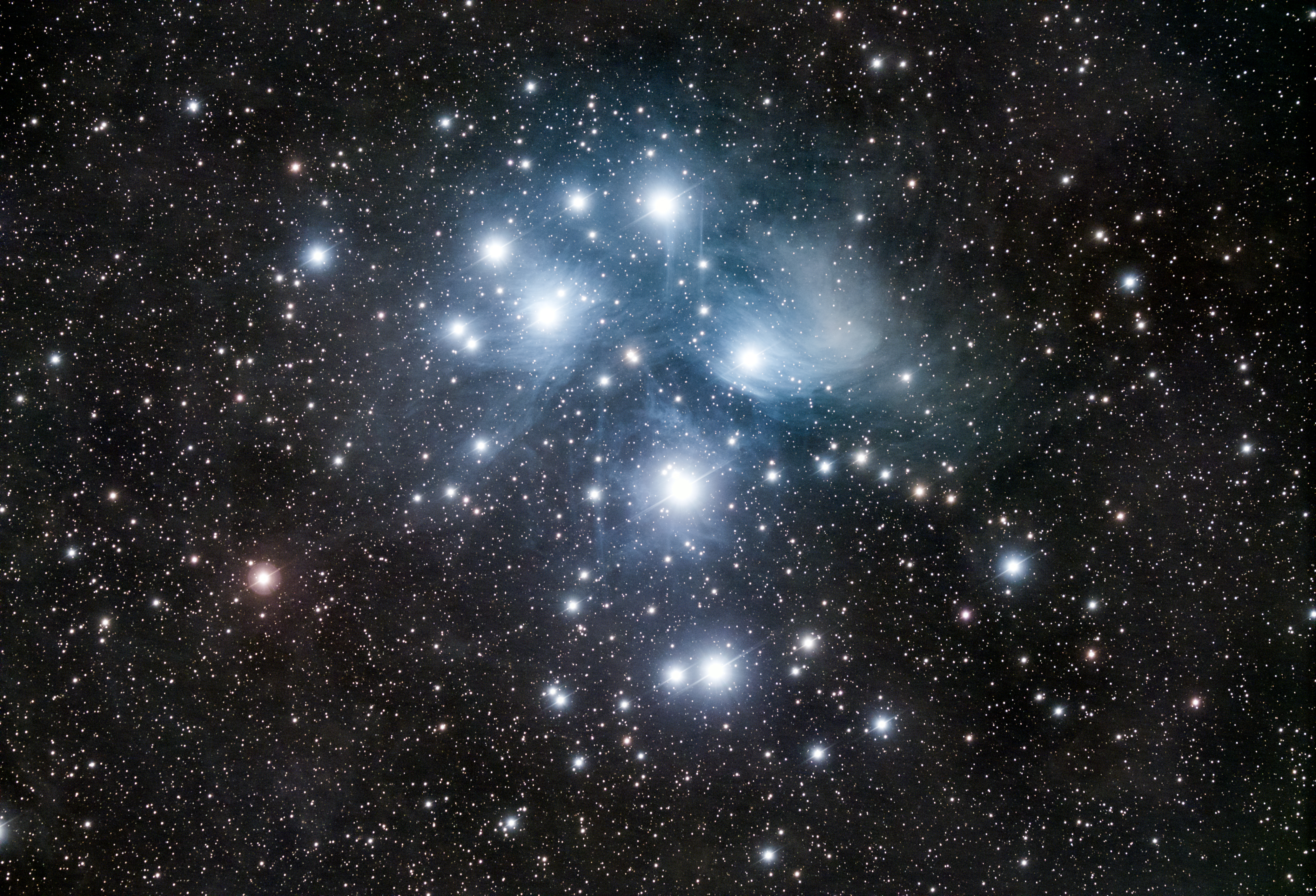
The waning crescent moon will align with the Pleiades star cluster on July 11, creating a visual pairing in the night sky.
This celestial event offers a rare opportunity for observers to see one of the most recognizable open star clusters positioned closely beside the moon. Because the Pleiades are often faint to the naked eye, the moon's proximity provides a helpful navigational marker for amateur astronomers.
Observers in London should look toward the east-north-east to catch the alignment [1]. The peak viewing window is expected in the early hours of July 11, specifically around 3 a.m. BST [1].
The Pleiades, also known as the Seven Sisters or M45 [1], consist of a group of hot blue stars. While the cluster is visible, its detail is limited without equipment. A reporter for The Guardian said, "Cluster might look like a mini version of the Plough unless you grab your binoculars" [1].
Binoculars or a small telescope can enhance the experience, revealing more of the stars within the cluster. The moon's delicate crescent shape will complement the tight grouping of the M45 stars, creating a striking contrast in the early morning sky.
Yahoo Lifestyle said that “the moon shines close to the Pleiades later this week” [2]. The event is a natural result of the moon's orbital path as it moves across the backdrop of distant stars and constellations throughout its monthly cycle.
“The waning crescent moon will align with the Pleiades star cluster on July 11.”
This alignment is a conjunction, where two celestial bodies appear close to each other from the perspective of Earth. While these events occur regularly due to the moon's orbit, the pairing with the Pleiades is particularly noted for its aesthetic appeal and its utility in helping observers locate the M45 cluster during the summer months.


