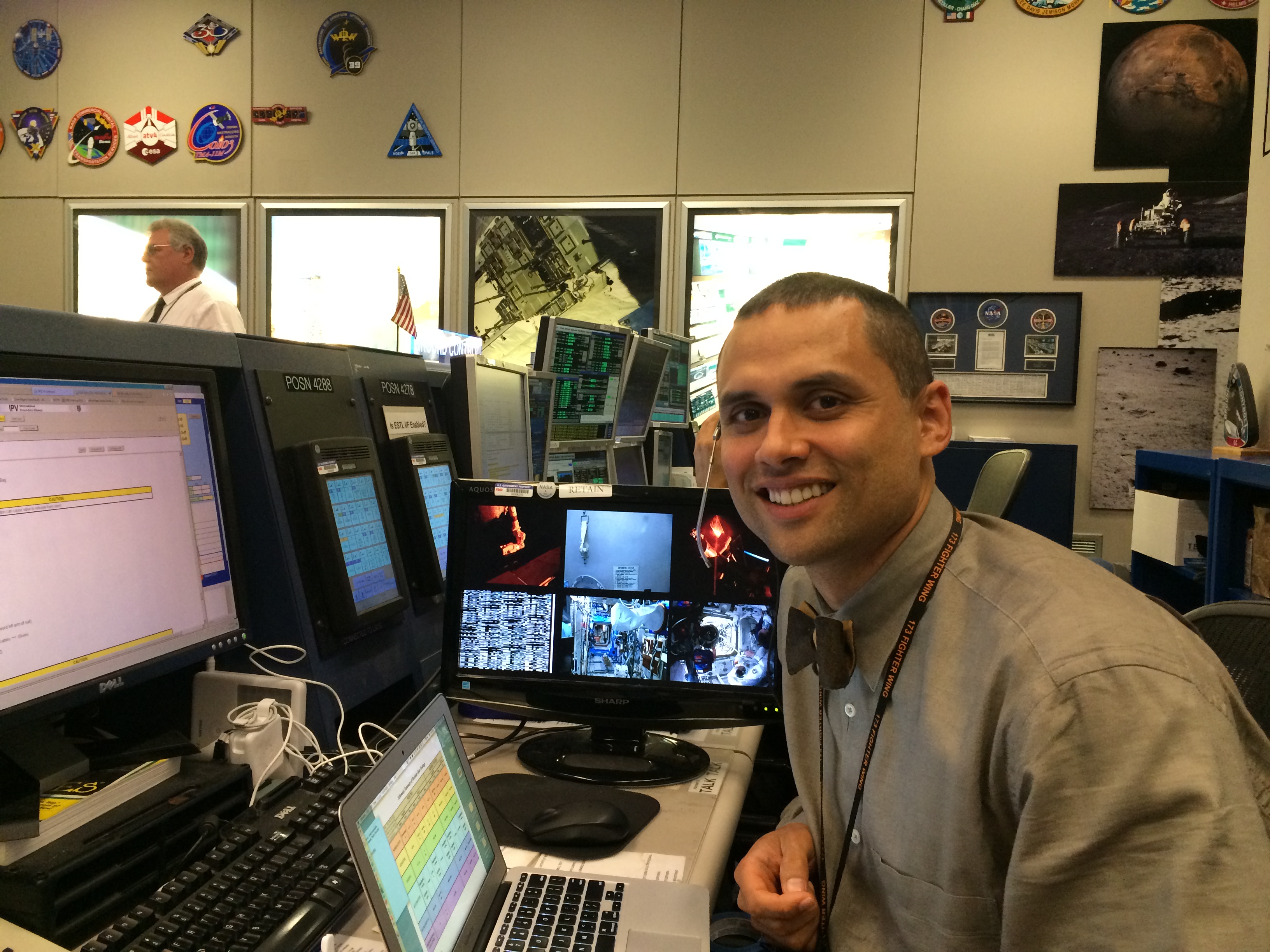
NASA physician-astronaut Anil Menon launched Tuesday aboard a Russian spacecraft to begin an eight-month scientific expedition on the International Space Station [1].
The mission underscores the continued operational partnership between the U.S. and Russia in orbital research despite terrestrial diplomatic tensions. By sharing transport and habitat resources, the agencies maintain a constant human presence in low Earth orbit to study long-term spaceflight effects.
Menon launched from the Baikonur Cosmodrome in Kazakhstan [4]. He was joined by Russian cosmonauts Pyotr Dubrov and Anna Kikina [1]. The crew departed on the Soyuz MS-29 spacecraft [3] at approximately 10:47 a.m. ET [2].
The crew is scheduled for a stay of eight months [1]. During this time, Menon and his colleagues will conduct various scientific research projects aboard the orbiting laboratory [2]. The physician-astronaut's medical background is expected to play a role in the expedition's scientific goals.
This launch follows established protocols for crew rotation on the station. The Soyuz spacecraft remains a primary vehicle for transporting international crews to the ISS, a facility managed by multiple global space agencies.
Baikonur has served as the primary launch site for these missions for decades. The coordination required for the launch involves precise timing and international logistics to ensure the spacecraft docks safely with the station [2].
“NASA physician-astronaut Anil Menon launched Tuesday aboard a Russian spacecraft”
The successful launch of Soyuz MS-29 demonstrates that the International Space Station remains a unique zone of international cooperation. While geopolitical relations fluctuate, the interdependence of the U.S. and Russian space programs, specifically regarding crew transport and station maintenance, creates a pragmatic necessity for continued collaboration in the pursuit of scientific discovery.


