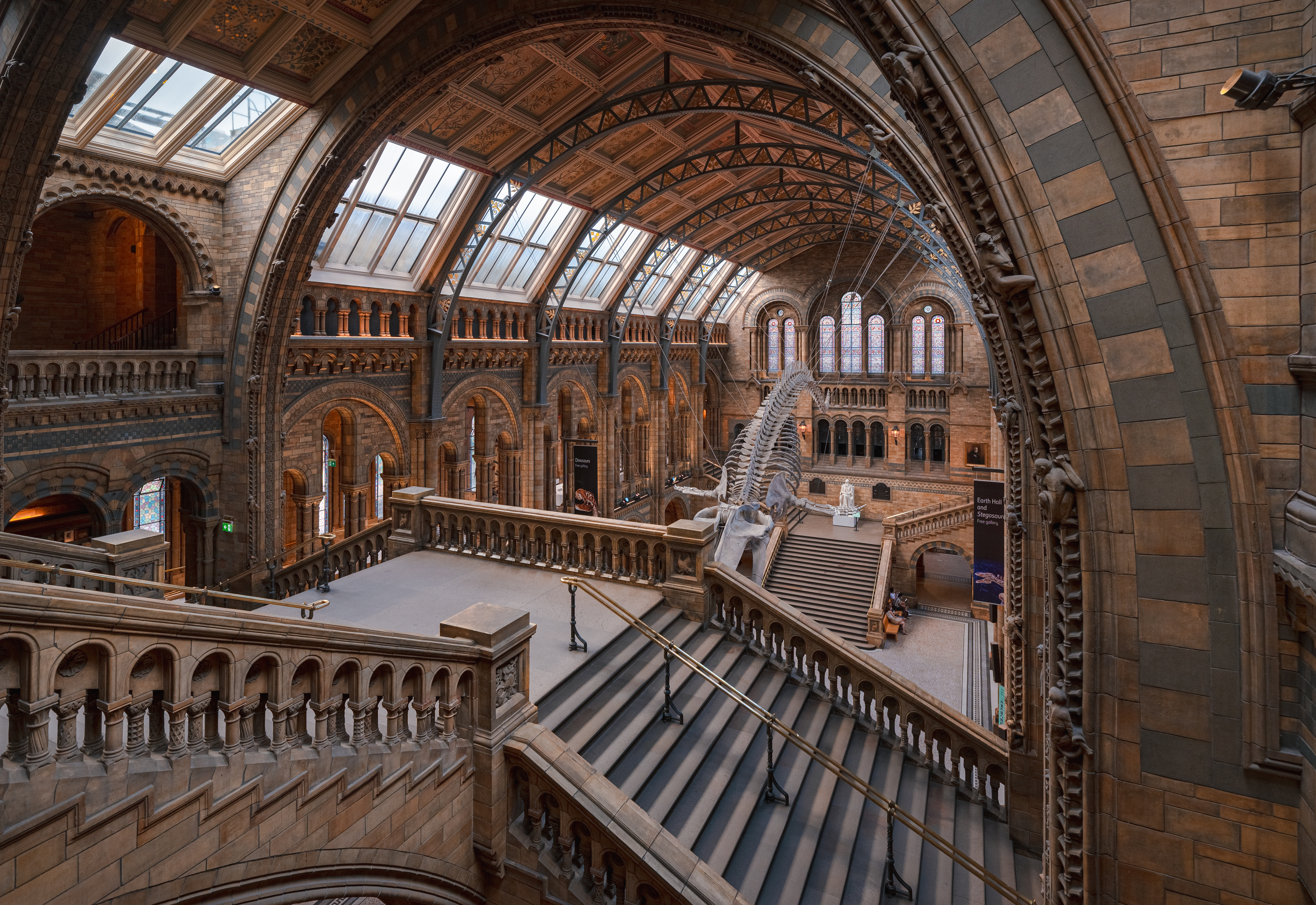
London's Natural History Museum opened a new exhibition titled "Jurassic Oceans: Monsters of the Deep" on Friday, May 22, 2026 [1].
The display uses the history of prehistoric marine predators to provide critical lessons on how ancient climate shifts inform modern climate-change discussions [1, 3].
Located in South Kensington, the exhibition launched to coincide with the UK half-term school holidays [2, 4]. The showcase focuses on the apex predators of the Jurassic era, bringing visitors face-to-face with the most terrifying creatures that once inhabited the earth's oceans [4].
Museum officials said they designed the exhibit to educate the public about ancient marine ecosystems [1, 3]. By examining the biological adaptations of these prehistoric animals, the museum aims to highlight the relationship between environmental changes, and species survival [1].
The installation features reconstructions of marine predators to illustrate the scale and danger of the deep [1, 4]. These models serve as a visual bridge between paleontological discovery and the current ecological challenges facing global oceans [3].
Visitors can explore the various stages of marine evolution and the specific environmental triggers that led to the rise and fall of these prehistoric giants [1]. The museum said the exhibition is intended to serve as both an educational tool for students and a warning regarding the fragility of oceanic stability [3].
“Jurassic Oceans: Monsters of the Deep”
By linking prehistoric extinction events and adaptations to current climate data, the museum is framing paleontology not just as a study of the past, but as a predictive tool for understanding how modern marine biodiversity may respond to rapidly warming oceans.


