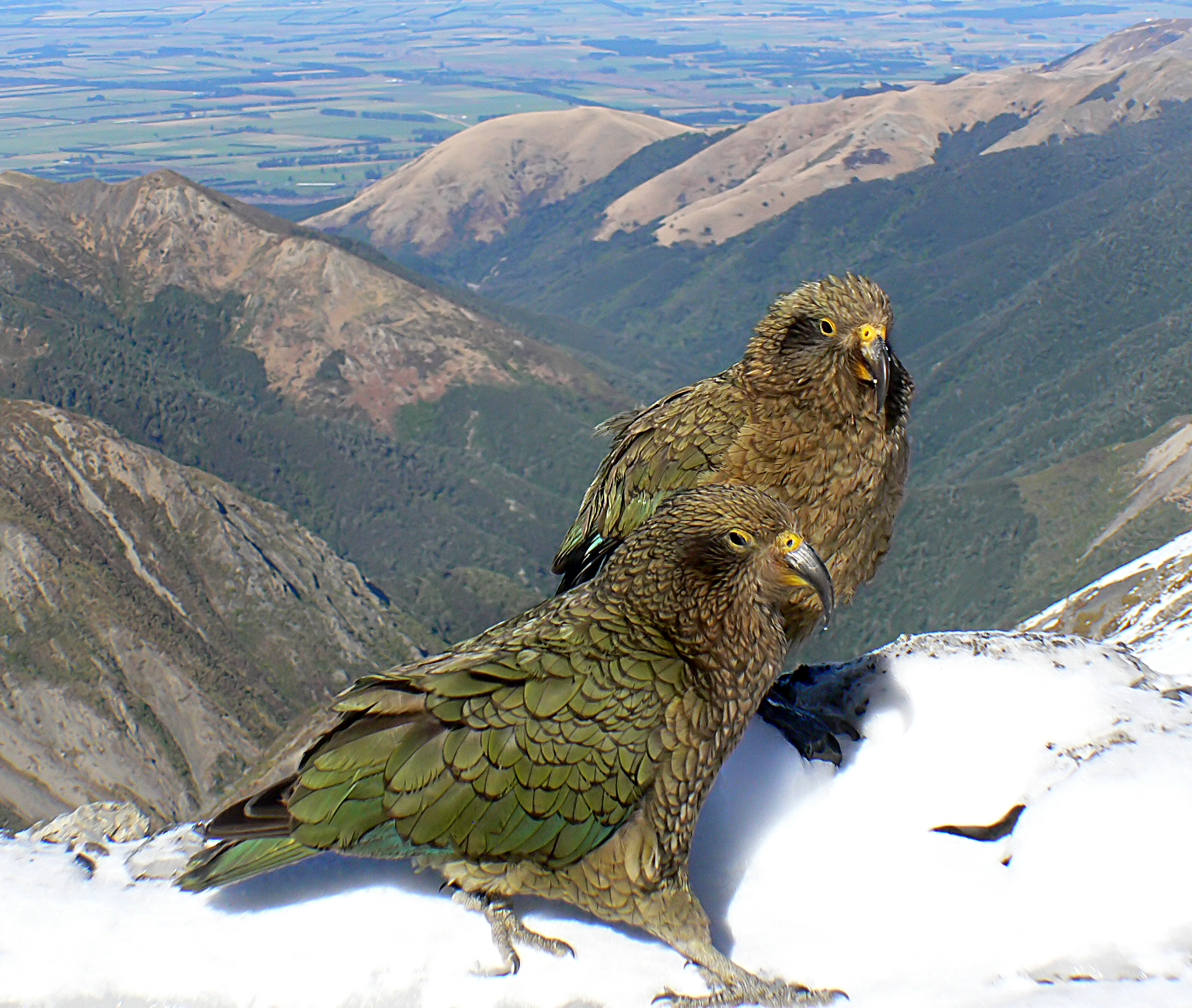
A wild-born New Zealand kea named Bruce became the dominant male in his captive group despite missing the top half of his beak [1, 4].
This case highlights the cognitive flexibility and adaptability of keas, which are known for their intelligence. Bruce's ability to overcome a significant physical disability to achieve social dominance provides insight into how avian species modify behavior to survive and thrive.
Bruce lost the upper portion of his beak when he was a juvenile [4]. In most parrot species, the beak is the primary tool for foraging and social interaction. However, Bruce developed a new method of combat to compete with other males at his wildlife sanctuary [5].
Instead of traditional jousting, the parrot uses his lower beak to attack and joust with rivals [1, 4]. This adaptation has made him an unbeatable force within his social circle [3]. Observers said that Bruce the kea uses lower beak attack to dominate group [1].
Now approximately 13 years old [2], Bruce has transitioned from a disabled bird to the alpha male of his group [2, 5]. His success is attributed to his ability to turn a physical limitation into a tactical advantage during territorial disputes [1, 4].
Wildlife experts said that Bruce's unique approach to fighting is uncommon among keas [5]. By leveraging the remaining part of his beak, he established a hierarchy that favors his specific style of aggression [1, 4].
“Bruce the kea uses lower beak attack to dominate group”
Bruce's ascent to alpha status demonstrates the high level of behavioral plasticity in keas. By innovating a new physical strategy for dominance, the bird bypassed the standard biological requirements for social hierarchy, suggesting that social standing in intelligent avian species can be driven by creativity and adaptation rather than just physical perfection.
'%2F%3E%0A%20%20%20%20%3Crect%20width%3D'1600'%20height%3D'900'%20fill%3D'url(%23v)'%2F%3E%0A%20%20%20%20%3Cg%20opacity%3D'0.08'%20fill%3D'%23ffffff'%3E%0A%20%20%20%20%20%20%3Ccircle%20cx%3D'1420'%20cy%3D'180'%20r%3D'220'%2F%3E%0A%20%20%20%20%20%20%3Ccircle%20cx%3D'1500'%20cy%3D'760'%20r%3D'120'%2F%3E%0A%20%20%20%20%3C%2Fg%3E%0A%20%20%20%20%3Cline%20x1%3D'80'%20y1%3D'172'%20x2%3D'220'%20y2%3D'172'%20stroke%3D'%23ffffff'%20stroke-width%3D'3'%20stroke-opacity%3D'0.6'%2F%3E%0A%20%20%20%20%3Ctext%20x%3D'80'%20y%3D'140'%20font-family%3D'Inter%2C%20-apple-system%2C%20Helvetica%2C%20sans-serif'%20font-weight%3D'700'%20font-size%3D'28'%20fill%3D'%23ffffff'%20letter-spacing%3D'6'%3EHANNA%20%C2%B7%20NEWS%3C%2Ftext%3E%0A%20%20%20%20%3Ctext%20x%3D'80'%20y%3D'230'%20font-family%3D'Inter%2C%20-apple-system%2C%20Helvetica%2C%20sans-serif'%20font-weight%3D'600'%20font-size%3D'40'%20fill%3D'%23ffffffb3'%20letter-spacing%3D'4'%3ESCIENCE%3C%2Ftext%3E%0A%20%20%20%20%3Ctext%20x%3D'80'%20y%3D'622'%20font-family%3D'Playfair%20Display%2C%20Georgia%2C%20serif'%20font-weight%3D'800'%20font-size%3D'86'%20fill%3D'%23ffffff'%20letter-spacing%3D'-1'%3ECleveland%20Clinic%20Highlights%3C%2Ftext%3E%3Ctext%20x%3D'80'%20y%3D'721'%20font-family%3D'Playfair%20Display%2C%20Georgia%2C%20serif'%20font-weight%3D'800'%20font-size%3D'86'%20fill%3D'%23ffffff'%20letter-spacing%3D'-1'%3ELung%20Cancer%20Screening%3C%2Ftext%3E%3Ctext%20x%3D'80'%20y%3D'820'%20font-family%3D'Playfair%20Display%2C%20Georgia%2C%20serif'%20font-weight%3D'800'%20font-size%3D'86'%20fill%3D'%23ffffff'%20letter-spacing%3D'-1'%3EServices%3C%2Ftext%3E%0A%20%20%20%20%3Ctext%20x%3D'80'%20y%3D'870'%20font-family%3D'Inter%2C%20-apple-system%2C%20Helvetica%2C%20sans-serif'%20font-weight%3D'500'%20font-size%3D'22'%20fill%3D'%23ffffff66'%20letter-spacing%3D'2'%3Enews.hanna-ai.com%3C%2Ftext%3E%0A%20%20%3C%2Fsvg%3E)

