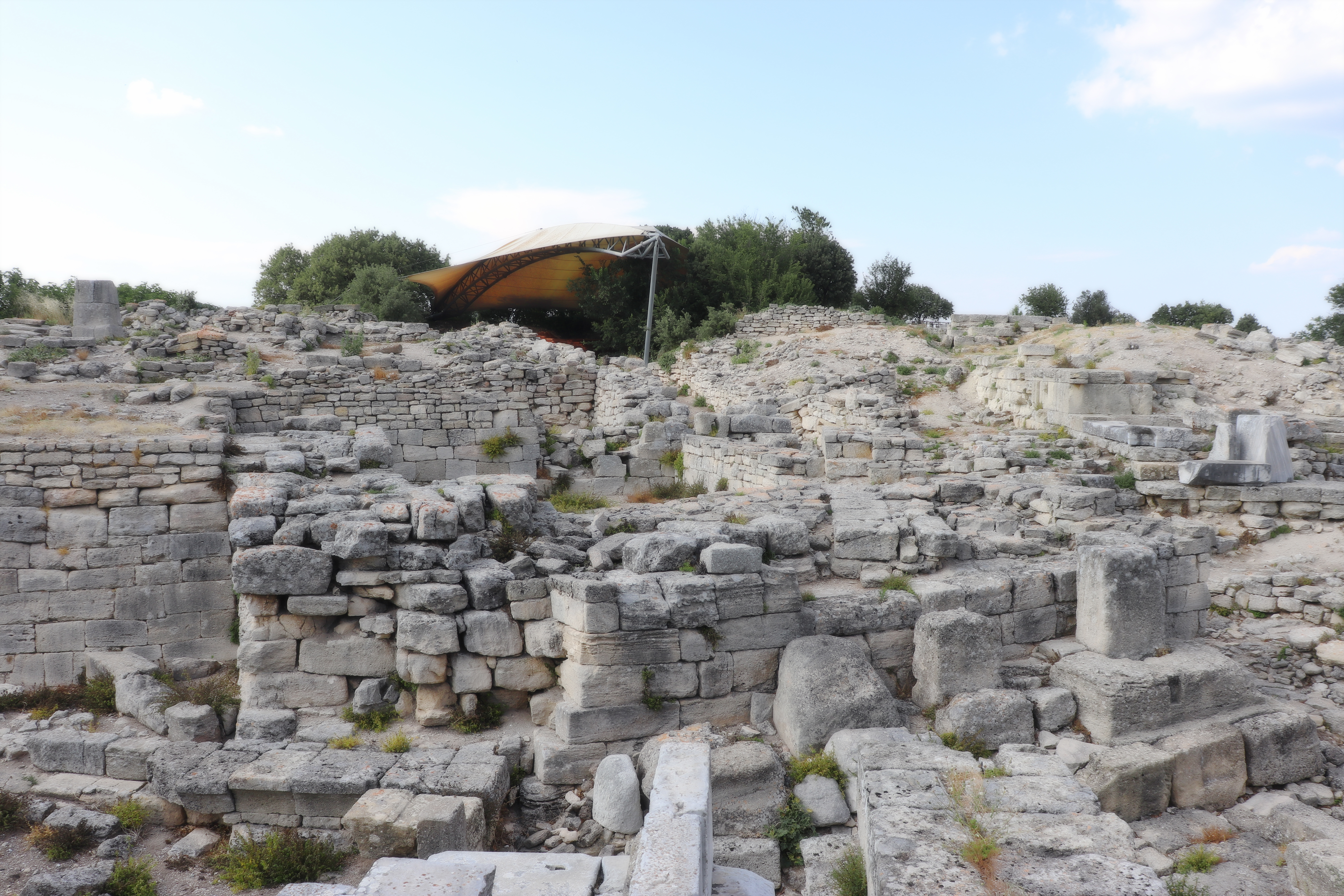
Director Christopher Nolan uses the ending of his new fantasy epic "The Odyssey" to frame the fall of Troy as a warning [1, 2, 3].
By linking ancient mythology to contemporary themes, Nolan aims to illustrate the persistent and destructive nature of human conflict. The film, starring Matt Damon as Odysseus, moves beyond a simple retelling of the epic poem to offer a critique of ambition [1, 2].
The narrative concludes with a scene referencing the ruins of Troy in ancient Greece [4]. According to Nolan, this sequence is intended to highlight the cyclical nature of war and how the city's collapse serves as a cautionary tale for the present day [3].
Nolan said the film is a warning about the costs of war and blood-thirsty quests for power [1]. This thematic focus transforms the story from a journey of homecoming into a broader meditation on the consequences of leadership, and conquest [3, 4].
Reviewers have noted that the final scene pulls back to reveal the entire story as a meditation on power [4]. While some reporting has focused on the film's depiction of mythological creatures, the director has maintained that the core message remains the human cost of war [1, 3].
The project was announced in 2024 and was slated for release in 2025 [3].
“The ending is about the cyclical nature of war and how the fall of Troy serves as a cautionary tale for our times.”
Nolan's approach suggests a shift toward using classical antiquity as a mirror for current geopolitical instability. By centering the film's resolution on the ruins of Troy rather than just the protagonist's return, the director emphasizes systemic failure and the inevitability of collapse when power is pursued without restraint.

