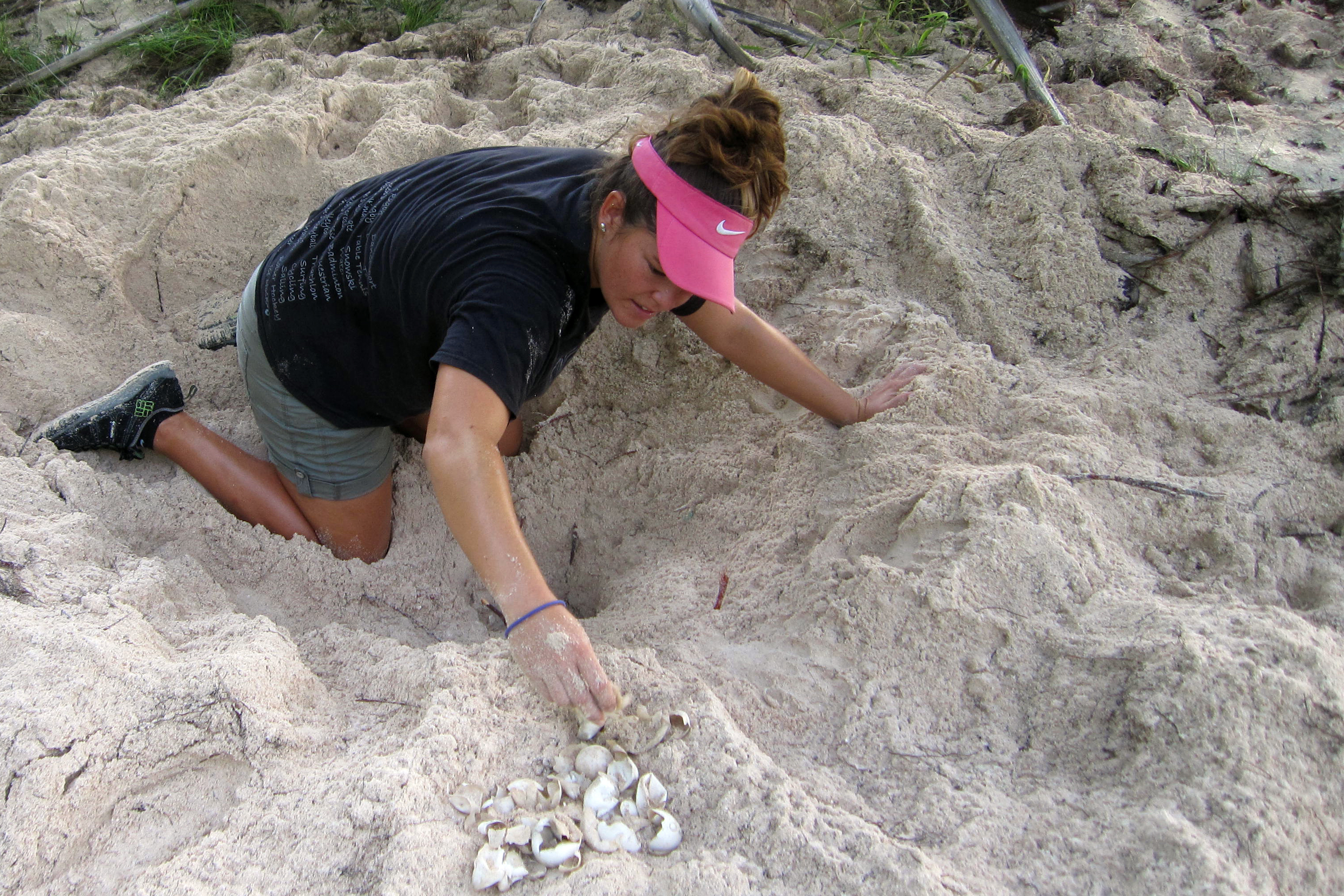
Residents of Santo Niño village in Palawan, Philippines, have organized a community-led program to protect sea-turtle nests and assist hatchlings [1].
The initiative marks a significant shift in local behavior toward endangered wildlife. By transitioning from the exploitation of turtle eggs to active conservation, the community aims to restore the nesting success of the species in the region [1].
Jerald Mahusay and other community members now oversee the protection of nests on the beach. The program focuses on ensuring that eggs remain undisturbed until they hatch, and that the young turtles can safely navigate the distance to the sea [2].
This conservation effort addresses a history of human interference with the nesting process. In the past, local residents did not view the eggs as a protected resource to be preserved for the environment [1].
"We were always playing with the eggs," Mahusay said [1].
The program involves monitoring the beaches of Santo Niño to prevent the accidental or intentional destruction of nests. Volunteers guide the hatchlings toward the water to reduce the risk of predation and other hazards that often kill sea turtles during their first journey to the ocean [2].
By integrating community members into the protection process, the program creates a sustainable model for wildlife management. Local involvement ensures that the beaches are monitored more consistently than they would be through external government oversight alone [1].
“We were always playing with the eggs.”
This shift toward community-led conservation in Palawan reflects a broader global trend where local stewardship is prioritized over top-down regulation. By transforming former disruptors of the ecosystem into its protectors, the Santo Niño program increases the survival rate of endangered sea turtles while fostering environmental literacy within the village.


