
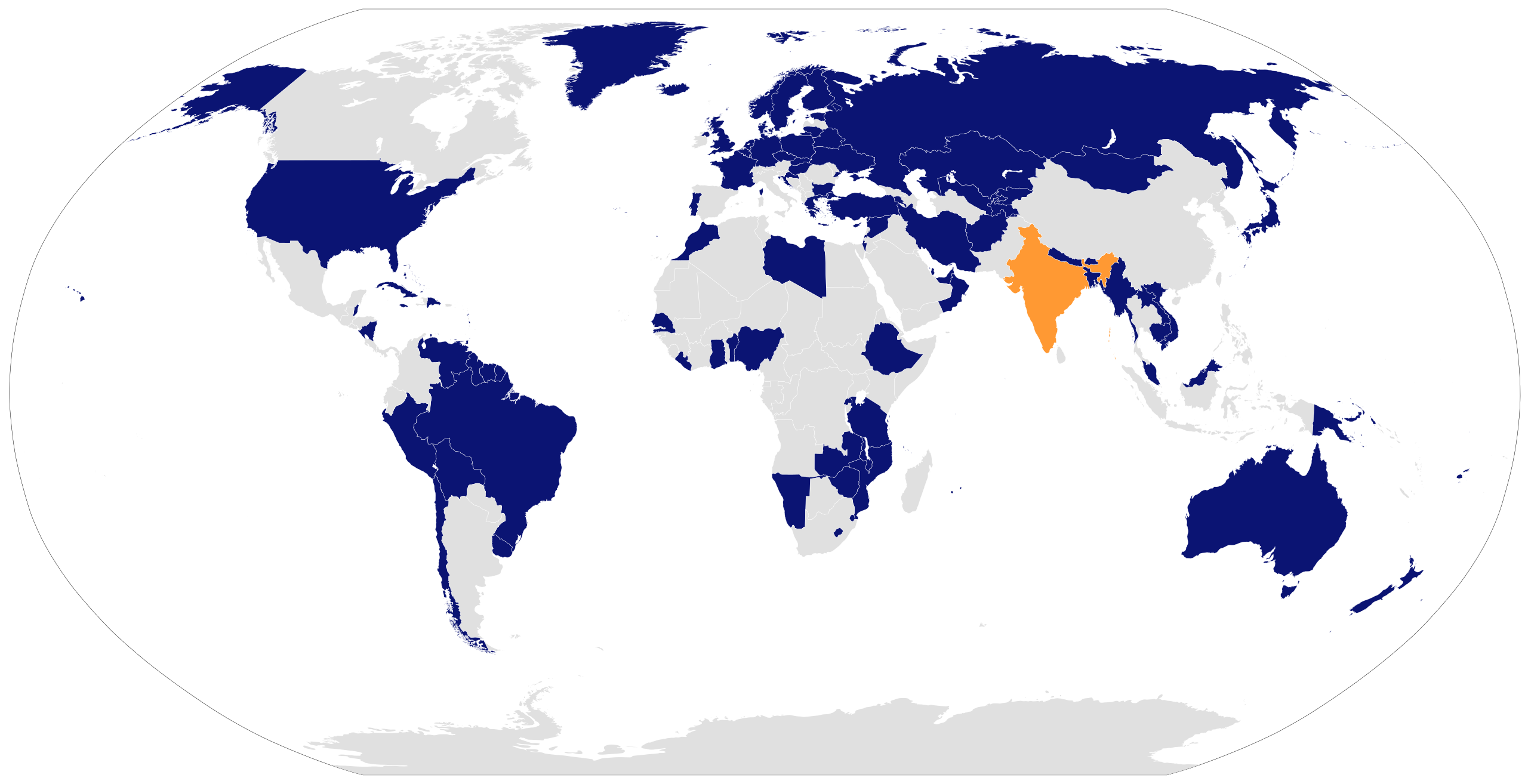
Portugal and Austria won the two European rotating seats on the UN Security Council on Wednesday, June 3, 2026 [1], [2].
The result marks a significant diplomatic shift, as Germany failed to secure a seat for the first time in 40 years [3].
The vote took place at the United Nations General Assembly in New York City [1], [3]. Portugal and Austria will hold these positions for a two-year term spanning 2027-2028 [4].
Analysts suggest the defeat stems from a combination of intense campaigning by the winning nations and growing criticism of Germany's foreign-policy positions [3], [5]. Some reports indicate that Germany's support for Ukraine and Israel may have influenced the outcome, though other sources attribute the loss to broader policy stances rather than specific conflicts [5], [6].
German officials have pointed to external interference as a primary cause. Johann Wadephul said it was "no secret" that Russia had stirred up sentiment against Germany due to its support for Ukraine [7].
This outcome reflects a challenging period for Berlin's global standing. While Germany has long been a fixture on the 15-member body, the recent election suggests a decline in the consensus surrounding its diplomatic approach [3], [5].
The loss is viewed as a diplomatic blow that raises questions about Germany's current influence within the General Assembly [5].
“Portugal and Austria have secured coveted seats on the Security Council, ending Germany's 40‑year streak on the body.”
Germany's exclusion from the Security Council signals a potential pivot in how UN member states perceive European leadership. The intersection of Russian lobbying and dissatisfaction with Berlin's foreign policy suggests that Germany's traditional diplomatic weight is no longer sufficient to guarantee a rotating seat, reflecting a more fragmented geopolitical environment.


