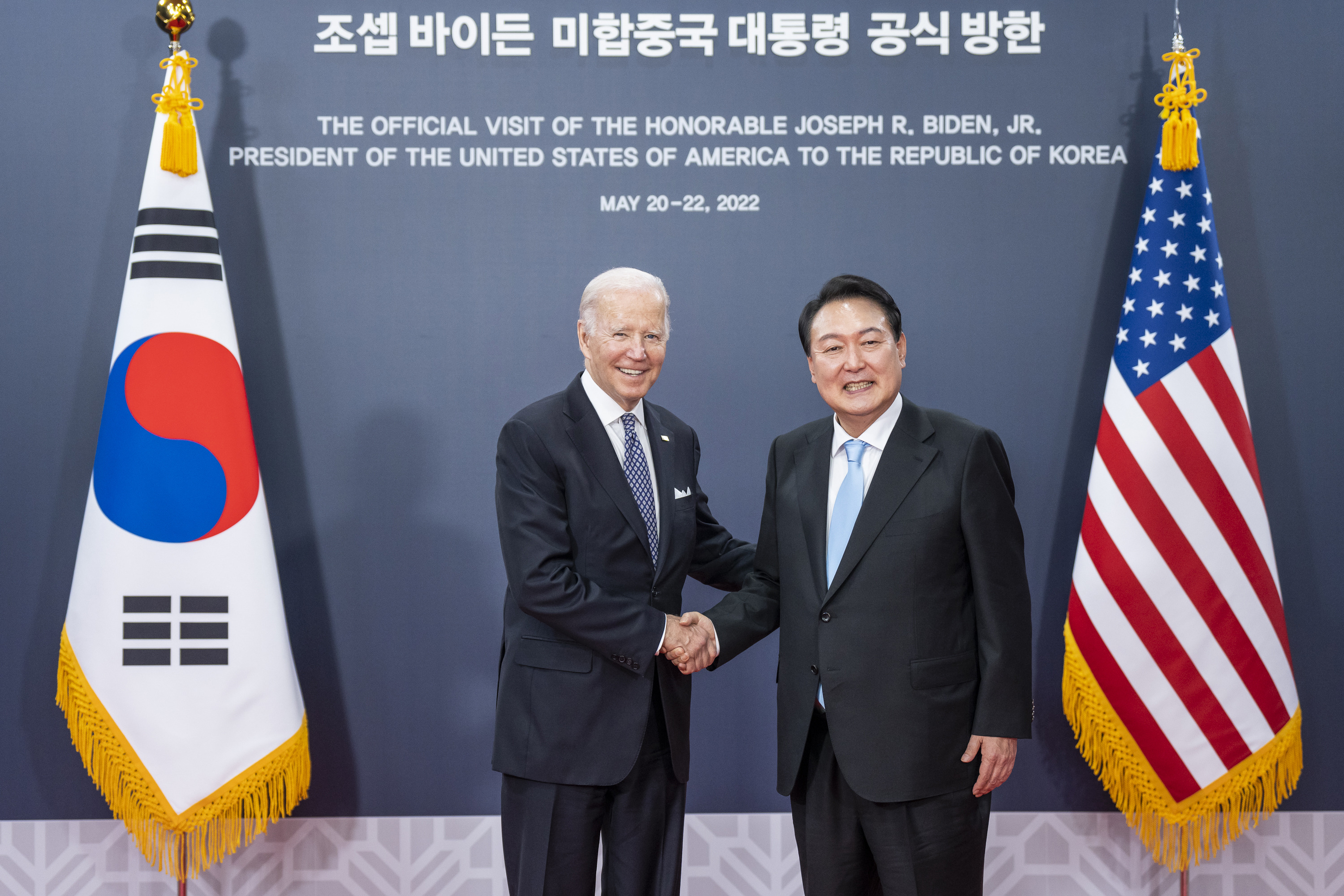
President Lee of South Korea traveled to Washington, D.C., on July 24 to meet with the four largest artificial-intelligence CEOs [1].
The visit comes as the South Korean government attempts to balance critical technology partnerships with escalating trade tensions. The meetings aim to coordinate on trade and technology policy while navigating new economic pressures from the U.S. government [1].
Concurrent with the diplomatic visit, the United States announced a 12.5% tariff rate imposed on South Korea and Japan [1]. These measures were implemented over concerns regarding forced labor [1]. The move complicates the economic landscape for Seoul, which is currently seeking to protect a targeted tariff agreement of 15% [1].
President Lee's agenda focuses on engaging with leading AI companies to discuss economic initiatives [1]. By meeting with the "big four" AI executives, Lee seeks to secure technological cooperation and investment despite the friction caused by the new tariffs [1].
The discussions in Washington are intended to align the strategic interests of South Korea's industrial sector with the rapid growth of the U.S. AI industry [1]. This diplomatic effort highlights the tension between national security-driven trade policies and the need for global technological integration, a balance that will define the bilateral relationship in the coming months [1].
“President Lee of South Korea traveled to Washington, D.C., on July 24 to meet with the four largest artificial-intelligence CEOs.”
The intersection of AI diplomacy and trade sanctions suggests that the U.S. is utilizing a dual-track approach with its allies. While Washington continues to leverage high-tech partnerships to maintain a global lead in artificial intelligence, it is simultaneously applying aggressive economic pressure via tariffs to enforce labor standards. For South Korea, this creates a precarious environment where technological dependence on U.S. AI firms may be used as leverage in broader trade negotiations.