
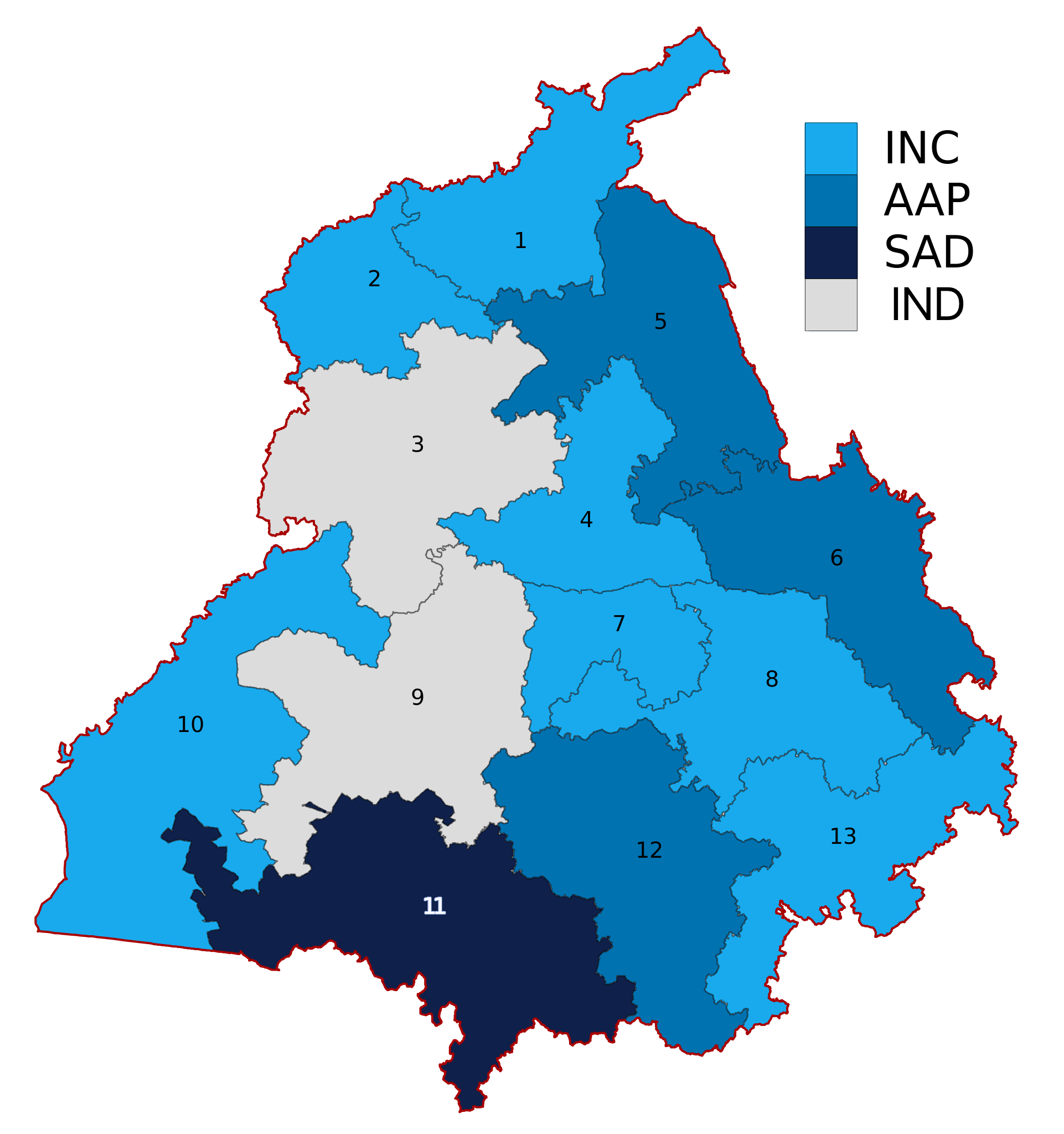
The Aam Aadmi Party (AAP) is leading in Punjab's municipal elections with more than 690 ward victories [4].
These civic body results serve as a critical barometer for local leadership and establish the political momentum ahead of the 2027 state assembly elections [1, 5].
Counting began on May 29, 2026 [7], for elections that took place on May 26, 2026 [6]. The contest spanned 102 municipal bodies [5], including key areas such as Mohali and Zirakpur [1, 2]. Candidates from AAP, the Bharatiya Janata Party (BJP), the Indian National Congress, and the Shiromani Akali Dal (SAD) competed for seats across the state [1, 2].
State election authorities reported an overall voter turnout of 63.94% [1, 2]. The scale of the election was significant, with a total of 1,897 wards contested across the various municipal corporations, and councils [3].
As the counting process continues, the AAP's early lead in over 690 wards [4] suggests a strong performance for the party in local governance. The results from these 102 bodies [5] will determine which party controls the municipal administration in the region's urban and semi-urban centers.
Observers are closely watching the tallies in Mohali and Zirakpur [1, 2], as these areas often reflect broader trends in voter sentiment. The final tally will provide a clearer picture of the current political landscape in Punjab as the state moves toward the next major legislative cycle.
“AAP is leading in Punjab's municipal elections with more than 690 ward victories.”
The AAP's strong showing in the municipal elections indicates sustained support for the party at the grassroots level. By securing a significant portion of the 1,897 contested wards, the party strengthens its organizational infrastructure and local influence, which may provide a strategic advantage entering the 2027 state assembly elections.


