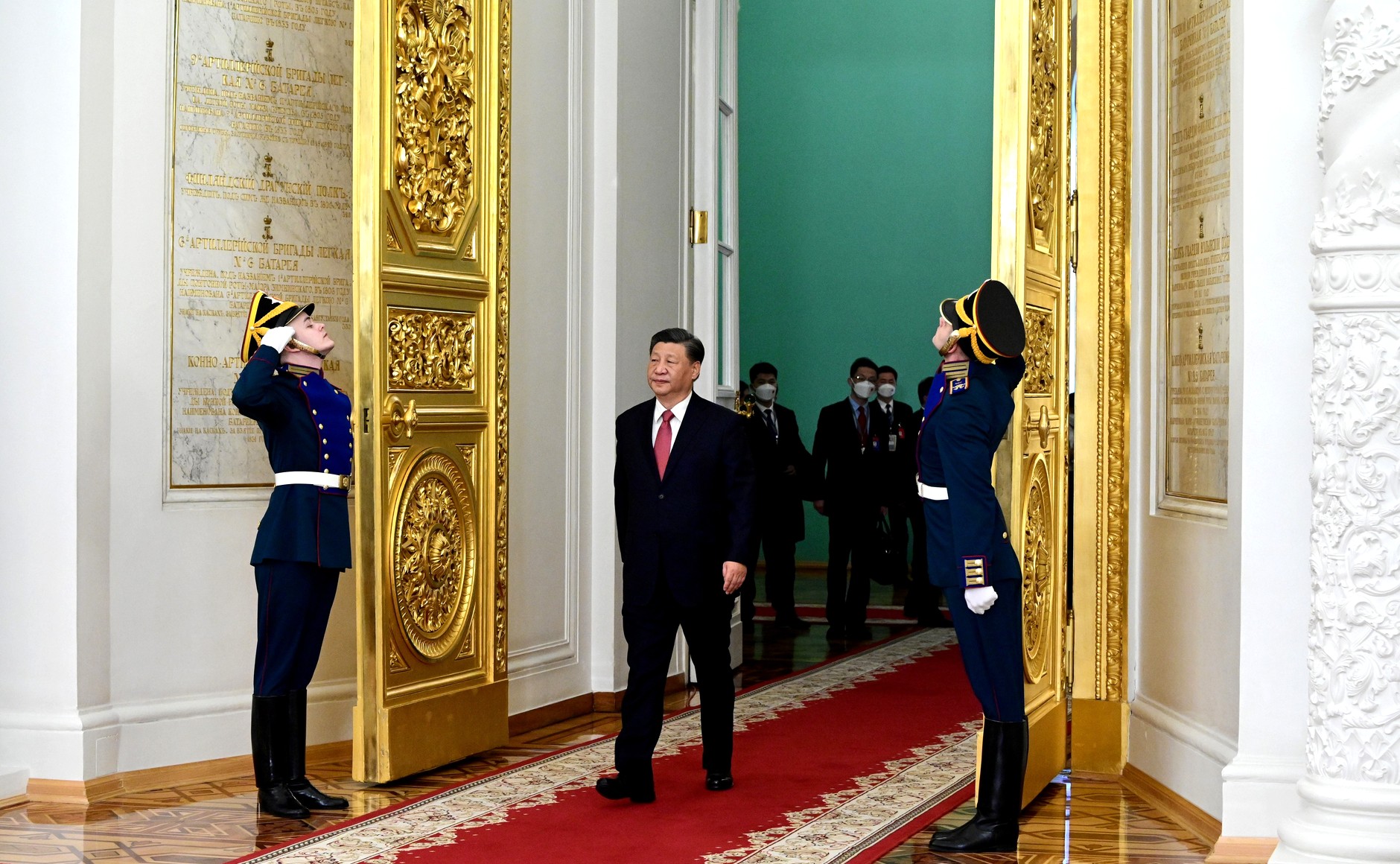
Russian President Vladimir Putin arrived in Beijing on Tuesday for a state visit and high-level talks with Chinese President Xi Jinping [1].
This visit occurs at a critical diplomatic juncture, serving as a public demonstration of the Russia-China partnership immediately following a trip to China by US President Donald Trump.
Putin landed in the Chinese capital four days after Trump left the country [2]. This marks the 25th time Putin has visited China [3]. The timing of the arrival underscores a strategic alignment between Moscow and Beijing as they navigate relations with the U.S.
During the visit, the two leaders are expected to discuss bilateral ties, trade, energy, and global security. The Chinese Foreign Ministry said that Xi and Putin will exchange views on bilateral ties, cooperation in various fields, and international and regional issues of mutual interest [3].
Putin said Xi Jinping is a "long-time good friend" [2]. He said that relations between the two countries have reached an "unprecedented level" [1].
The meetings are intended to showcase an "unshakeable" partnership between the two nations [1]. By coordinating these high-level diplomatic engagements, Russia and China appear to be signaling a unified front on the global stage—particularly in response to U.S. foreign policy shifts.
“"relations between two countries have reached 'unprecedented level'"”
The rapid succession of visits by both the U.S. and Russian presidents to Beijing highlights China's central role as a global diplomatic hub. By hosting Vladimir Putin shortly after Donald Trump, President Xi Jinping is positioning China as a primary mediator and power broker, while the 'unprecedented' closeness between Russia and China suggests a strategic counterweight to U.S. influence in Eurasia.


