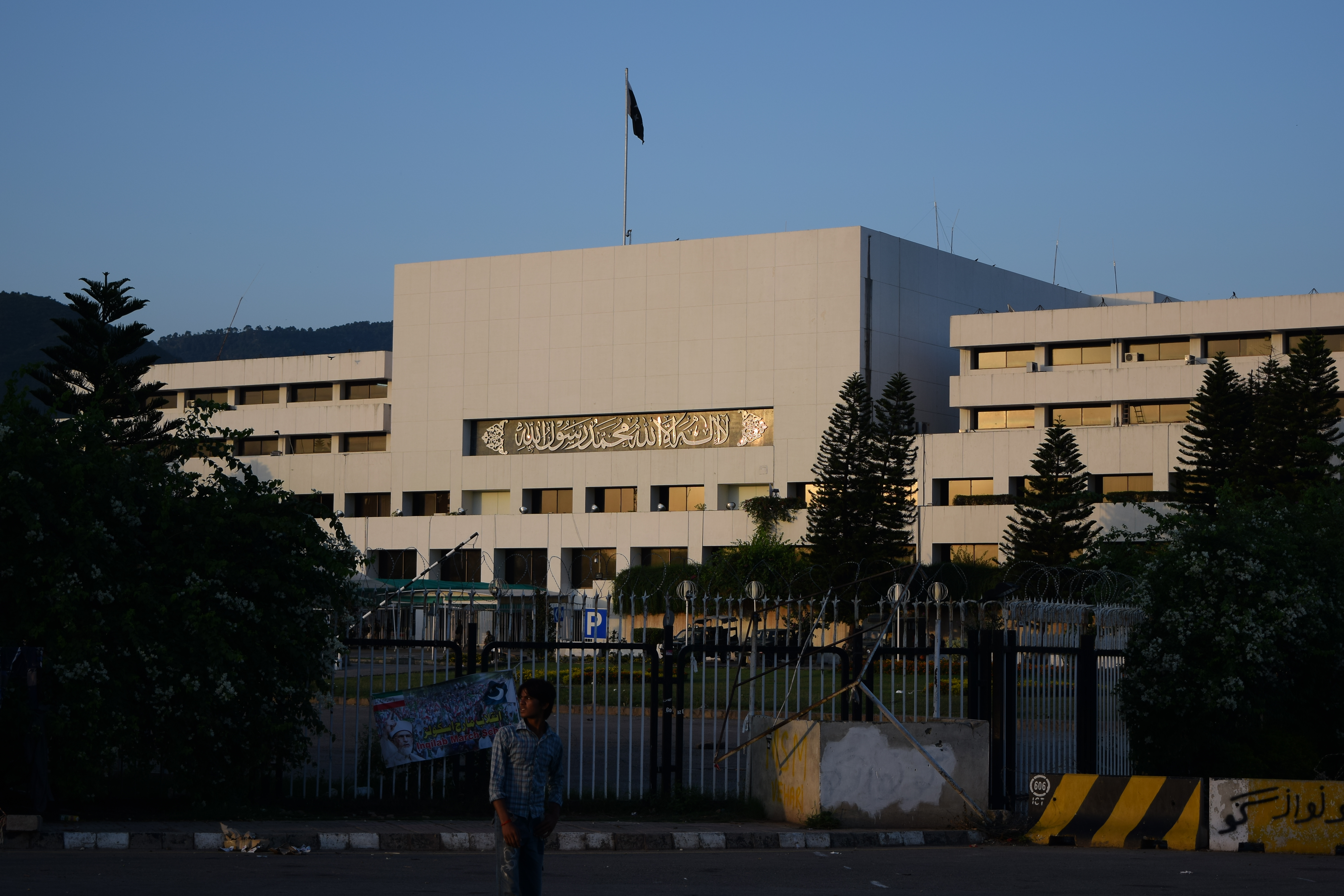
Senator Rana Sanaullah Khan, the Prime Minister's Adviser on Political and Public Affairs, called for political dialogue to ensure national stability and development.
The appeal comes amid ongoing political tensions between the government and the Pakistan Tehreek-e-Insaf (PTI) party. Establishing a stable political environment is viewed as a prerequisite for sustainable national progress and economic growth.
Speaking at a public briefing in Islamabad on June 14, 2024, Sanaullah emphasized the need for a collaborative approach to governance [1]. He said that the current political climate requires a shift toward reconciliation to prevent further volatility.
"Political dialogue is essential for stability and development," Sanaullah said [1].
He further noted that the path to national progress requires a commitment to democratic norms and the recognition of the roles played by the country's administrative bodies. He suggested that without a baseline of mutual respect, the government cannot effectively implement long-term development strategies.
"We need tolerance and respect for state institutions to move forward," Sanaullah said [1].
The adviser's message specifically targeted the PTI, urging the opposition to engage in constructive talks rather than continuing a cycle of confrontation. By calling for a dialogue, the administration seeks to lower the political temperature and create a predictable environment for investment, and governance.
Sanaullah said that the government remains open to discussions that prioritize the national interest over partisan gains. He argued that the stability of state institutions is not a partisan issue but a necessity for the survival of the state's administrative framework.
“Political dialogue is essential for stability and development.”
This call for dialogue represents an attempt by the Pakistani government to neutralize the political deadlock with the PTI. By framing the issue as a matter of 'national development' and 'institutional respect,' the administration is attempting to shift the narrative from a power struggle to a necessity for state survival and economic stability.


