
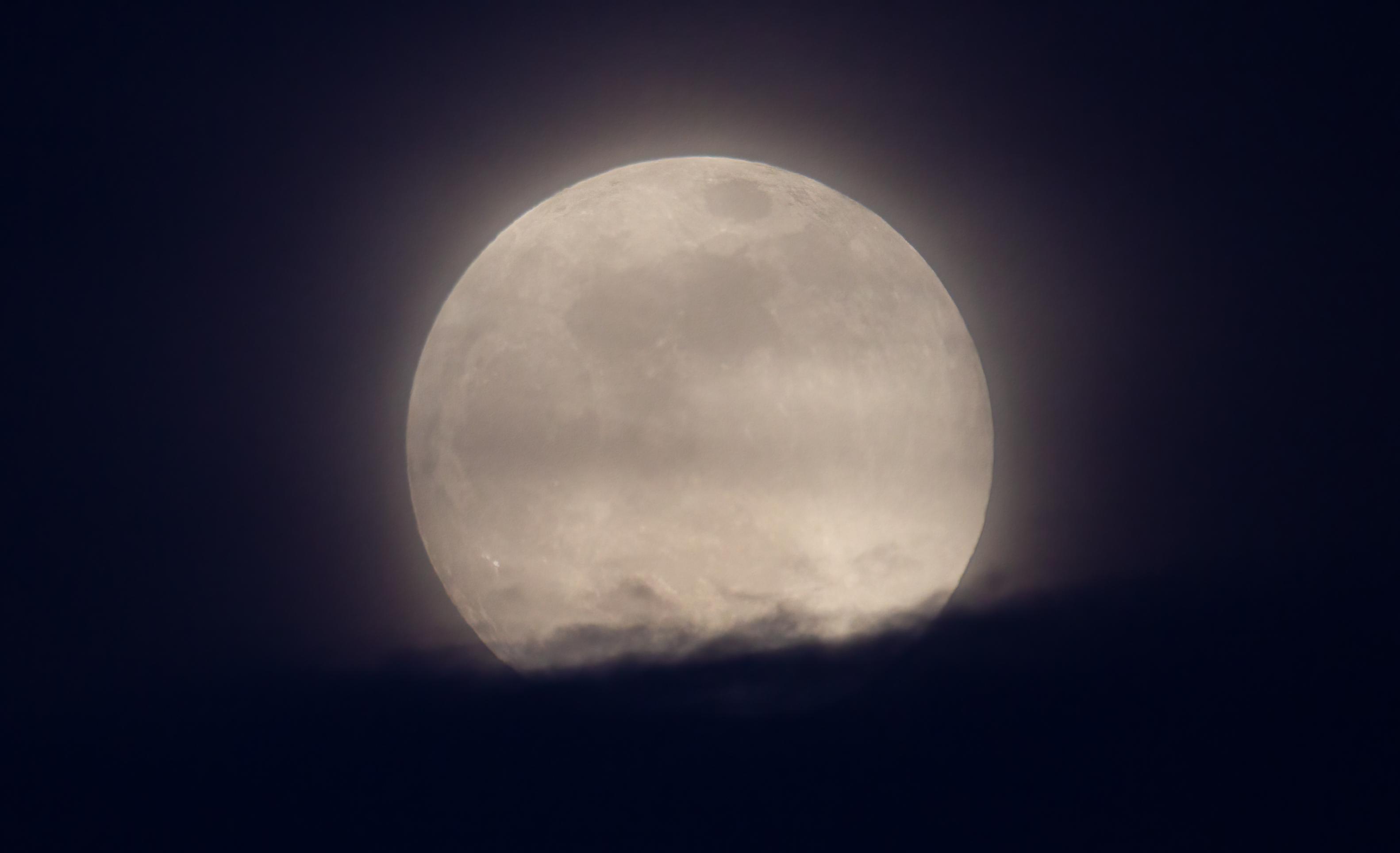
Skywatchers worldwide observed a rare Blue Moon on May 31, 2026 [1], which also served as the year's smallest full moon.
This event is significant because it combines two distinct lunar phenomena. A "blue moon" occurs when a single calendar month contains two full moons [3], while a "micromoon" happens when the moon reaches its farthest point from Earth during a full phase.
The lunar event occurred as the second full moon in May [3]. Because the moon was near its apogee, it appeared smaller in the sky than typical full moons. At the time of the event, the moon was more than 406,000 kilometres from Earth [2].
Visibility spanned most of the globe, with specific viewing guides provided for regions including India and Mississippi [4], [5]. To accommodate those unable to view the sky, a livestream of the event was broadcast from Italy [6]. The livestream began at 9:30 p.m. EDT [6].
Astronomers said that the combination of the blue moon and micromoon timing is an extremely rare occurrence [7]. While the moon does not actually change color, the term "blue moon" refers to the frequency of the lunar cycle rather than a visual hue.
Observers in the U.S. and other regions tracked the moon's position throughout the night of May 30 and May 31 [8]. The event provided a unique opportunity for researchers and hobbyists to document the smallest lunar disk of 2026 [6].
“The smallest full moon of 2026”
The occurrence of a micromoon during a blue moon phase highlights the intersection of the moon's elliptical orbit and the Gregorian calendar. Because the moon's distance from Earth varies, the resulting difference in apparent size allows astronomers to study the lunar cycle's extremes within a single calendar year.


