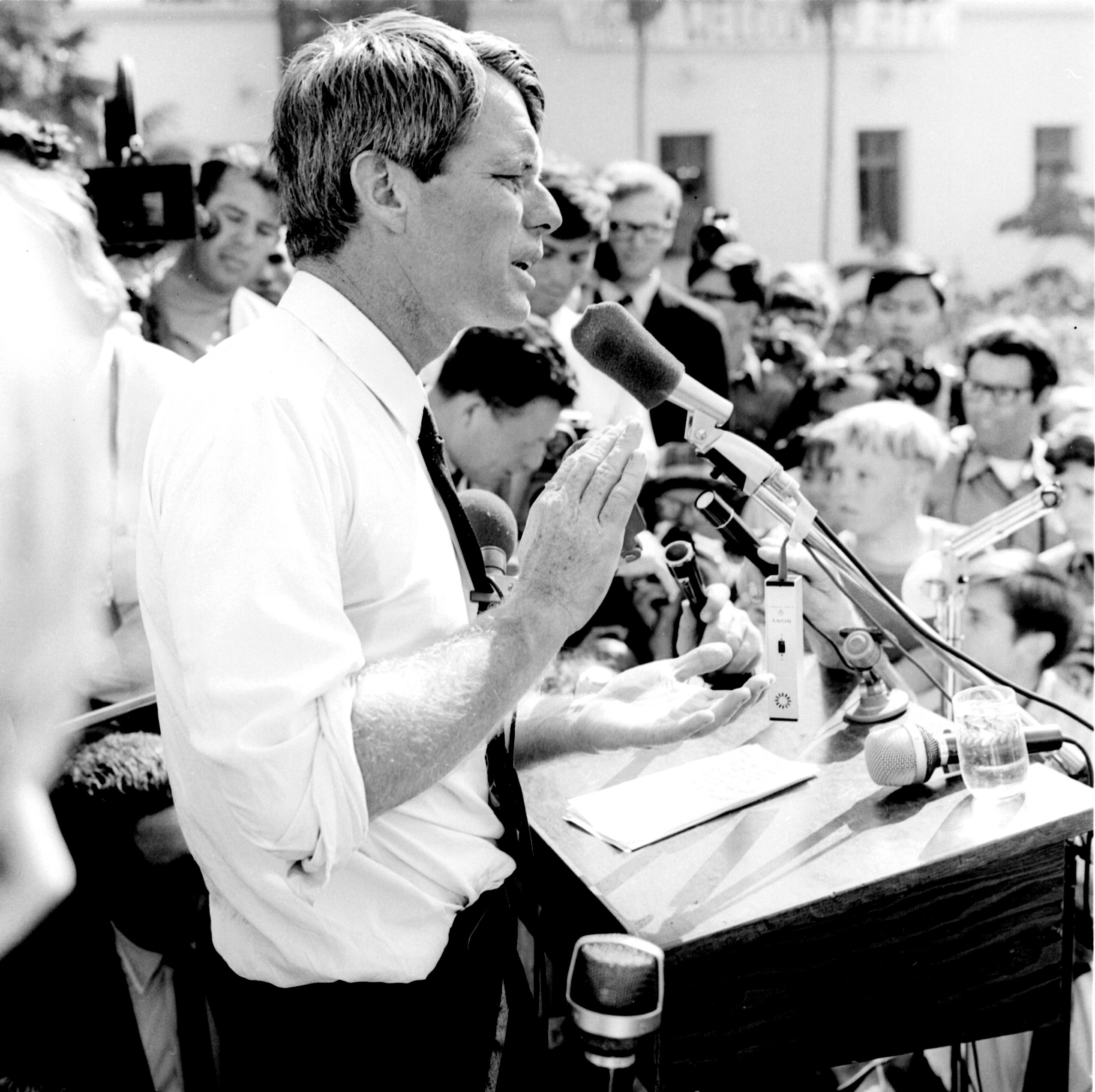
Senator Robert F. Kennedy, a U.S. presidential candidate, died on June 6, 1968, following an assassination attempt the day before [1].
The death of the senator represents a pivotal moment in American political history, removing a leading contender from the presidential race during a period of intense national instability.
Kennedy was shot on June 5, 1968 [2]. Following the attack, he was transported to Good Samaritan Hospital in Los Angeles, California [1]. The hospital became a focal point for public grief and tension as news of the shooting spread.
Reports indicate that about 300 people crowded the hospital entrance [1]. The gathering of onlookers reflected the sudden shock felt by the public as medical staff worked to save the candidate.
Kennedy remained at the facility until he died from his injuries on June 6, 1968 [1]. The event marked the second assassination of a member of the Kennedy family to impact the U.S. political landscape in less than five years.
“Senator Robert F. Kennedy, a U.S. presidential candidate, died on June 6, 1968.”
The assassination of Robert F. Kennedy disrupted the 1968 democratic process and intensified the social volatility of the era. By removing a candidate who campaigned on racial integration and peace during the Vietnam War, the event altered the trajectory of the U.S. presidential election and deepened the national trauma following the previous assassination of his brother, John F. Kennedy.


