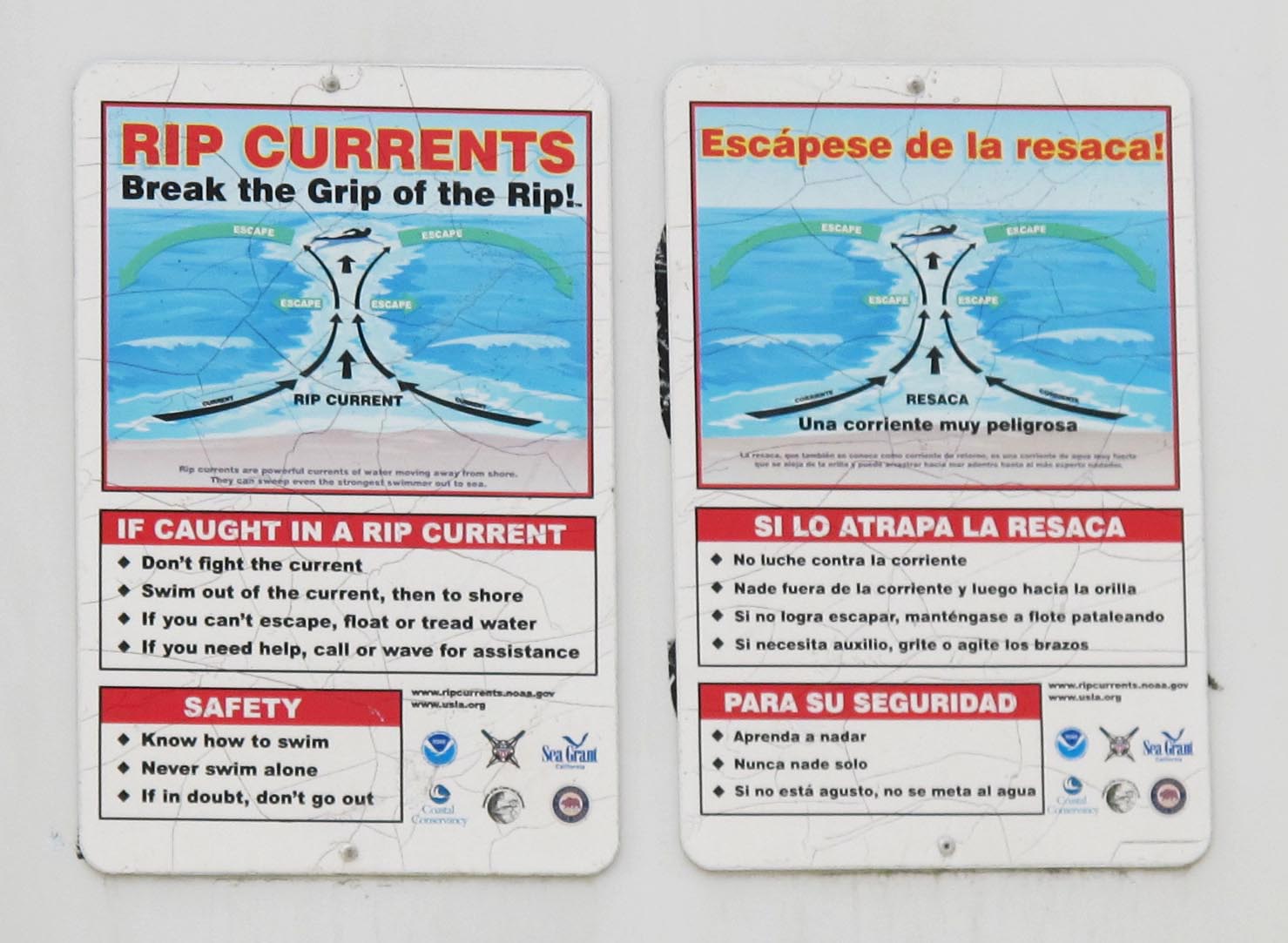
Water safety experts and lifeguards are urging swimmers to avoid fighting rip currents by swimming parallel to the shore to find an escape route [1, 2].
These guidelines are critical for preventing drownings, as fighting the current often leads to exhaustion and panic. Following these protocols can reduce the number of fatalities occurring at beaches, particularly along the coast of Florida [2].
A rip current is a powerful, narrow channel of fast-moving water that flows from the shore back out to sea. Because these currents move with significant force, attempting to swim directly back to the beach is often impossible. Experts said that swimmers should remain calm and wait for a natural exit point [1, 2].
The recommended technique is to swim parallel to the coastline. This movement allows the swimmer to move out of the narrow current's path, effectively sliding sideways out of the danger zone, before attempting to swim back toward the land [1, 2].
Safety officials said that panic is one of the greatest risks when trapped in these waters. By swimming sideways, individuals conserve energy and increase their chances of reaching calmer water where the current is weaker [1].
The danger remains a persistent public health issue in coastal regions. According to reports, at least 100 people die each year in the sea after becoming trapped in rip currents [2]. Lifeguards continue to advise visitors to stay within designated swimming areas and pay attention to warning flags on U.S. beaches [2].
“Swim parallel to the coastline to move out of the narrow current's path.”
The recurring nature of rip current fatalities underscores a gap in public safety literacy regarding ocean dynamics. While swimmers often instinctively try to fight the current to reach the shore, the physics of the water makes this approach fatal. By shifting the public response from a direct struggle to a lateral escape, safety experts aim to transform a high-risk panic response into a survivable maneuver.
![HB-ZKE: MD Helicopters MD Explorer [1]](https://upload.wikimedia.org/wikipedia/commons/4/45/HB-ZKE-IMG_1730.JPG)

