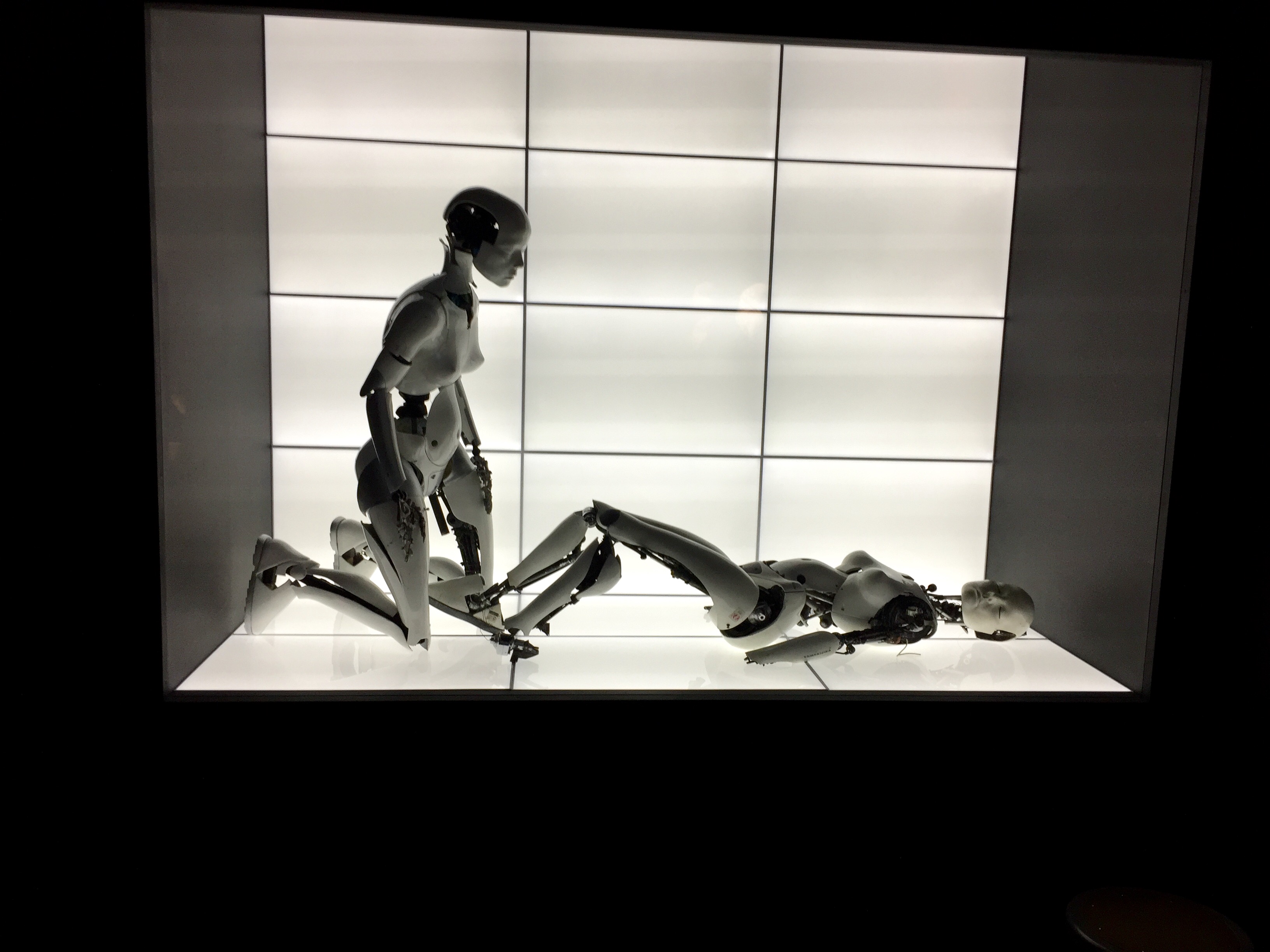
Advanced AI robots have entered the public spotlight through a half-marathon victory in China and a high-profile appearance at the Met Gala.
These events signal a shift in artificial intelligence, moving technology from digital screens into physical forms capable of complex movement and social interaction. The transition suggests that humanoid robotics are reaching a level of sophistication that allows them to compete with humans in athletic and cultural arenas.
In China, a humanoid robot recently won a half-marathon, demonstrating a level of physical endurance and coordination previously unseen in public robotic competitions [1]. This achievement highlights the rapid integration of AI-driven motor skills and physical engineering.
Meanwhile, in New York City, the AGIBOT robot made its debut at the 2026 [1] Met Gala. The appearance of a robot at one of the world's most exclusive fashion events underscores the move toward robots as cultural icons rather than just industrial tools.
Michael Ashley said, "The robot revolution has officially begun" [1].
Developers are now focusing on moving AI into the physical world to perform tasks that require both intelligence and mobility. This shift is enabled by rapid advances in AI that allow robots to navigate unpredictable environments, such as a crowded gala or a race course, with increasing autonomy [1, 2].
As these machines move from controlled laboratory settings into the public eye, the focus is shifting toward how these entities interact with human crowds and existing social structures [2].
“The robot revolution has officially begun.”
The emergence of humanoid robots in diverse settings, from athletic competitions to elite social gatherings, indicates that AI is no longer confined to data processing. By successfully navigating the physical world, these robots are proving the viability of embodied AI, which could lead to broader integration of humanoid machines in labor, healthcare, and entertainment.