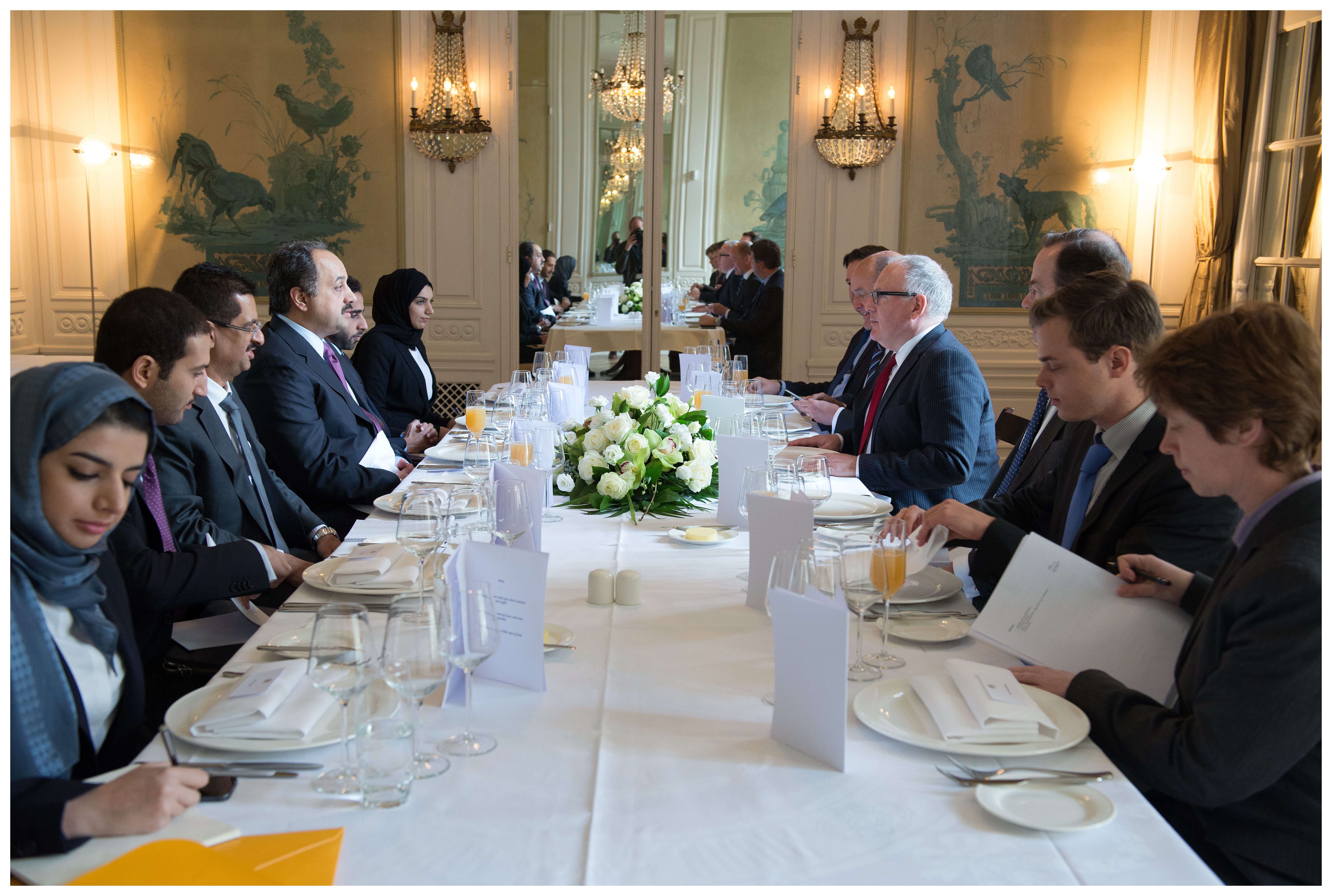
U.S. Secretary of State Marco Rubio met with Italian officials and Pope Leo on Friday to secure stronger European support regarding the war with Iran [1, 2].
The visit comes as the U.S. seeks to mend diplomatic fractures with key Western allies and the Holy See following critical remarks from President Trump [1, 3].
During the two-day visit [4], Rubio held meetings in Rome with Prime Minister Giorgia Meloni and Foreign Minister Antonio Tajani [1, 3]. The discussions focused on the need for concrete action against Iran as the conflict continues to destabilize the region [1, 5]. Rubio's outreach follows a period of heightened tension, highlighted by U.S. military actions where two Iran-flagged tankers were fired upon [6].
Rubio also traveled to the Vatican for an audience with Pope Leo [3]. This meeting was intended to repair strained relations between the U.S. administration and the papacy, a relationship that has faced challenges due to the president's public rhetoric [3, 5].
Throughout the diplomatic tour, Rubio questioned whether European allies are providing sufficient support to the U.S. position on Iran [1, 2]. The Secretary of State said that the current security environment requires a more unified front among Atlantic partners to deter further Iranian aggression [1, 5].
When asked about the expected outcome of these high-level discussions, Rubio remained cautious regarding the immediate results of the diplomacy.
"We'll see what the response entails," Rubio said [7].
“Rubio questioned whether European allies are providing sufficient support to the U.S. position on Iran.”
This diplomatic push indicates a shift toward damage control for the U.S. administration. By pairing security demands regarding Iran with a 'mending' tour of the Vatican and Rome, the U.S. is attempting to decouple its strategic military objectives from the personal friction caused by presidential rhetoric. The success of this mission depends on whether Italy and the Pope view Rubio as a reliable bridge to the White House or merely a messenger for a volatile policy.