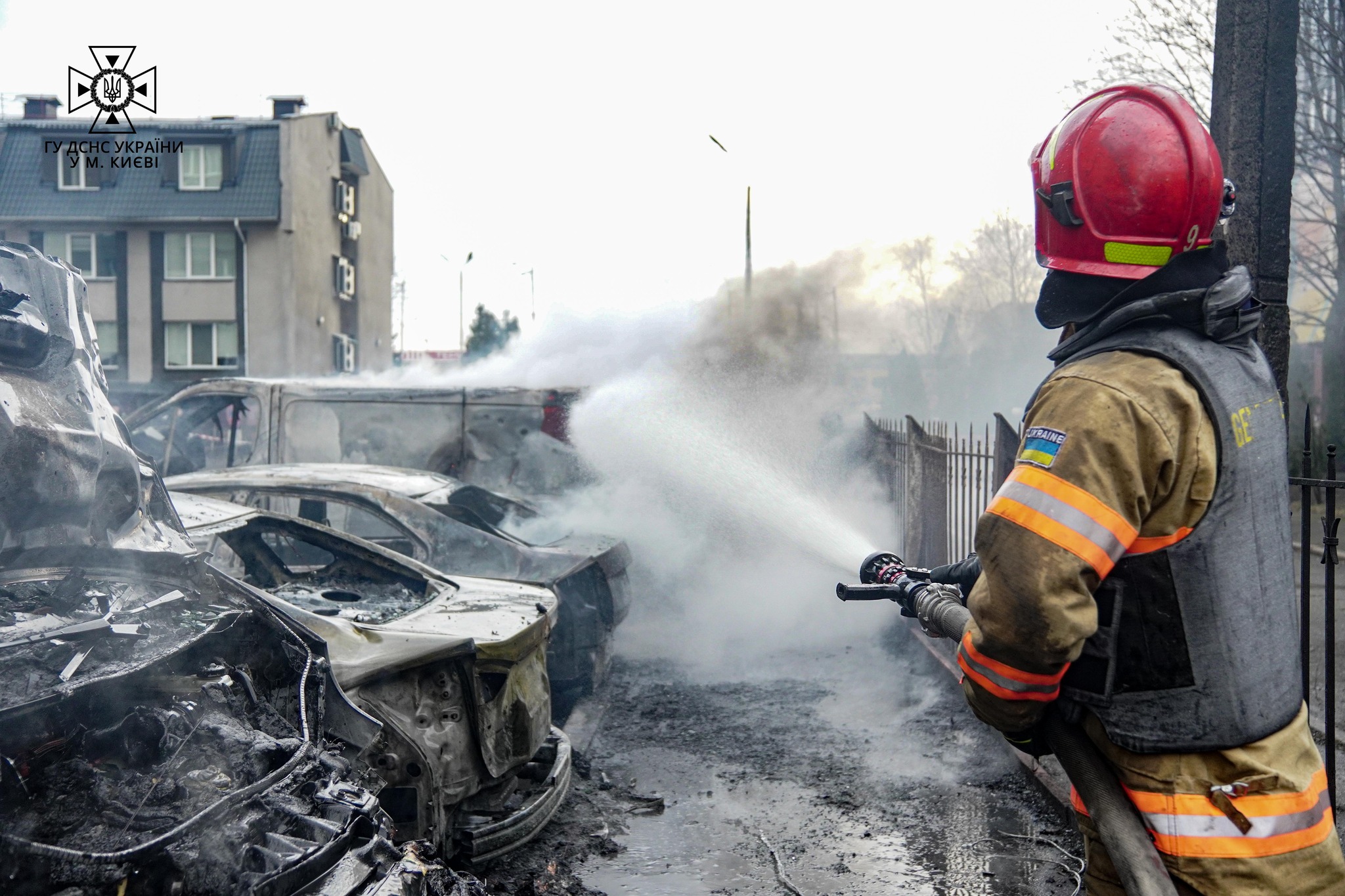
Russia launched a massive wave of missiles and drones at Kyiv and surrounding areas overnight on Sunday, May 24, 2024 [1, 2].
The scale of the assault and the use of advanced hypersonic technology signal an escalation in Russia's ongoing military campaign against Ukraine [2, 3].
According to reports, the Russian military fired 90 missiles and 600 drones during the overnight barrage [1]. The attack caused significant casualties, killing four people [2]. More than 80 others were wounded in the strikes [1].
The bombardment caused widespread destruction across the capital and nearby regions. Dozens of residential buildings were damaged [1]. Several schools were also hit during the assault [1].
Among the weapons deployed was an Oreshnik hypersonic missile [1, 3]. This specific strike targeted Bila Tserkva, a town located about 64 km from Kyiv [1, 3].
The intensity of the strike reflects a coordinated effort to overwhelm Ukrainian air defenses. By combining a high volume of drones with precision missiles, Russia targeted both military and civilian infrastructure across the region [1, 2].
“Russia fired 90 missiles and 600 drones during the overnight barrage.”
The deployment of the Oreshnik hypersonic missile alongside a massive swarm of 600 drones indicates a strategy of saturation. By overwhelming air defense systems with high-volume drone traffic, Russia creates windows for high-speed, difficult-to-intercept hypersonic weapons to strike targets. This combination increases the risk to civilian infrastructure and complicates the defensive posture of the Ukrainian capital.


