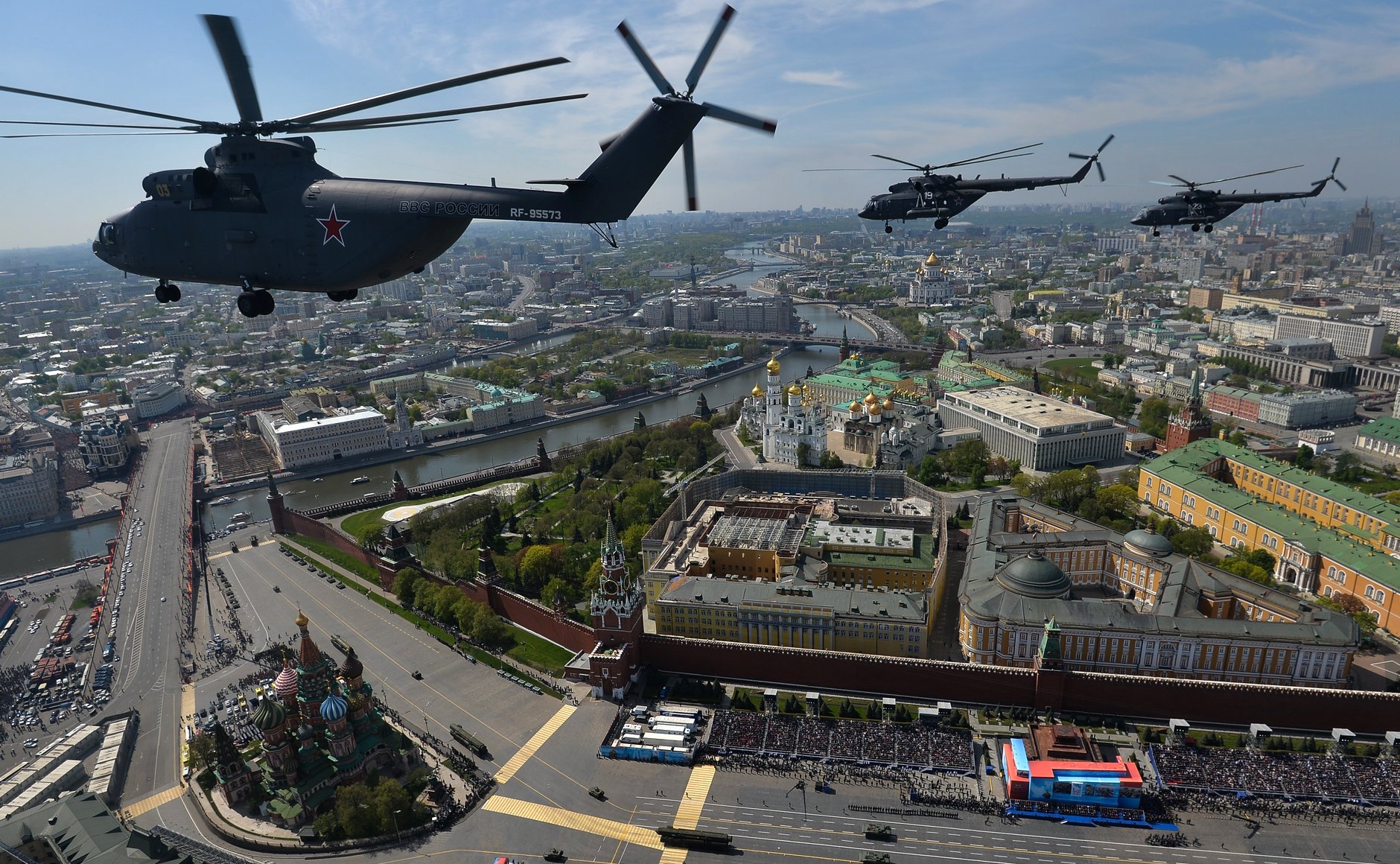
Russian President Vladimir Putin led a scaled-back Victory Day military parade on Red Square on May 8, 2026 [2].
The event marks a significant shift in how the Kremlin projects power during its ongoing conflict with Ukraine. By omitting the traditional display of heavy weaponry, Russia signaled a change in its domestic security posture and military priorities.
For the first time in nearly 20 years, the parade featured no tanks, missiles, or other heavy military equipment [4]. The ceremony, which continued with live coverage into May 9 [2], focused instead on infantry and the presence of foreign dignitaries. These guests participated by laying flowers at the Tomb of the Unknown Soldier [1].
Security concerns influenced the organization of the event. To protect the festivities from potential drone attacks, a three-day ceasefire was agreed upon [3]. The absence of heavy hardware on the square reflects the current operational needs of the Russian military, shifting resources from ceremonial displays to the front lines.
President Putin addressed the crowd during the proceedings [1]. He used the speech to commemorate the defeat of Nazi Germany in World War II and to signal Russia's resolve [1]. Despite the reduced scale of the hardware on display, the Kremlin said the event was intended to showcase its military might and endurance [1].
The celebration of Victory Day is traditionally the most significant military holiday in Russia. The decision to modify the parade's composition suggests a pragmatic approach to security and resource management in the face of prolonged warfare [2].
“For the first time in nearly 20 years, the parade featured no tanks, missiles, or other heavy military equipment.”
The removal of heavy weaponry from the Red Square parade indicates a transition from symbolic military posturing to a wartime footing. By prioritizing security through a temporary ceasefire and avoiding the concentration of high-value assets in Moscow, the Russian government is acknowledging the vulnerability of its capital to modern drone warfare while attempting to maintain the ideological narrative of strength.

![Contains modified Copernicus Sentinel data [2023], processed by Pierre Markuse Mount Etna, Sicily, Italy - 29 October 2023 Image is about 26 kilometers wide Do you want to support this collection of s](https://upload.wikimedia.org/wikipedia/commons/6/66/Mount_Etna%2C_Sicily%2C_Italy_-_29_October_2023_%2853320439428%29.jpg)
