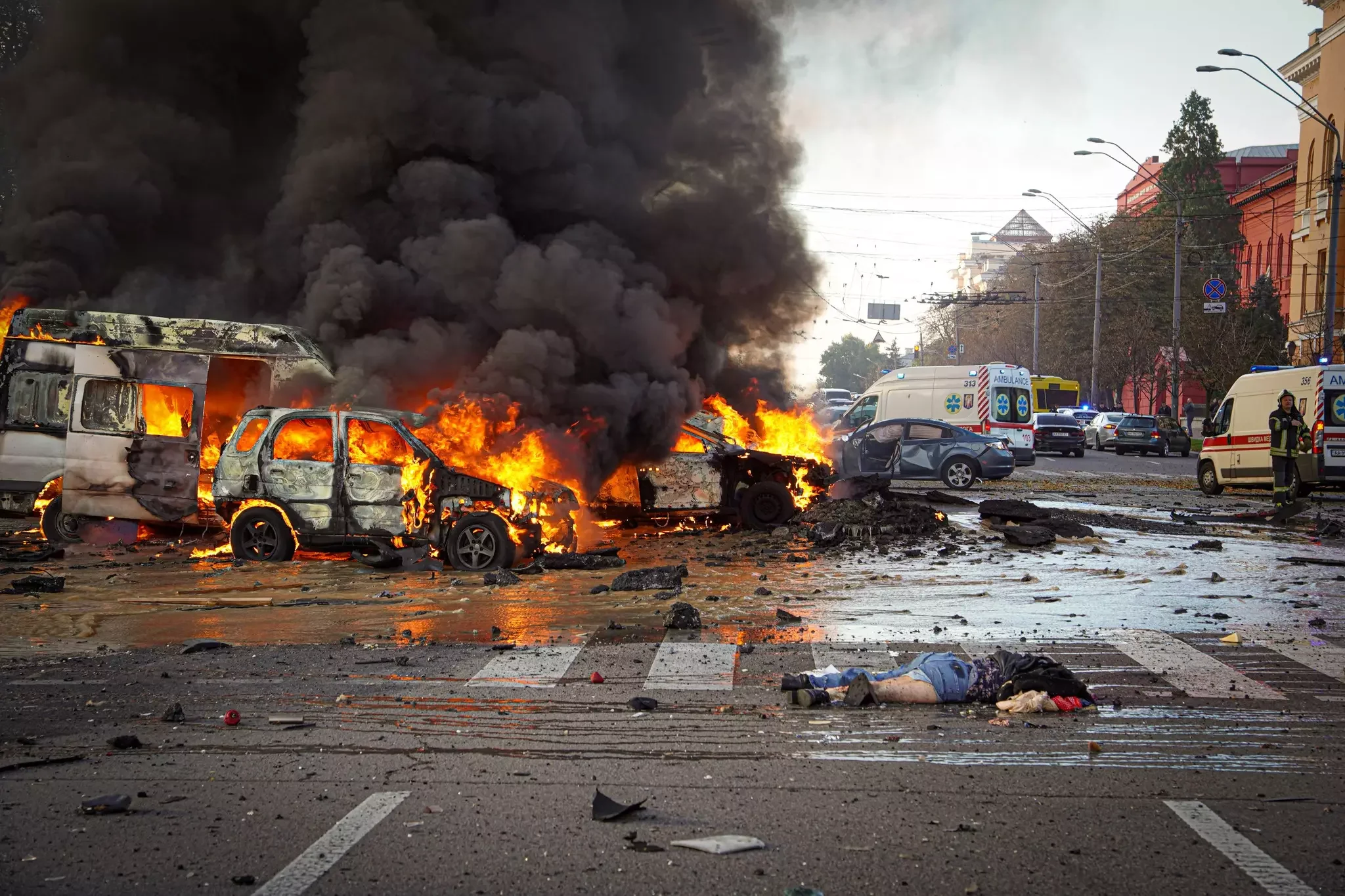
Russian forces launched overnight missile and drone air strikes targeting Kyiv on May 12, 2026 [1, 2].
The attacks occurred shortly after the expiration of a 72-hour truce, signaling a return to intense aerial bombardment in the Ukrainian capital [1]. This escalation follows a period of brief diplomatic tension regarding ceasefire offers and drone attacks [3].
Residents of Kyiv reported explosions and air-raid alerts throughout the night and into the early hours of May 13 [1]. The Russian military utilized a combination of missiles and drones to strike targets within the city [1, 2].
Reports regarding the human cost of the strikes vary significantly across sources. Some reports indicate that 22 people were killed in the attacks [4]. However, other accounts state that five people died [5, 6].
This wave of strikes is part of the broader ongoing Russia-Ukraine conflict [1, 3]. The timing of the bombardment, immediately following the end of a temporary ceasefire, suggests a strategic decision by Moscow to resume offensive operations [1].
Ukrainian air-defense units responded to the incoming projectiles as the city faced multiple waves of strikes [1]. The use of drones alongside traditional missiles has become a recurring tactic in the campaign against urban centers in Ukraine [2].
“Russian forces launched overnight missile and drone air strikes targeting Kyiv”
The immediate resumption of strikes following a 72-hour truce underscores the fragility of temporary ceasefires in the Russia-Ukraine conflict. By targeting the capital with a mix of drones and missiles, Russia continues to pressure Ukrainian urban infrastructure and psychological resilience, while the conflicting casualty reports highlight the difficulty of verifying real-time data during active combat operations.


