
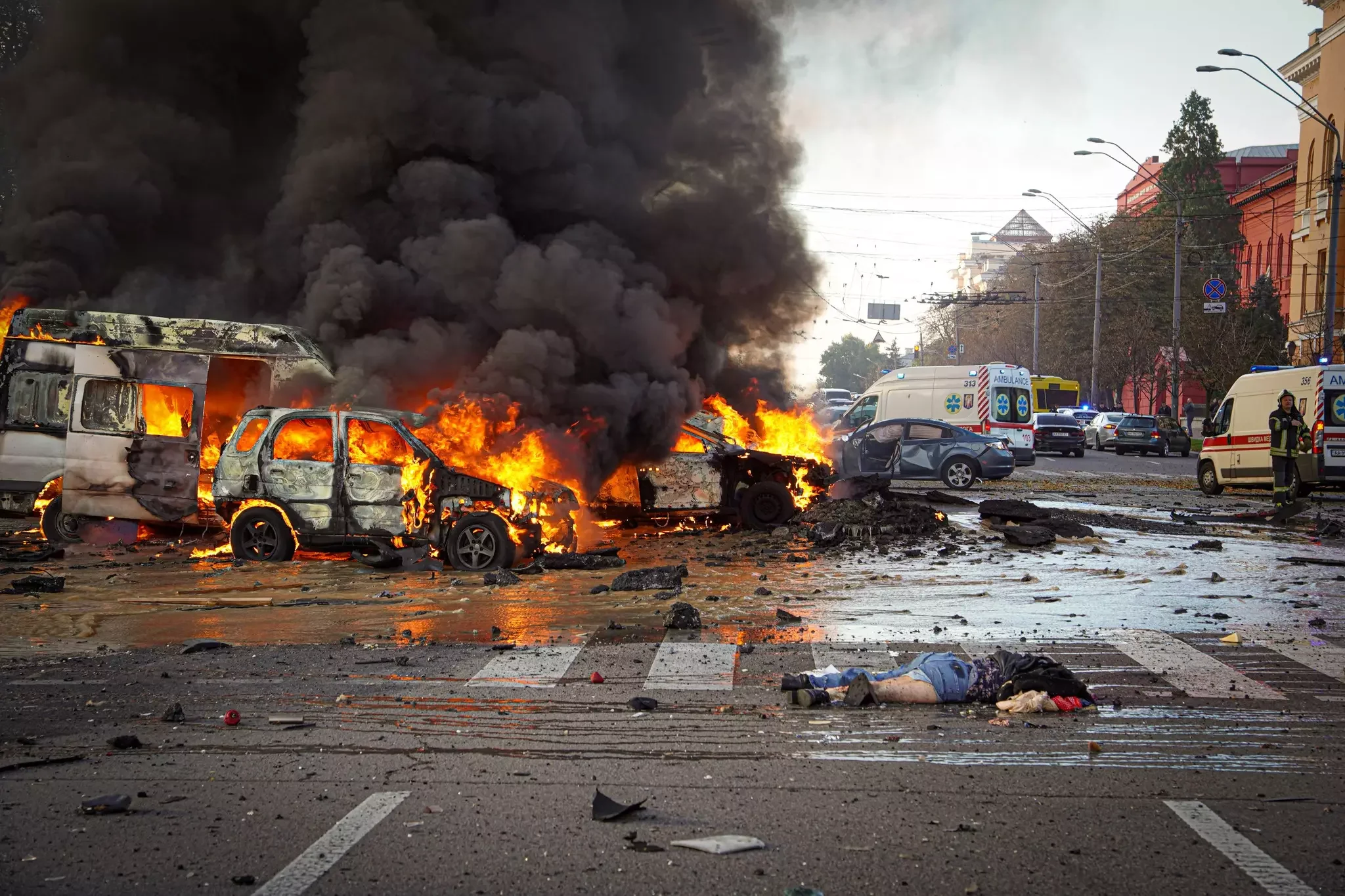
Russian forces launched a series of airstrikes and missile attacks across Ukraine on Tuesday, killing at least 22 people [1].
These attacks target critical infrastructure and residential areas to pressure Ukrainian defenses and weaken civilian morale. The scale of the strikes indicates a continued effort by Russia to disrupt stability within major urban centers.
Reports on the casualties vary among news agencies. CBC said at least 22 died [1], while CNN cited a higher toll of at least 23 dead [2]. Other reports focused on specific regional impacts, with WTOP reporting at least three deaths [4] and the Star Advertiser reporting at least five [5]. In the Kharkiv region, local officials said at least four died [6].
The strikes utilized a combination of missiles and drones to hit multiple locations, including the capital city of Kyiv and the Kharkiv region [1, 2, 5]. Survivors described the chaos of the blasts and the struggle of being trapped in rubble as emergency crews worked to recover victims [3].
President Volodymyr Zelenskyy responded to the escalation by alerting the public to the volatility of the situation. Zelenskyy said there was a possible repeat before dawn Wednesday [7].
The assault is part of an ongoing campaign by Russian forces to maintain military pressure on the Ukrainian government [1, 2]. The use of drone technology alongside traditional missiles allows Russian forces to strike multiple targets simultaneously, increasing the difficulty for air defense systems to intercept every projectile.
“Russian forces launched a series of airstrikes and missile attacks across Ukraine on Tuesday”
The discrepancy in death tolls between reporting agencies highlights the difficulty of verifying casualties in real-time during active conflict. By targeting both the capital and regional hubs like Kharkiv, Russia is employing a strategy of wide-area attrition designed to stretch Ukrainian emergency services and air defense resources thin across the country.


