
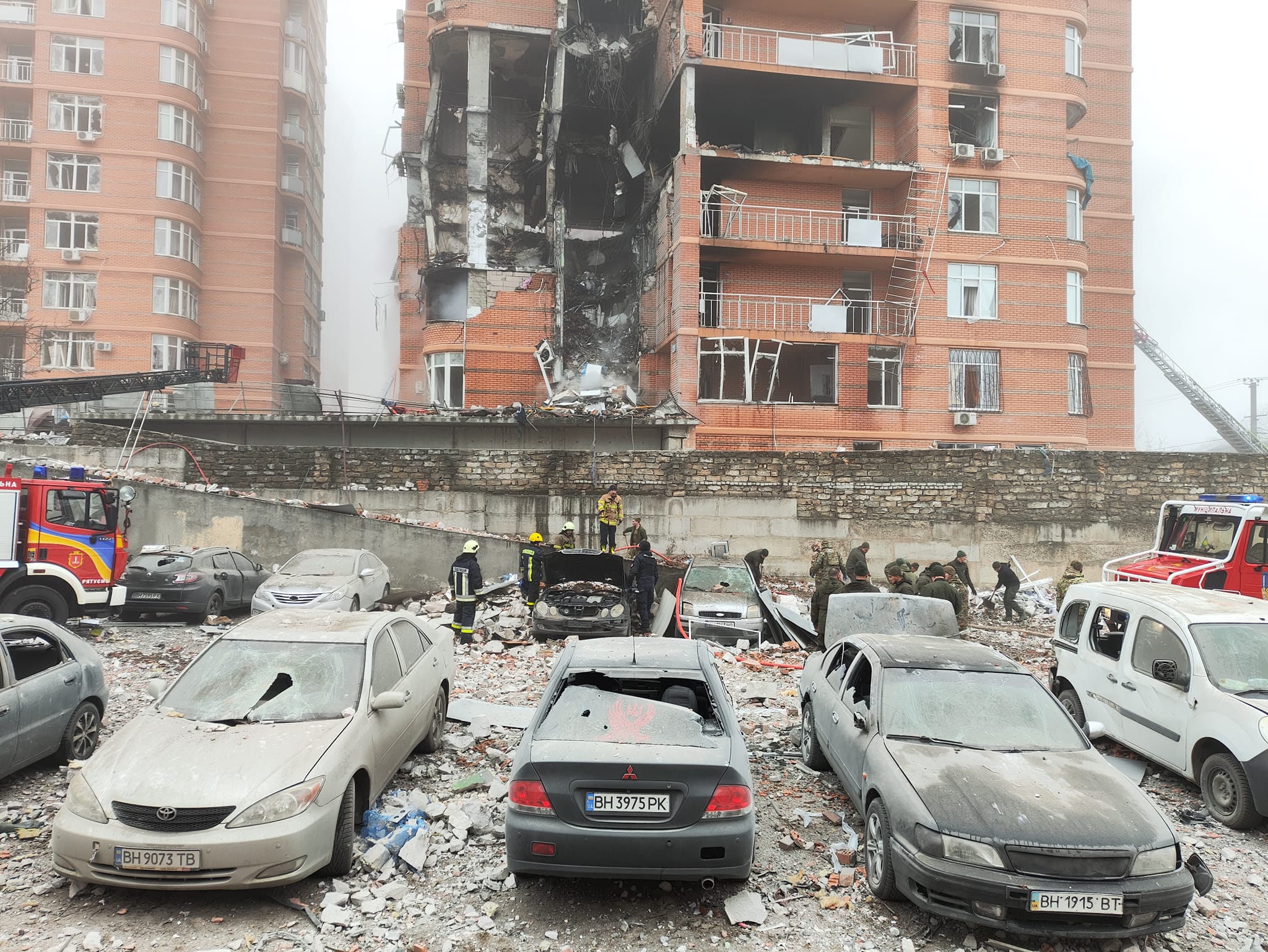
Russian military forces launched a series of intensive missile and drone strikes across several major Ukrainian cities this week [1, 2].
The escalation represents a widening of the conflict's intensity, as the Kremlin utilizes advanced hypersonic weaponry to target critical infrastructure and military-industrial sites [1, 2].
Attacks struck Kyiv, Zaporizhzhia, Kharkiv, Dnipro, Poltava, and Sumy [1, 2]. Russian officials said the operation aimed at military-industrial targets, though the strikes left large portions of these urban centers in rubble [1, 2]. Reports indicate that President Vladimir Putin is expanding this as a "revenge" operation following previous attacks on Kyiv [1, 2].
Casualty reports vary across sources. Ukrainian authorities said that at least 16 civilians died [1] and more than 100 were wounded [1]. Other reports specifically noted at least seven deaths in Kyiv, including a 12-year-old girl [3].
In some areas, emergency responders worked to locate individuals feared trapped after missile hits caused buildings to collapse [2]. The use of hypersonic missiles makes interception more difficult for Ukrainian air defenses, increasing the risk to non-combatants in densely populated areas [1, 2].
President Volodymyr Zelenskyy and Ukrainian authorities continue to manage the aftermath of the overnight assaults as the cities attempt to clear debris and treat the wounded [1, 2].
“Russian military forces launched a series of intensive missile and drone strikes across several major Ukrainian cities”
The deployment of hypersonic missiles against a broad array of cities suggests a strategic shift toward degrading Ukraine's industrial capacity while applying psychological pressure on urban populations. By framing the strikes as a revenge operation, the Kremlin signals a move toward more aggressive retaliatory cycles that complicate diplomatic efforts and increase the volatility of the frontline.


