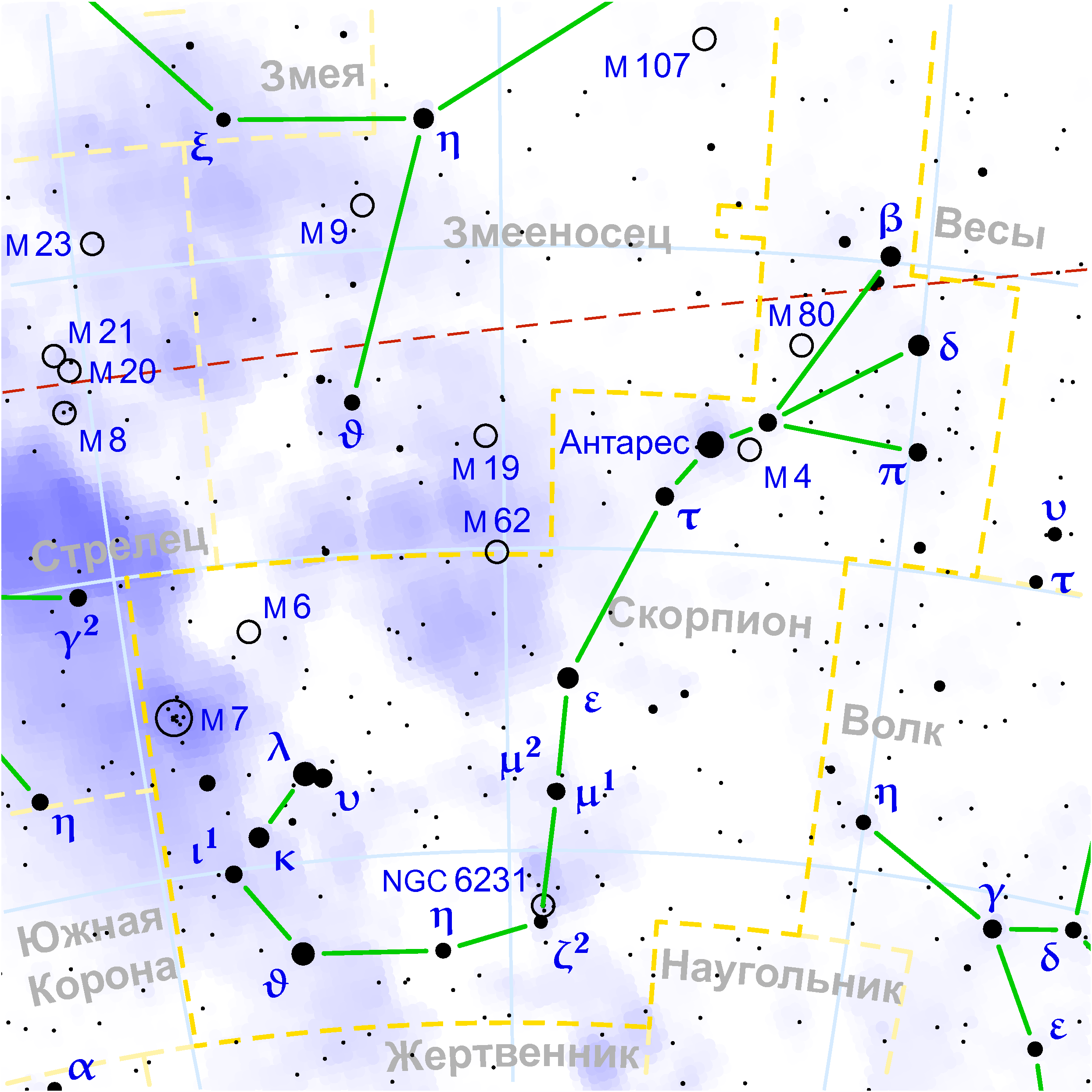
Observers in the United Kingdom can currently locate the Scorpius constellation appearing low in the southern part of the sky [1].
This celestial alignment provides a visual representation of one of astronomy's oldest myths. The positioning of the stars illustrates the legendary conflict between the Scorpion and Orion, ensuring the two adversaries rarely share the horizon.
According to reports on the constellation, Scorpius is identified as the mythical adversary of Orion [1, 2]. In Greek mythology, the Scorpion was sent to kill the great hunter. This ancient story is reflected in the actual mechanics of the night sky, as the two constellations appear on opposite sides of the celestial sphere [1, 2].
When Orion sets below the horizon, Scorpius rises. This astronomical cycle ensures that the hunter and the scorpion remain separated, a cosmic manifestation of their eternal enmity [1].
For those attempting to spot the constellation from the UK, looking toward the southern horizon is essential. Because Scorpius remains low in the sky for observers in this region, clear horizons and minimal light pollution are necessary to identify the distinct shape of the scorpion [1, 2].
The study of such constellations blends astronomical observation with cultural history. By tracking the movement of Scorpius, observers can see how ancient civilizations mapped their stories onto the stars to understand the seasonal shifts of the heavens [1].
“The two constellations appear on opposite sides of the sky.”
The visibility of Scorpius in the southern UK sky serves as a practical example of how mythological narratives were used to categorize astronomical observations. The physical opposition of these two constellations in the sky reinforces the storytelling tradition that linked celestial movements to legendary conflicts, providing a mnemonic device for early astronomers to track seasonal changes.


