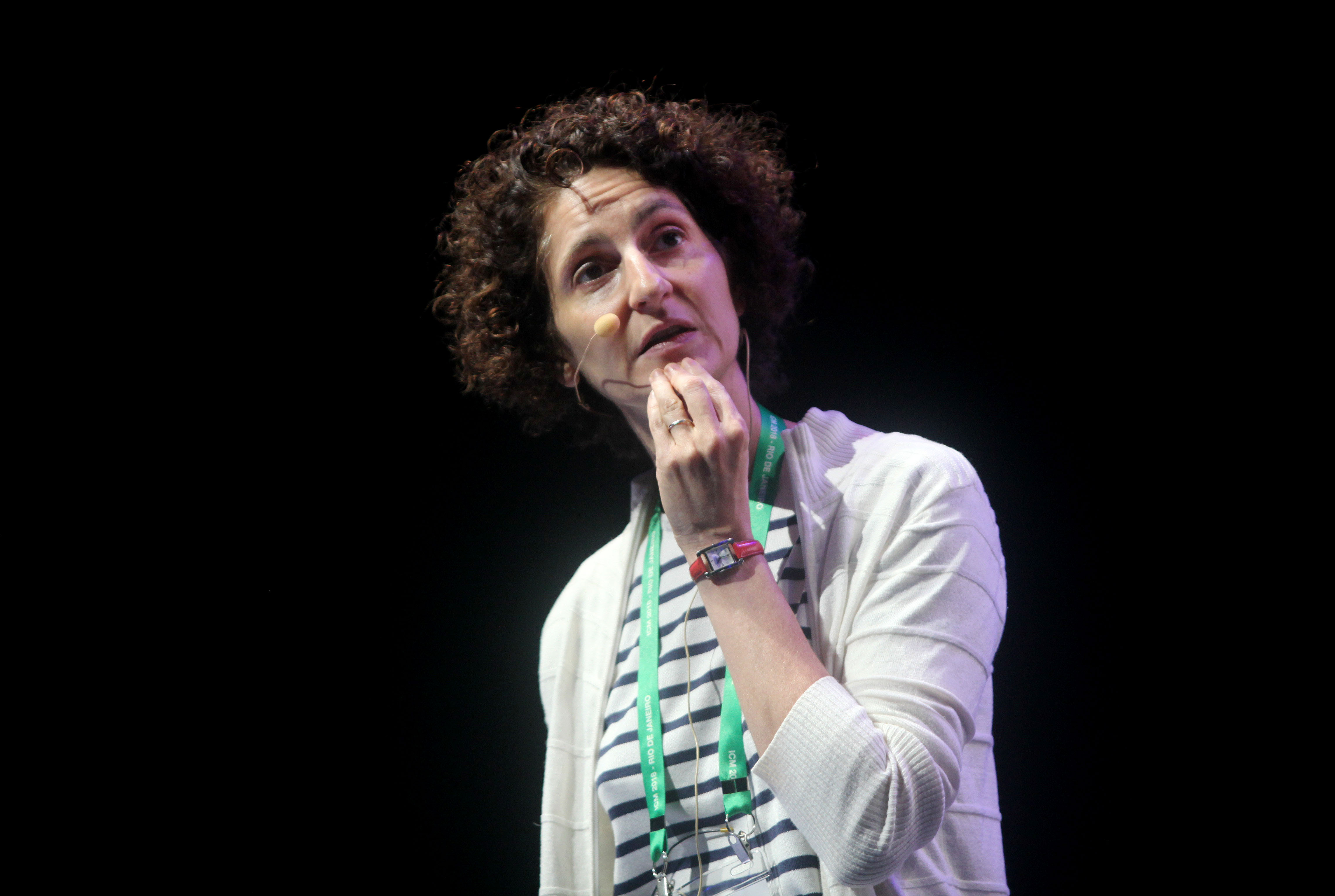
Mathematician Sylvia Serfaty said whether artificial intelligence could eventually replace human mathematicians in a recent interview for Le Figaro’s Planétarium series [1].
The conversation addresses a growing tension in the scientific community regarding the role of automation in theoretical discovery. As AI systems become more capable of processing complex data, the question of whether a machine can achieve the creative intuition required for high-level mathematics becomes critical for the future of the profession.
Serfaty said how AI is currently transforming various scientific fields [1]. The discussion centers on the distinction between the ability to calculate or identify patterns, and the ability to construct a formal mathematical proof from first principles. While AI can accelerate the discovery of potential solutions, the role of the mathematician remains focused on the rigorous verification and conceptualization of those findings.
The interview explores the potential for AI to surpass human mastery in specific mathematical tasks [1]. This shift suggests a future where the mathematician acts more as a curator or strategist, guiding AI tools to explore vast mathematical landscapes that would be impossible for a human to navigate alone.
Serfaty’s analysis suggests that the integration of AI does not necessarily signal the end of the human mathematician. Instead, it indicates a transformation in the methodology of research—moving from manual derivation to a hybrid model of human-machine collaboration.
The Planétarium series aims to provide a venue for experts to assess the trajectory of emerging technologies [1]. By questioning the replaceability of mathematicians, the program highlights the unique cognitive requirements of theoretical science that may remain resistant to algorithmic replication.
“The question of whether a machine can achieve the creative intuition required for high-level mathematics becomes critical.”
The debate over AI in mathematics reflects a broader shift in the 'science' category, where the value of human expertise is moving from execution to oversight. If AI can handle the computational heavy lifting, the human element will be defined by the ability to ask the right questions and validate the logic of the answers, rather than the act of calculation itself.


