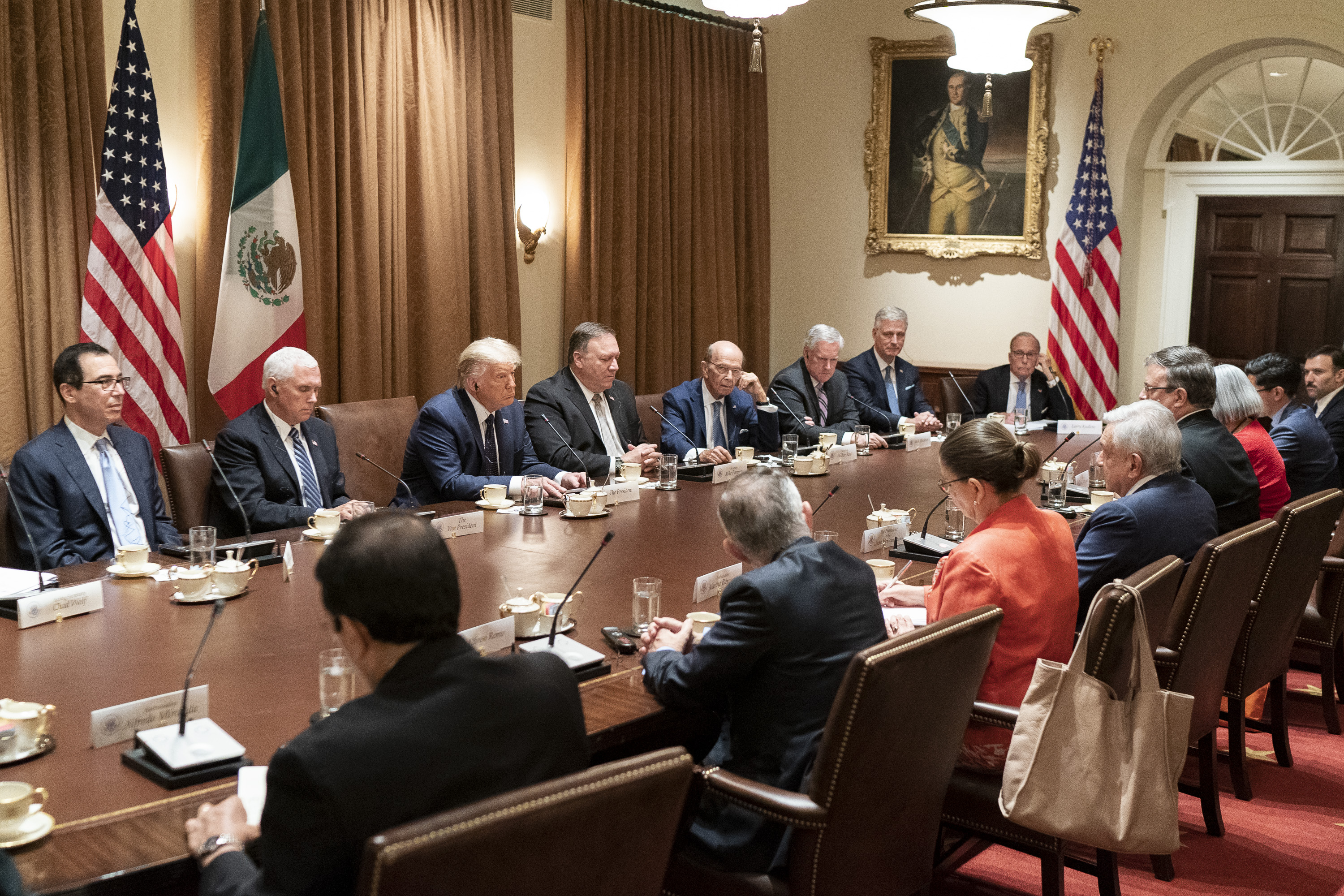
President Claudia Sheinbaum called for national pride after responding to what she described as hate speech from U.S. President Donald Trump.
The exchange underscores the diplomatic tension between the two nations regarding migration and border security. As the U.S. and Mexico navigate complex trade and security ties, the rhetoric from the White House often impacts bilateral cooperation and public sentiment in both countries.
Speaking during her daily morning press conference in Mexico City, Sheinbaum addressed remarks made by President Trump at the U.S.–Mexico border [1]. Trump had recently accused Mexico of losing control of the country and criminalizing migrants [1]. Sheinbaum said these statements were hateful discourse and urged Mexicans to feel proud of their country [1, 2].
"México debe ser tratado con respeto y dignidad por todas las naciones," Sheinbaum said [1].
Beyond the diplomatic dispute, the president pivoted to domestic social issues during the session. She addressed the habits of the younger generation, specifically the impact of digital devices on learning [1].
"Los estudiantes deben reducir el tiempo que pasan frente a las pantallas y enfocarse en su educación," Sheinbaum said [1].
The president's comments on screen time come as part of a broader effort to prioritize educational focus over digital distractions [1]. The morning press conference, known as the Conferencia matutina, serves as the primary venue for the administration to address both international conflicts and internal policy goals [1].
“"México debe ser tratado con respeto y dignidad por todas las naciones."”
This interaction highlights a recurring pattern of confrontational rhetoric between the U.S. and Mexican executives. By framing the U.S. president's comments as 'hate speech' and simultaneously pivoting to national pride, Sheinbaum is positioning her administration as a defender of Mexican sovereignty and dignity against external criticism.


