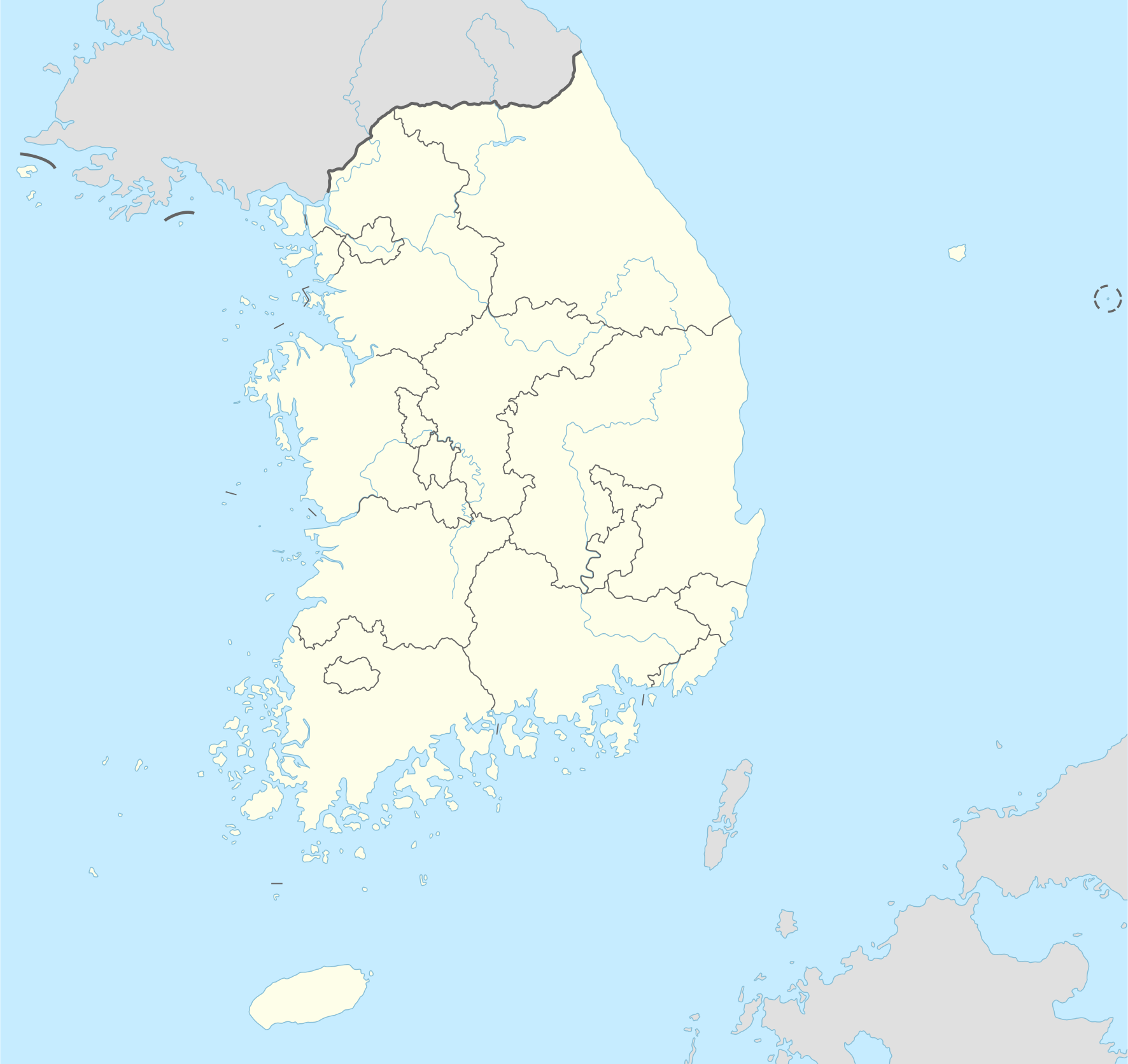
South Korea's Defence Ministry will relocate the functions of Gwangju Air Base to other military airfields by mid-2028 [1].
The move is intended to clear land for a planned semiconductor cluster in southwestern South Korea. By removing military operations from the site, the government aims to accelerate the development of a new chip-manufacturing hub to bolster the national economy.
President Lee Jae Myung ordered the relocation to ensure the semiconductor project proceeds without land-use delays [1]. The semiconductor cluster project carries an estimated cost of 800 trillion won [2]. This industrial push is supported by a South Korean chip fund totaling $4.5 billion [3].
The Gwangju Air Base currently occupies a significant portion of the land designated for the high-tech zone. Moving these functions allows the government to transition the area from a military installation to an industrial center, a shift the administration said is necessary for global competitiveness.
However, the timeline has sparked debate among observers. Some reports suggest the strict transfer deadline may weaken South Korea's strategic position with the U.S. [4]. Conversely, other reports said the relocation will boost the national chip industry by speeding up construction [5].
The Defence Ministry is tasked with coordinating the temporary transfer of personnel and equipment to other existing airfields. This transition must be completed by the mid-2028 deadline [1] to avoid stalling the semiconductor cluster's development.
“South Korea's Defence Ministry will relocate the functions of Gwangju Air Base to other military airfields by mid-2028.”
This relocation represents a strategic prioritization of economic security over traditional military infrastructure. By converting a defense site into a semiconductor hub, South Korea is attempting to solidify its position in the global chip supply chain, though the rapid timeline may create friction with international defense partners.